
Reviewed · COOKING CLASSES
Private Cooking Class with a Tbilisi Food and City Expert Dinara
Georgian food makes the most sense when you help prepare it. In Dinara’s Tbilisi apartment, you learn family recipes in a real home kitchen, then sit down to eat what you made. I like the private setting and the chance to ask questions without keeping up with a large group. I also like that Dinara is both a city guide and former café owner, so food and local life come together naturally.
The main drawback is the price: $148 per person is a serious spend for a three-and-a-half-hour activity. The menu can also vary, with khinkali or Shkmeruli listed as possible main dishes, so you may not prepare every item named in the description.
Key points at a glance
- A real Tbilisi home: You meet Dinara at the apartment she shares with her husband, daughter, and friendly dog.
- Three dishes from scratch: The hands-on cooking session lasts about two and a half hours.
- Classic Georgian cooking: Possible dishes include khachapuri, khinkali, Shkmeruli, salad, pkhali, and matsoni dessert.
- A private class: Only your group takes part, so Dinara can tailor the pace and answer your questions.
- Food and city insight together: Dinara is a city guide and former café owner who enjoys sharing Georgian culture.
- A generous time commitment: The full experience lasts about three and a half hours and ends where it began, in Saburtalo.
Why a home kitchen tells you more about Georgia
A restaurant shows you the finished plate. A home cooking class shows you how Georgian food fits into daily life. That difference matters. You see the work behind the bread, dumplings, sauces, and vegetable dishes, and you get a better feel for why Georgian meals are built for sharing.
You meet Dinara at her apartment in Saburtalo, a part of Tbilisi outside the city’s best-known old-town sights. The setting is personal rather than polished for tourism. You have a refreshing drink, meet the family, and settle into the open kitchen before the cooking begins.
I like this start because it gives the meal a human setting. You are not just moving from one restaurant table to another. You are entering the home of a local family, with Dinara’s husband, daughter, and friendly dog part of the scene.
That also means you should expect a home visit, not a cooking school with commercial equipment and a formal demonstration counter. If you prefer a neat, highly staged class, this may feel informal. If you want a more direct look at local life, the apartment is the point.
A few more things to do in Tbilisi worth a look
- Small-Group Khinkali and Khachapuri Cooking Class in Tbilisi
★ 4.5 · 224 reviews - Cook True Ajarian Khachapuri and Khinkali in Highlanders Style
★ 5.0 · 93 reviews - Nana’s Kitchen – traditional Georgian cooking class at real Georgian family home
★ 5.0 · 37 reviews
Meeting Dinara in Saburtalo
Dinara brings two useful kinds of experience to the class. She has run a café, so she understands food preparation and presentation. She also works as a city guide, so she can place the recipes in a wider Georgian setting.
That combination is valuable for you. A cook may show you how to shape dough, while a guide can explain why a dish matters and how it appears on Georgian tables. The supplied details do not promise a formal city tour during the class, so think of the cultural side as conversation around the food rather than sightseeing in Tbilisi.
The starting point is Saburtalo, and the activity ends back there. You should plan your day around that meeting point rather than expect pickup from your hotel or a finish near the old town. The description gives no hotel transfer service, so confirm the exact apartment directions after booking.
The experience is private, meaning only your group participates. That is one of its strongest features. You can ask about ingredients, cooking methods, and Georgian customs without competing with a busload of people. A private format is also useful if one person in your group cooks slowly, wants extra help, or needs more explanation.
The 2.5-hour cooking session
The cooking portion lasts about two and a half hours. That is enough time for more than a quick recipe demonstration. You should expect to work with Dinara at her large open kitchen, learning techniques as you prepare three Georgian dishes from scratch.
The wording matters here: this is hands-on instruction. You are not simply watching Dinara cook and then receiving a plate. You take part in preparing the meal, which makes the final dinner more satisfying and gives you methods you can try at home.
The recipes come from generations of Dinara’s family. That detail gives the class a personal anchor. You are learning the food through one family’s kitchen rather than receiving a generic introduction to Georgian cuisine.
The exact sequence is not specified, and the menu can include different combinations. The listed possibilities are:
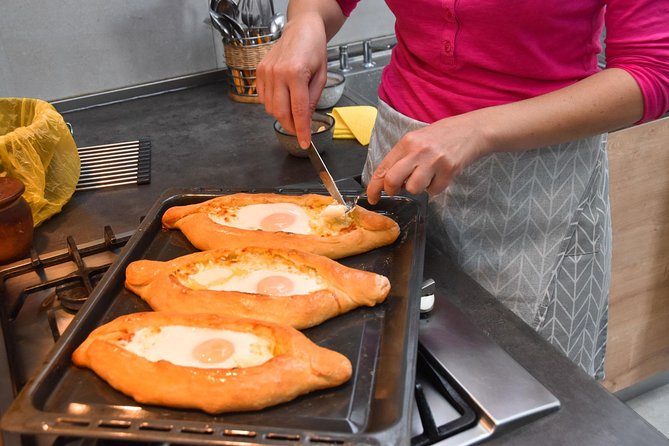
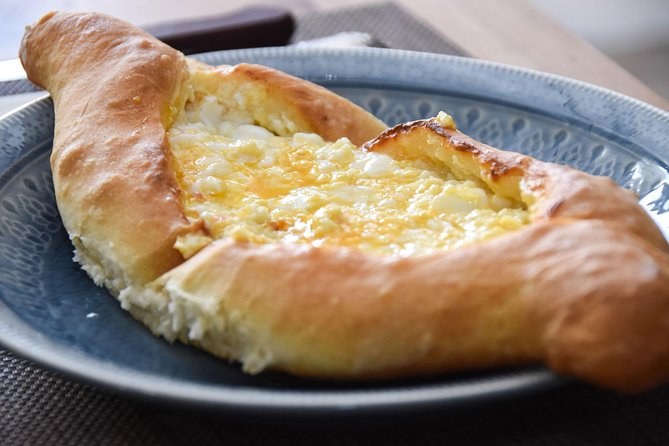
- Khachapuri, bread filled with cheese and egg
- Khinkali, Georgian dumplings
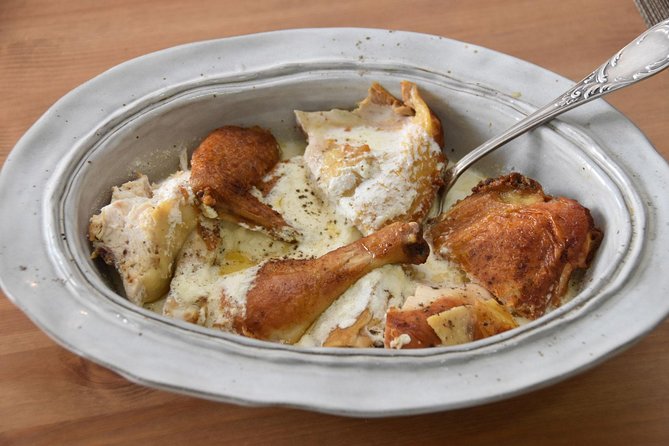
- Shkmeruli, fried chicken in garlic sauce
- Georgian salad
- Pkhali, minced vegetables mixed with nuts and herbs
- Matsoni, a yogurt-style Georgian dessert served with honey and nuts
You are expected to prepare three dishes, not necessarily every item above. Ask Dinara or the booking contact which menu applies to your date if a particular dish is important to you.
Khachapuri, khinkali, and the work behind the food
Khachapuri is one of the best dishes to learn in a kitchen because the appeal is not only the filling. You get to see how the bread is handled, how the cheese and egg fit into the dish, and how a simple set of ingredients becomes a centerpiece for the table.
Khinkali offers a different kind of lesson. Georgian dumplings require attention to shaping and filling, so the class gives you a practical look at the skill behind a dish that can seem effortless when it arrives at a restaurant. If khinkali is on your menu, expect the hands-on work to be part of the fun.
Shkmeruli takes you in another direction, with fried chicken served in a garlic sauce. It is a hearty main course, and the sauce shows how a few strong ingredients can carry a Georgian dish.
The class may pair one of these main dishes with lighter items. A Georgian salad adds freshness, while pkhali brings minced vegetables, nuts, and herbs together in a form that is both savory and distinctly local. These side dishes help you understand that the meal is not built around one large plate alone.
Same base, a different sort of day:
- Day Trip to Kakheti Wine Region Including 9 Wine Tastings
★ 5.0 · 2,774 reviews - Highlights of Caucasus Mountains-Jinvali,Ananuri,Gudauri,Kazbegi(Group tour)
★ 5.0 · 2,682 reviews - Day Trip to Kazbegi and Gudauri
★ 5.0 · 2,009 reviews - Day Trip to Mtskheta Gori and Uplistsikhe
★ 5.0 · 1,801 reviews
Sitting down to the meal you made
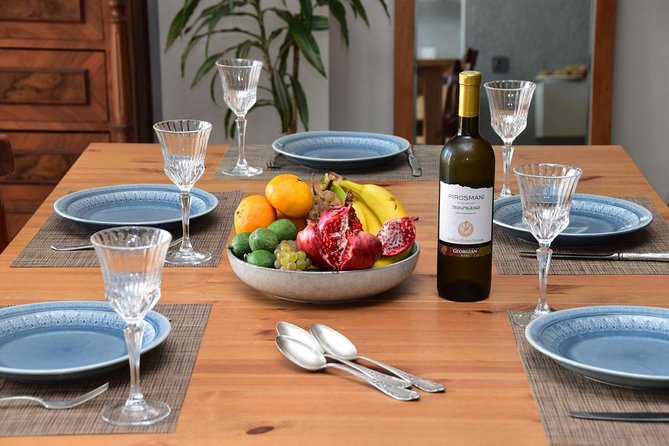
After cooking, you sit at the table for a family-style meal. This is an important part of the experience, not a quick taste at the end. You have spent time making the dishes, so eating them together gives the class a natural finish.
The meal can include the food you prepared, with the final menu depending on the dishes selected for your class. Dessert may be matsoni with honey and nuts. It is a simple ending, but it keeps the focus on Georgian ingredients and home cooking rather than a restaurant-style finale.
I like the shared table because it gives you time to talk with Dinara after the practical work is over. Cooking classes can feel rushed when everyone leaves as soon as the last pan is finished. Here, the meal creates room for conversation about Tbilisi, family traditions, and the city guide’s view of local culture.
Still, you should allow the full three and a half hours. This is not a short lesson squeezed between museum visits. If you have a fixed dinner reservation, airport transfer, or evening performance, leave plenty of space after the stated end time.
What the $148 price really buys you
At $148 per person, this is not a budget food activity. The price makes the most sense when you value privacy, instruction, and a home visit more than simply eating Georgian food at a restaurant.
You are paying for about three and a half hours, a private class, three dishes prepared from scratch, the meal afterward, and direct time with Dinara. The private format is especially important for a couple, family, or small group that wants personal attention. A lower-cost group class may offer similar recipes but less time for questions and less connection to one host’s family kitchen.
The value is weaker if your main goal is to sample as many foods as possible. A restaurant crawl would likely give you a broader menu and perhaps more dishes for less money. This experience earns its price through participation and access, not quantity alone.
Group discounts are available, which may improve the cost for a larger party. Since the activity is private, you also avoid sharing the kitchen with unrelated participants. For the right group, splitting the private experience can make the price easier to justify.
What the rating and feedback suggest
The overall rating is 4.2 from five reviews, a small sample that should be treated with care. One detailed five-star review called the experience a highlight of a Georgia trip, which points to the personal nature of the class and the impact of the home setting.
That same feedback described an earlier problem with Viator’s Help Center and praised Traveling Spoon for taking action to resolve the matter. This is useful practical information: if a booking problem appears, communication between the booking platform and the local food host can matter. It does not point to a problem with Dinara’s cooking session itself, but it does remind you to keep your confirmation details and contact information handy.
The review history is too limited to promise a perfect experience for every group. Still, the strongest praise centers on the host connection and the sense that the class became a major part of the trip, not just another meal.
Who will enjoy this class most
I would choose this experience for you if you like food with a story and prefer meeting one local host over moving through a large organized tour. It suits couples, families, and small groups who enjoy sitting down together after doing something practical.
It is also a good choice for people who want a gentler introduction to Georgian culture. You do not need to know Georgian cooking in advance. Dinara provides instruction, and the private format allows the class to move at your group’s pace.
Families may appreciate the home setting and the friendly dog, though the supplied details do not describe a special children’s program. If you are booking with children, ask about the menu and the amount of hands-on work before committing.
This is less suited to you if you want a quick activity, a central old-town meeting point, or a formal professional kitchen. It may also disappoint if you expect to cook every Georgian dish named in the description. The class covers three dishes, with the exact selection likely to depend on the plan for your visit.
Practical details before you book
The experience lasts approximately three hours and 30 minutes. About 2.5 hours are devoted to cooking, with the remaining time covering the welcome, meal, and conversation.
The meeting point is in Saburtalo, Tbilisi, and the activity ends at the same meeting point. You receive confirmation within 48 hours of booking, subject to availability. A mobile ticket is offered, and service animals are allowed.
Free cancellation is available if you cancel at least 24 hours before the local start time. Cancellations made less than 24 hours ahead are not refunded, and changes inside that window are not accepted. Keep the timing in mind, since a home-based private class needs a firm schedule.
The experience is private, but the supplied details do not give a maximum group size. If your party is larger than a small family or friend group, confirm the group arrangements before booking.
Should you book Dinara’s cooking class?
Book it if you want to cook, talk, and eat in a local home, and if $148 per person fits your budget. The strongest reasons to go are the private instruction, the three made-from-scratch dishes, Dinara’s experience as a guide and former café owner, and the chance to share the finished meal with her family.
Think twice if you want the cheapest way to taste Georgian food or if you need a tightly timed activity near central Tbilisi. Also confirm which three dishes you will prepare, especially if khinkali, khachapuri, or Shkmeruli is the main reason you are interested.
For a food-focused visit to Georgia, this is a personal, unhurried way to understand the cuisine. You leave with more than a meal: you have seen how the dishes come together and shared the table with the person who taught you.
FAQ
Where does the cooking class take place?
The class takes place at Dinara’s apartment in Saburtalo, Tbilisi. The activity ends back at the meeting point.
Who hosts the cooking class?
The host is Dinara, a Tbilisi city guide and former café owner. She shares the apartment with her husband, daughter, and friendly dog.
How long does the experience last?
The full experience lasts approximately three hours and 30 minutes. The hands-on cooking portion lasts about 2.5 hours.
How many dishes will I prepare?
You will learn to prepare three Georgian dishes from scratch. The exact dishes can vary.
Which Georgian dishes might be included?
Possible dishes include khachapuri, Georgian salad, khinkali, Shkmeruli, pkhali, and matsoni with honey and nuts.
Is the class private?
Yes. Only your group participates in the activity.
How much does the class cost?
The listed price is $148 per person. Group discounts are available.
Are service animals allowed?
Yes, service animals are allowed.
Can I cancel for a refund?
Yes. You can cancel for a full refund at least 24 hours before the experience’s start time. Cancellations made less than 24 hours before the start are not refunded.
More Workshops in Tbilisi
- Taste of Kakheti: Wine Tour Bread Baking & Churchkhela Workshop
★ 4.5 · 46 reviews - Join a Local for a Market Tour, Cooking Class and Meal in her Tbilisi Home
★ 5.0 · 15 reviews - Georgian Dance Class in Tbilisi, Georgia
★ 5.0 · 10 reviews - Taste of Georgia. Cooking-Class Khinkali, Khachapuri and more
★ 5.0 · 7 reviews
More food experiences in Tbilisi
- Private Tbilisi Food Tour: 9 Tastings Walk in Bohemian District
★ 5.0 · 227 reviews - Tbilisi Food Tour in a Local Family
★ 5.0 · 113 reviews - Private 4 days Food & Wine and Sightseeing tour to Kakheti, Kazbegi, Mtskheta.
★ 5.0 · 25 reviews - Tbilisi Private Food and Wine Tour with Lunch and Tastings
★ 5.0 · 6 reviews
Just added in Tbilisi
- Private Adorable City Tour of Tbilisi★ 5.0 · 3 reviews
- Tbilisi Airport to Gudauri, Bakuriani, Batumi, Tbilisi★ 5.0 · 3 reviews
- full day Kazbegi-Gudauri-jvari -from Tbilisi★ 5.0 · 6 reviews
- Old tbilisi walking tour & wine tasting★ 5.0 · 9 reviews
- Wine promenade in hospitable Tbilisi★ 5.0 · 17 reviews
- Vardzia. Lake Paravani, Khertvisi & Lomisa castle, Rabati★ 4.5 · 12 reviews
- Your unique photo session in Tblisi, Georgia★ 3.5 · 4 reviews
- Private Wine Tour In Kakheti Region with 7 Wines and Lunch★ 5.0 · 3 reviews
Cooking Classes, compared.

Small-Group Khinkali and Khachapuri Cooking Class in Tbilisi
Read our review →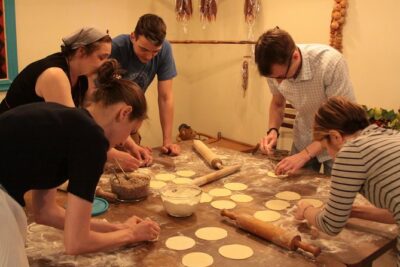
Cook True Ajarian Khachapuri and Khinkali in Highlanders Style
Read our review →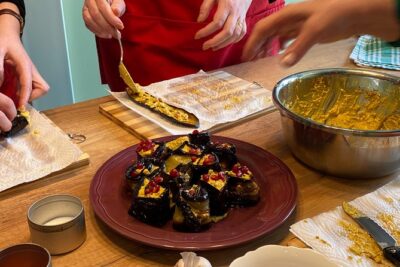
Nana’s Kitchen – traditional Georgian cooking class at real Georgian family home
Read our review →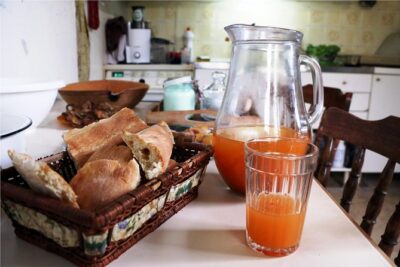
Join a Local for a Market Tour, Cooking Class and Meal in her Tbilisi Home
Read our review →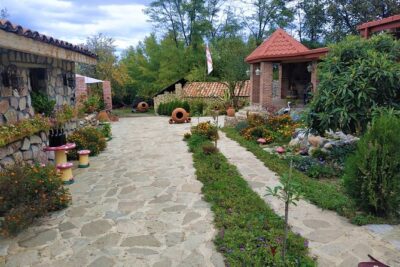
Kakheti Wine Tour with 20+ Wine Tastings & Qvevri Masterclass
Read our review →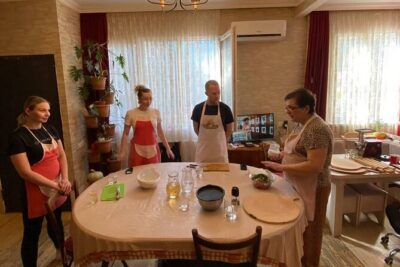
Taste of Georgia. Cooking-Class Khinkali, Khachapuri and more
Read our review →
Kazbegi Adventure – Private Day Trip From Tbilisi with a Dinner + Masterclass
Read our review →
Military Road Marvels: Ananuri, Kazbegi & Khinkali Masterclass
Read our review →Browse the lists this tour appears in