
Reviewed · COOKING CLASSES
Taste of Georgia. Cooking-Class Khinkali, Khachapuri and more
The best part of this Tbilisi class is that you do not just sit down to eat Georgian food. You learn to make two of the country’s signature dishes in a family kitchen, from soft dough to the final fold. The dumpling lesson is especially useful because khinkali can fall apart if you handle them poorly.
I like the small maximum of eight people, which gives the class a personal feel, and I like the chance to work with an English-speaking host such as Grisha. I also appreciate that you can request a variation such as Imeruli khachapuri when booking. The main drawback is the short two-hour schedule, so the class focuses on khinkali and khachapuri rather than offering a broad tour of Georgian cooking.
Key points to know before you book
- Khinkali is the first hands-on lesson: You learn to mix elastic dough, prepare a filling, protect the broth, and fold the dumplings so they hold together.
- Adjarian khachapuri follows: The lesson covers tender dough, melting cheese, and the familiar egg-yolk finish.
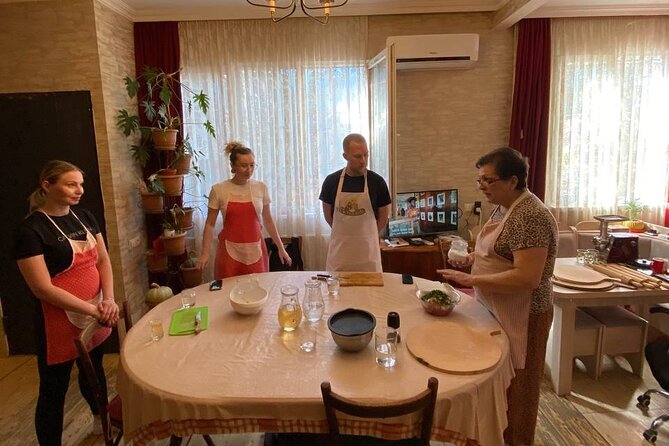
- A Georgian family setting shapes the experience: This is designed as a homely cooking session rather than a formal restaurant demonstration.
- The group is capped at eight people: That is a useful size for asking questions and getting help with shaping.
- Food and alcoholic drinks are included: You cook, taste homemade dishes, and eat lunch as part of the class.
- The class lasts about two hours: It fits neatly into a Tbilisi sightseeing day, but leaves little room for extra dishes.
Cooking two Georgian classics in one small class
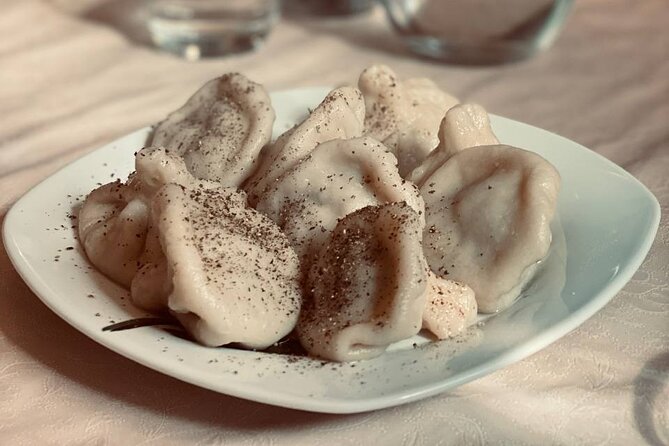
Georgian cuisine has many dishes, but khinkali and khachapuri give you a clear introduction to the country’s cooking style. One is a soup-filled dumpling that depends on careful dough work. The other is cheese baked inside bread, finished in the Adjarian style with egg yolk.
That contrast makes the class worthwhile. You learn both a delicate shaping technique and a more forgiving baked dish. By the end, you have worked with dough in two very different ways and can see why texture matters so much in Georgian food.
The session takes place at Georgian Cooking Classes Chakandrila8 on Merab Kostava Street in Tbilisi. The activity begins and ends at the same meeting point, and public transportation is nearby. You will need to arrange your own way there, since private transportation is not included.
The English-language format makes the instructions easier to follow, especially during the folding stages. The group maximum of eight is another practical advantage. Cooking classes can become frustrating when everyone crowds around one work surface, but this size should allow more direct help from the host.
A few more things to do in Tbilisi worth a look
- Small-Group Khinkali and Khachapuri Cooking Class in Tbilisi
★ 4.5 · 224 reviews - Cook True Ajarian Khachapuri and Khinkali in Highlanders Style
★ 5.0 · 93 reviews - Nana’s Kitchen – traditional Georgian cooking class at real Georgian family home
★ 5.0 · 37 reviews
Starting with khinkali dough and broth
Khinkali is often introduced as a Georgian dumpling, but that simple label misses the main challenge. The dumpling must hold a savory filling and its hot broth without tearing. You need firm but pliable dough, a well-balanced filling, and a secure top fold.
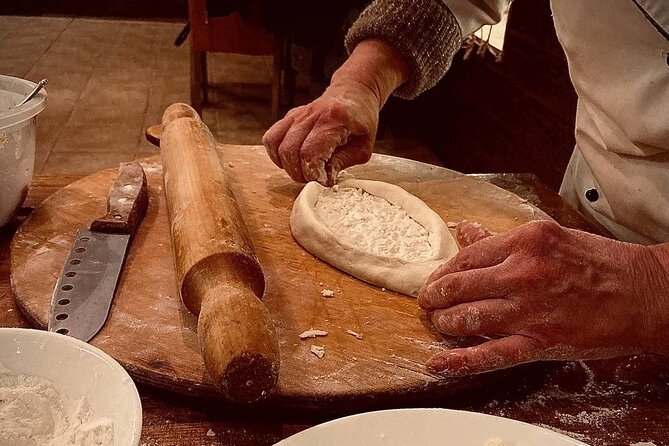
The first part of the class focuses on dough. You learn how to measure the ingredients and mix them until the dough becomes soft and elastic. This is the sort of instruction that helps later at home, because the dough texture affects everything that follows.
You then work on the filling. The menu allows for meat, cheese, or mushrooms in their sauce, so the exact version may depend on the class setup. The important point is the liquid inside. That broth is not an afterthought. It is one of the reasons khinkali must be handled and eaten with care.
The class also explains how to seal and turn the dumplings correctly. A poorly closed khinkali can split during cooking, sending the filling and broth into the pot. You will be shown how to shape the top so the dumpling keeps its form.
This is the most technical part of the session, and it is where a small class matters. You may need a few attempts before your folds look tidy. Do not worry about making restaurant-perfect dumplings on the first try. The useful skill is learning what the dough should feel like and how firmly to close it.
Eating khinkali the Georgian way
The finished khinkali is both a dish and a small piece of table technique. The broth inside is the reason you should not treat it like an ordinary boiled dumpling. You need to keep it intact until it reaches your plate.
The class is built around preparing and tasting the food you make. That gives the cooking lesson a clear payoff: you do not practice shapes only for display, then move on to a separate meal. You eat the homemade dishes as part of the experience, with alcoholic drinks included.
The exact serving style is not described in detail, so you should not expect a full restaurant menu or several courses beyond the listed dishes. This is a focused lunch master class. If you want a broad tasting of Georgian specialties, you may need a separate food tour or restaurant visit afterward.
Still, khinkali alone gives you a useful food memory to take home. Once you understand the dough, filling, broth, and fold, you can recognize the work behind the dish when you order it elsewhere in Georgia.
Moving on to Adjarian khachapuri
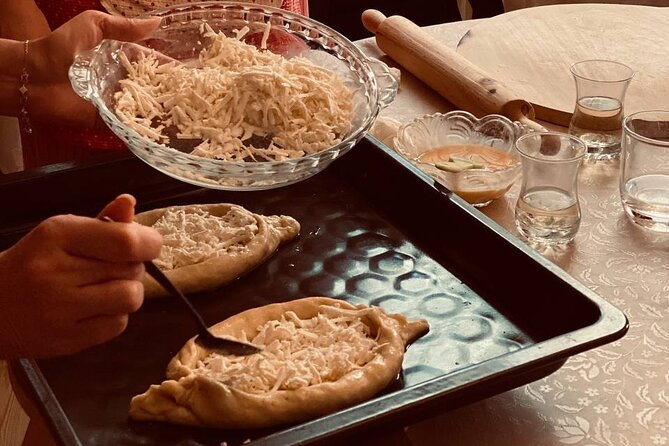
The second major dish is Adjarian khachapuri, the open cheese bread associated with Georgia’s Black Sea region. Its shape is part of the appeal: dough forms a boat around melted cheese, with egg yolk placed in the center.
Here, the focus shifts from dumpling structure to bread texture and cheese. You learn how to prepare a tender dough and which cheese produces the stretchy, melted result the dish needs. That detail is important. The cheese is not just a topping, and the wrong texture can make the finished bread heavy or dry.
The host also explains different ways to arrange the dish. This gives you some room to see how presentation and cooking affect the final result. The provided menu describes sticky cheese in dough with egg yolk, so you should expect the classic Adjarian combination rather than a long list of regional khachapuri styles.
A useful advantage of this lesson is that the bread is more approachable than khinkali. You are still working with dough, but there is less pressure to seal liquid inside a delicate package. The khachapuri section balances the trickier dumpling lesson and gives you another recipe to repeat at home.
The time limit matters here. A two-hour class must keep the pace moving, especially with two dough-based dishes. You will get the key methods, but not an exhaustive study of every khachapuri style or Georgian baking tradition.
Same base, a different sort of day:
- Day Trip to Kakheti Wine Region Including 9 Wine Tastings
★ 5.0 · 2,774 reviews - Highlights of Caucasus Mountains-Jinvali,Ananuri,Gudauri,Kazbegi(Group tour)
★ 5.0 · 2,682 reviews - Day Trip to Kazbegi and Gudauri
★ 5.0 · 2,009 reviews - Day Trip to Mtskheta Gori and Uplistsikhe
★ 5.0 · 1,801 reviews
A family kitchen rather than a staged food show
The setting is described as a cozy Georgian family home with experienced culinary hosts. That gives the class a more personal frame than a large cooking school with several dozen participants.
The family setting also fits the food. Khinkali and khachapuri are dishes meant to be shared, and learning them around a table makes sense. You are not only following a recipe. You are seeing how these foods fit into Georgian hospitality and everyday cooking.
The class may be hosted by a culinary technician, and Grisha is named as a table-side chef connected with the experience. If you are booking with friends, you can expect a social format in which cooking and conversation happen together. Communication before the class has been described as thorough, which is useful if you want to make a food request.
One such request was for Imeruli khachapuri, and it was accommodated. That does not guarantee every variation will be available on every date, but it is worth asking when you book. Imeruli khachapuri is a closed, cheese-filled style rather than the open Adjarian version, so the request could change the hands-on lesson slightly.
What the $98 price includes
At $98 per person, this is not the cheapest way to eat lunch in Tbilisi. Georgian restaurants offer generous food at much lower prices, so you should judge the cost by the instruction and setting, not by the meal alone.
The price includes the cooking master class, the homemade food you prepare and taste, and alcoholic beverages. It also buys you a small group format and an English-language lesson. For someone who wants a practical food memory and recipes to use later, that makes the cost easier to justify.
The value is strongest if you enjoy doing rather than watching. You will work on the dough, fillings, folds, and cheese mixture instead of simply hearing a chef explain them. It is also a good choice if you are traveling with friends and want one shared activity that ends with lunch.
The value is weaker if you mainly want a quick meal or a broad food tour. The class has about two hours, and the menu centers on two dishes. Private transportation is not included, so you also need to budget time and local transport to Merab Kostava Street.
Who will enjoy this class most
I would recommend this experience to visitors who want to understand how Georgian food is made, not just photograph it or order it from a menu. It suits curious cooks, couples, small groups of friends, and anyone who likes a social meal with a practical task attached.
It should also work well for first-time cooking-class participants. The reported experience of making a personal request and cooking with friends suggests the format can handle some flexibility. You do not need to arrive as an expert. The class is designed to teach the basic techniques from the start.
Families may want to confirm the arrangements directly before booking, since no age policy is provided. The same applies to dietary needs. Meat, cheese, and mushroom fillings are mentioned, but there is no stated information about vegetarian substitutions, allergies, or special diets.
You may want to skip it if you dislike dough work, want a long market visit, or prefer a formal restaurant meal. There is no market stop, sightseeing route, or private transportation listed. This is a short cooking appointment at one location.
Timing, meeting point, and booking advice
The activity begins and ends at Georgian Cooking Classes Chakandrila8, Merab Kostava Street, Tbilisi. Since public transportation is nearby, you can make your own way to the meeting point, but private transfers are not part of the package.
Allow enough time to reach the address without rushing. The session lasts about two hours, and the cooking itself is the main event from beginning to end. Arriving late could mean missing the dough instructions, which are the foundation for both recipes.
The class is offered in English and is limited to a maximum of eight people. Confirmation is provided when you book. If you want Imeruli khachapuri or another adjustment, place the request during booking and wait for confirmation rather than assuming it will be available.
The cancellation terms are friendly but firm. You can receive a full refund if you cancel at least 24 hours before the local start time. A cancellation or change made inside that window is not accepted for a refund.
How this fits into a Tbilisi visit
This class works best as a compact food activity between other plans. Since it returns to the starting point and takes about two hours, it does not require giving up an entire day in Tbilisi.
You can use it as a break from churches, museums, and city walks, but keep your schedule realistic. The experience is not a sightseeing tour, and no transport between attractions is included. Its reward is the meal and the technique, not a series of city views.
I especially like the way the menu gives you two different challenges. Khinkali teaches control, sealing, and broth. Adjarian khachapuri teaches bread shaping, cheese choice, and the final egg-yolk finish. Together, they offer a better introduction than a class that only demonstrates one simple recipe.
The small group and family setting are the strongest reasons to choose this activity over a large cooking demonstration. You have a better chance to ask about dough texture, request help with a fold, and discuss changes to the recipe. The tradeoff is the narrow focus and short schedule.
Should you book Taste of Georgia?
Book it if you want an intimate, hands-on introduction to Georgian cooking and you are happy to spend $98 on instruction, food, and drinks rather than on lunch alone. The class is especially appealing for friends, first-time cooking students, and anyone who wants to recreate khinkali or khachapuri after returning home.
Think twice if you want a cheap meal, extensive sightseeing, or a full survey of Georgian cuisine. You will make two important dishes in roughly two hours, not sample every regional specialty.
For the best fit, request any preferred variation when booking, arrive at the Merab Kostava Street meeting point on time, and treat the class as a social cooking session. That is where the experience offers its clearest value.
FAQ
Where does the cooking class take place?
The class begins and ends at Georgian Cooking Classes Chakandrila8, Merab Kostava Street, Tbilisi, Georgia.
How long does the experience last?
The cooking class lasts approximately two hours.
Which dishes will I learn to make?
You will learn to prepare Georgian khinkali and Adjarian khachapuri.
Is the class offered in English?
Yes. The experience is offered in English.
How many people can join the class?
The activity has a maximum of eight participants.
Are food and drinks included?
Yes. The package includes the cooking master class, tasting of homemade dishes, lunch, and alcoholic beverages.
Is transportation included?
No. Private transportation is not included. The meeting point is near public transportation.
Can I cancel for a full refund?
Yes. You can cancel at least 24 hours before the experience start time for a full refund. Cancellations made less than 24 hours in advance are not refunded.
Just added in Tbilisi
- Private Adorable City Tour of Tbilisi★ 5.0 · 3 reviews
- Tbilisi Airport to Gudauri, Bakuriani, Batumi, Tbilisi★ 5.0 · 3 reviews
- full day Kazbegi-Gudauri-jvari -from Tbilisi★ 5.0 · 6 reviews
- Old tbilisi walking tour & wine tasting★ 5.0 · 9 reviews
- Vardzia. Lake Paravani, Khertvisi & Lomisa castle, Rabati★ 4.5 · 12 reviews
- Your unique photo session in Tblisi, Georgia★ 3.5 · 4 reviews
- Wine promenade in hospitable Tbilisi★ 5.0 · 17 reviews
- Private Wine Tour In Kakheti Region with 7 Wines and Lunch★ 5.0 · 3 reviews
Cooking Classes, compared.
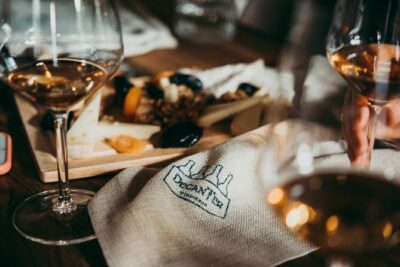
Small-Group Khinkali and Khachapuri Cooking Class in Tbilisi
Read our review →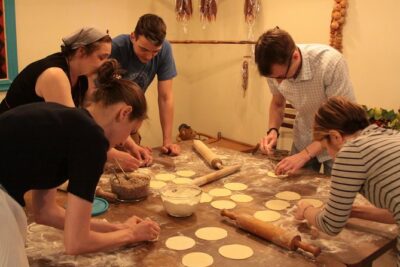
Cook True Ajarian Khachapuri and Khinkali in Highlanders Style
Read our review →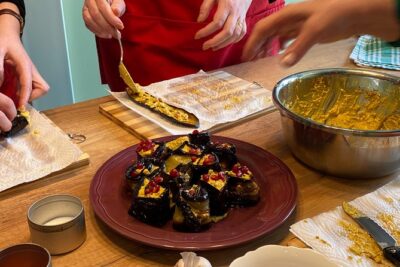
Nana’s Kitchen – traditional Georgian cooking class at real Georgian family home
Read our review →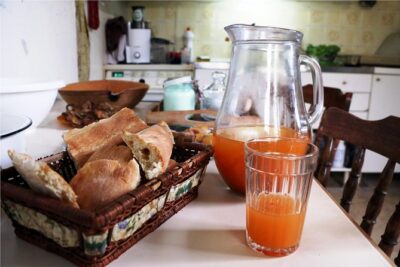
Join a Local for a Market Tour, Cooking Class and Meal in her Tbilisi Home
Read our review →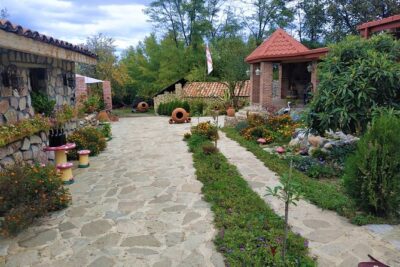
Kakheti Wine Tour with 20+ Wine Tastings & Qvevri Masterclass
Read our review →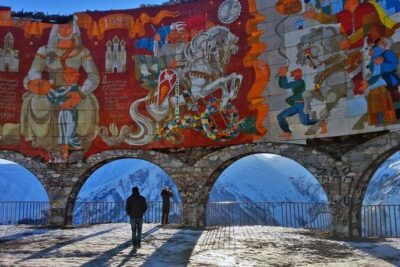
Kazbegi Adventure – Private Day Trip From Tbilisi with a Dinner + Masterclass
Read our review →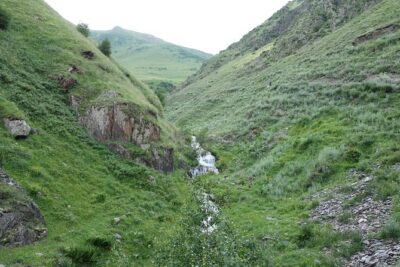
Military Road Marvels: Ananuri, Kazbegi & Khinkali Masterclass
Read our review →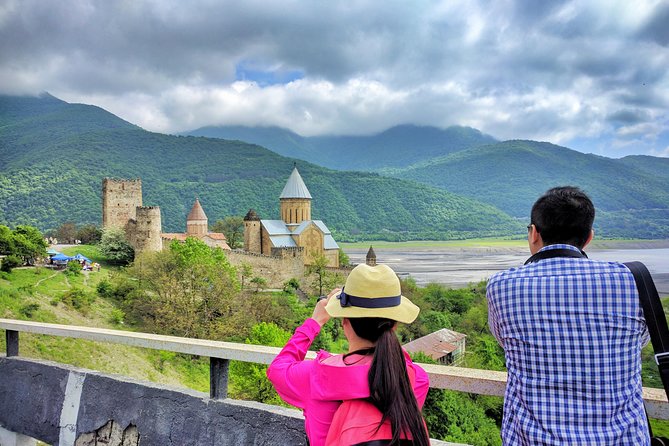
Kazbegi and Khinkali – the ultimate mountain experience tour
Read our review →Browse the lists this tour appears in