
Reviewed · COOKING CLASSES
Enjoy a Traditional Georgian Cooking Class and Meal with a Local in Tbilisi
The best part of this Tbilisi experience is simple: you enter Tina and Teo’s family home, cook in their kitchen, and sit down to eat what you helped prepare. This is less a formal lesson than a warm visit with a Georgian family, with food providing the common language.
I like the hands-on format, since you do not just watch someone fold dumplings or stir a stew. I also like the western Georgian touch, with dishes connected to Lechkhumi and Samegrelo, along with local wine, chacha, and churchkhela.
The main consideration is the price, $152 per person for about three hours. That is a serious sum for a meal in Tbilisi, so this makes the most sense if you value a private home visit and personal contact more than a bargain cooking demonstration.
Key points to know before you book
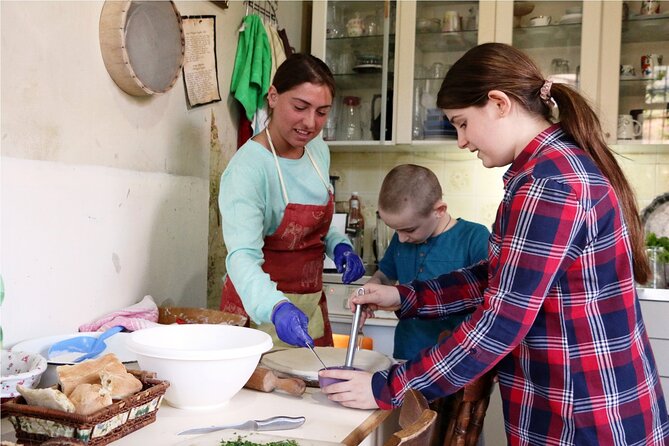
- You cook in a real family kitchen: Tina, Teo, or another family member guides you through two or three Georgian dishes.
- The meal reflects western Georgia: Expect possible specialties such as chakhokhbili, khachapuri, khinkali, salad, and churchkhela.
- The welcome is a major part of the experience: Tina lives with her husband and six children, creating a busy, informal home setting.
- A market visit may be included: Teo has taken participants to a local market to explain cheeses, herbs, and Georgian sweets.
- Lunch or dinner is available: You can choose the time that fits your Tbilisi plans.
- It is private: Only your own group takes part, which suits couples, families, and friends who want relaxed conversation.
Entering Tina and Teo’s Tbilisi home
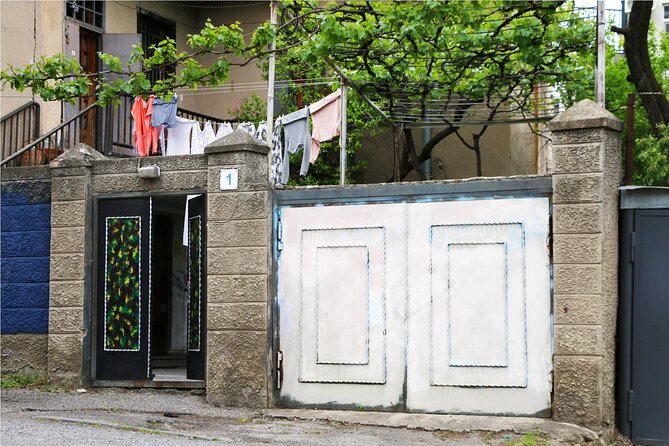
This experience begins in Tbilisi and ends back at the meeting point. Hotel pickup is not included, so you need to make your own way there. The home is near public transportation, which helps, but you should allow time to reach the starting point without rushing.
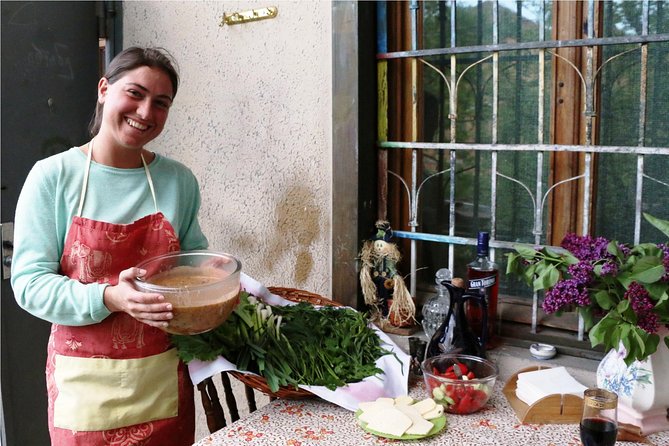
You may be welcomed by Tina, her daughter Teo, and other family members who happen to be around. The household includes Tina’s parents and six siblings, so this is not a staged restaurant setting with a polished front-of-house routine. It is a family home, and the mood can feel lively, personal, and a little unpredictable in the best way.
That setting matters. Georgian food is closely tied to family life, hospitality, and long meals shared around a table. Here, you see that connection directly instead of receiving a short cooking lesson in a commercial studio.
The experience is private, but private does not mean silent or formal. You are visiting a family, not renting a kitchen. If you enjoy conversation, curiosity, and a home that feels lived in, this arrangement can be a strong match. If you prefer a tightly scheduled class with professional workstations and exact quantities, you may find the format less controlled.
A few more things to do in Tbilisi worth a look
- Small-Group Khinkali and Khachapuri Cooking Class in Tbilisi
★ 4.5 · 224 reviews - Cook True Ajarian Khachapuri and Khinkali in Highlanders Style
★ 5.0 · 93 reviews - Nana’s Kitchen – traditional Georgian cooking class at real Georgian family home
★ 5.0 · 37 reviews
Cooking two or three Georgian dishes
Tina provides a hands-on lesson in her kitchen. The exact recipes depend on the season and the available ingredients, so you should not book expecting one fixed menu. You will learn two or three Georgian dishes, then eat the food together at the family dining table.
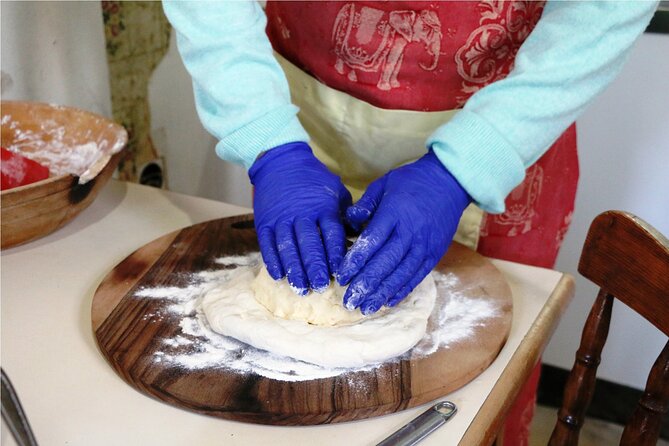
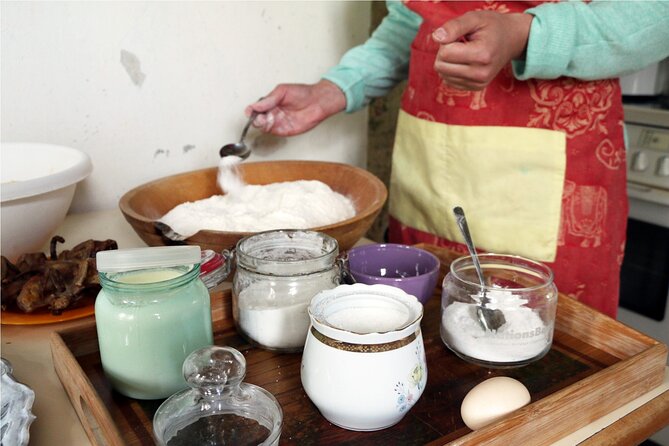
The cooking is the heart of the activity. You are expected to participate, not simply stand nearby while the host does all the work. That can mean preparing ingredients, helping shape dough, or taking part in other basic kitchen tasks, depending on the menu that day.
One possible dish is khachapuri, Georgia’s famous cheese-filled bread. It is a useful introduction to the country’s love of bread, cheese, and food made for sharing. Khinkali, the large Georgian dumpling, may also appear. These dumplings are a fun choice for a class because shaping them takes more than simply placing food in a pot.
Chakhokhbili, a chicken stew with fresh herbs, offers a different lesson. It shows how Georgian cooking can build flavor from poultry, herbs, and a slow-cooked sauce rather than relying on complicated equipment.
You may also help with a fresh tomato and cucumber salad. It sounds basic, but a simple salad gives the meal freshness alongside bread, dumplings, and stew. The menu can vary, so treat these dishes as examples rather than a promise.
One practical tip is to tell the host about allergies, dietary restrictions, or cooking preferences when you book. The menu changes with the season, and advance notice gives the family a chance to plan around your needs.
A possible stop at a local market
The core description centers on the home cooking class, but the experience can also include a visit to a local market. Teo has accompanied participants through the market, explaining the differences between local cheeses, fresh herbs, and sweets.
This is a useful addition because Georgian food can be hard to understand from a restaurant menu alone. At a market, you can see the ingredients before they reach the kitchen. Cheese is not just cheese, herbs are not just decoration, and sweets carry their own traditions.
The market portion should be treated as a possible part of the visit, not a guaranteed stop. The stated activity lasts about three hours, so the exact balance between shopping, cooking, and dining may depend on the day and the chosen lunch or dinner time.
If the market is included, pay attention to how Teo explains the ingredients. That kind of context helps you recognize foods later during your time in Georgia. It also gives you more to talk about once you return to the house.
Western Georgian flavors at the family table
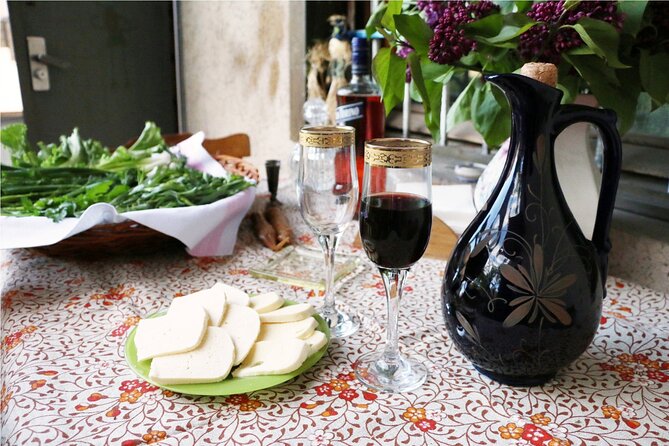
The meal draws on the Lechkhumi and Samegrelo regions, where Tina’s parents grew up. These areas in western Georgia have their own food traditions, and that regional link gives the meal more character than a generic selection of famous Georgian dishes.
You may taste a spread that includes tomato and cucumber salad, chakhokhbili, khachapuri, khinkali, and other family foods. The point is not to sample every dish in Georgian cooking. It is to eat the kind of food a local family might prepare and to understand how several dishes work together at one table.
The family serves the meal after the cooking session. That transition is important. You do not rush out after the final recipe. You sit down with Tina and share the result, turning the class into a social meal.
Local alcohol is included, usually one or two glasses. You may be offered wine and chacha, the Georgian grape spirit. Non-alcoholic drinks are also included, so you do not need to drink alcohol to take part comfortably.
The meal ends with churchkhela or another sweet. Churchkhela is made by repeatedly dipping a string of nuts into tatara, a mixture of flour, sugar, and concentrated grape juice, also called badagi. Dry fruits may be used as well. Its unusual shape and chewy texture make it a memorable finish, and it gives you one more example of how Georgian food uses grapes beyond wine.
Same base, a different sort of day:
- Day Trip to Kakheti Wine Region Including 9 Wine Tastings
★ 5.0 · 2,774 reviews - Highlights of Caucasus Mountains-Jinvali,Ananuri,Gudauri,Kazbegi(Group tour)
★ 5.0 · 2,682 reviews - Day Trip to Kazbegi and Gudauri
★ 5.0 · 2,009 reviews - Day Trip to Mtskheta Gori and Uplistsikhe
★ 5.0 · 1,801 reviews
What the three-hour schedule feels like
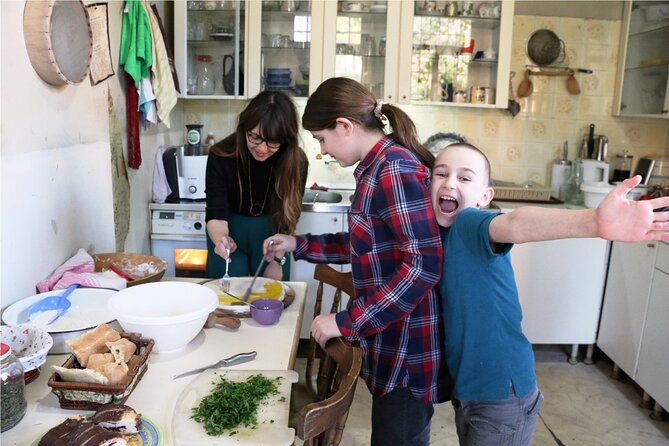
The experience lasts about three hours, with lunch and dinner options. That is enough time for a proper visit, but not so long that it takes over your full day in Tbilisi.
A typical flow may look like this:
- You meet the host in Tbilisi and are welcomed into the family home.
- You may visit a local market with Teo, depending on the arrangement.
- Tina or Teo explains the dishes and ingredients.
- You cook two or three Georgian recipes with guidance.
- You sit at the dining table and eat the meal together.
- You finish with a traditional sweet and included drinks.
The schedule is likely to feel relaxed rather than sharply timed. That is part of the appeal, but it also means you should not expect a minute-by-minute class. Conversation, family activity, and the pace of the kitchen all shape the visit.
Lunch works well if you want to use the evening for Tbilisi sightseeing. A dinner class may suit you better if you want the cooking visit to become the social highlight of your night. Since both options are offered, choose based on your wider plans rather than assuming one time is better.
The value of $152 per person
At $152 per person, this is not a cheap way to get fed. Tbilisi has many affordable meals, and you can sample Georgian classics for far less at a restaurant.
The value here comes from several things bundled together: a private class, a home visit, personal instruction, a shared meal, local alcohol, non-alcoholic drinks, taxes, and gratuities. You are paying for access to a family setting and for time with your hosts, not only for the food on the plate.
For a couple or small private group, that can make sense. You receive direct attention instead of sharing a demonstration with a large class. You can ask questions, work at your own pace, and spend the meal talking with the family.
Group discounts are available, which may improve the price for a larger party. Since the activity is private, it may be especially good for friends or relatives who want one shared event during a Tbilisi visit.
Still, you should be clear about what you are buying. This is not a professional culinary certification course. It is not built around advanced knife skills, a long recipe booklet, or a chef-led restaurant production line. Its value is human contact, local food, and the feeling of being welcomed into a Georgian home.
The family welcome is the real attraction
The strongest reason to choose this activity is the family connection. The visit is hosted by Tina, with her daughter Teo involved in welcoming and guiding people. Other children may be around, and the home includes a large family household.
That can make the experience feel generous and genuine. You are not just learning how to make khinkali. You are seeing how food fits into a Georgian family setting, where cooking, conversation, and hospitality overlap.
The warmth begins before the first recipe. You may be offered cheeses, wine, or chacha while the cooking gets underway. The drinks and snacks help the visit feel like an invitation rather than a class where everyone watches the clock.
This style will suit you if you like meeting people and asking questions. It may be less suitable if you want privacy within your own group and little interaction with the hosts. The activity is private from a booking standpoint, but it is designed around contact with Tina and Teo.
Who should book this experience
I would recommend it most strongly to:
- Couples looking for a personal evening in Tbilisi
- Families who enjoy cooking together
- Friends who want a shared meal rather than another restaurant
- First-time visitors who want food context from a local family
- People interested in western Georgian cooking
- Anyone who prefers small, personal activities to large group tours
It is also a good choice for people who have already seen Tbilisi’s main sights and want a slower, more social activity. Cooking gives you a reason to talk, and the meal gives the visit a natural ending.
You may want to skip it if your main goal is low cost, a strict timetable, or advanced culinary training. You should also check the arrangement carefully if someone in your group has serious dietary restrictions, then share those details at booking.
Booking, cancellations, and practical details
You receive confirmation when you book, and the experience is available with a mobile ticket. The meeting point is in Tbilisi, and the activity ends back there. Hotel pickup and drop-off are not included.
The tour has a full refund policy if you cancel at least two full days before the local start time. Cancellations made within two days are not refunded, and changes in that period are not accepted. This is worth noting because the experience is arranged around a private home and a planned meal.
The overall rating is 4.7 from three reviews, so the sample is small. The clearest strengths are the welcoming family, the chance to cook with Tina and Teo, the food, and the personal atmosphere. Keep that small sample in mind, but the details of the experience point to a consistent style: warm, informal, and centered on sharing food.
Should you book Tina and Teo’s cooking class?
Book this if you want a personal Georgian food experience more than a bargain meal. The home setting, western Georgian recipes, market option, and family table give you a side of Tbilisi that a restaurant cannot provide.
At $152, the cost is high for three hours, but the private format and included meal, drinks, instruction, taxes, and gratuities explain where the money goes. I would choose it for a special evening, a couple’s activity, or a small group that values conversation and local hospitality.
If you prefer a polished cooking studio, fixed recipes, or the lowest possible price, spend your money elsewhere. If you want to make khachapuri or khinkali with a Georgian family, then sit down for wine, chacha, and churchkhela, this is a strong pick.
FAQ
Where does the Georgian cooking class take place?
The activity takes place in Tbilisi, in Tina’s family home. The meeting point and ending point are both in Tbilisi.
How long does the experience last?
The cooking class and meal last about three hours.
Is the class offered at lunchtime or dinner?
Yes. You can choose a lunch or dinner class.
How many dishes will I learn to cook?
You will learn to prepare two or three typical Georgian dishes. The exact menu may change with the season.
What food might be served?
Possible dishes include tomato and cucumber salad, chakhokhbili, khachapuri, and khinkali. The meal may finish with churchkhela or another traditional sweet.
Are drinks included?
Yes. Local alcohol, usually one or two glasses, and non-alcoholic beverages are included.
Is this a private activity?
Yes. Only your group will participate. Hotel pickup and drop-off are not included.
Just added in Tbilisi
- Private Adorable City Tour of Tbilisi★ 5.0 · 3 reviews
- Tbilisi Airport to Gudauri, Bakuriani, Batumi, Tbilisi★ 5.0 · 3 reviews
- full day Kazbegi-Gudauri-jvari -from Tbilisi★ 5.0 · 6 reviews
- Old tbilisi walking tour & wine tasting★ 5.0 · 9 reviews
- Wine promenade in hospitable Tbilisi★ 5.0 · 17 reviews
- Vardzia. Lake Paravani, Khertvisi & Lomisa castle, Rabati★ 4.5 · 12 reviews
- Your unique photo session in Tblisi, Georgia★ 3.5 · 4 reviews
- Wine Tasting in Tbilisi★ 5.0 · 8 reviews
Cooking Classes, compared.

Small-Group Khinkali and Khachapuri Cooking Class in Tbilisi
Read our review →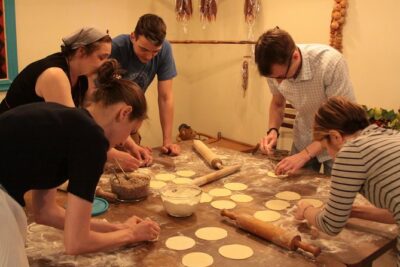
Cook True Ajarian Khachapuri and Khinkali in Highlanders Style
Read our review →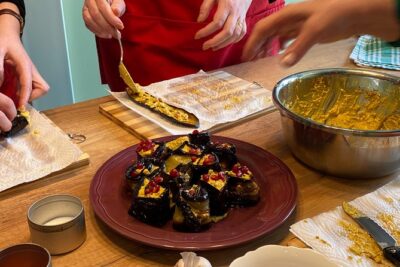
Nana’s Kitchen – traditional Georgian cooking class at real Georgian family home
Read our review →
Join a Local for a Market Tour, Cooking Class and Meal in her Tbilisi Home
Read our review →
Kakheti Wine Tour with 20+ Wine Tastings & Qvevri Masterclass
Read our review →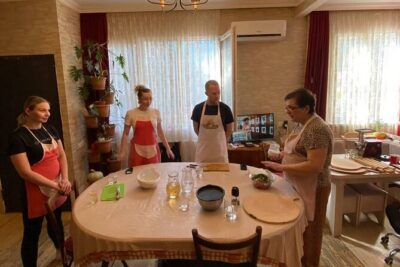
Taste of Georgia. Cooking-Class Khinkali, Khachapuri and more
Read our review →
Kazbegi Adventure – Private Day Trip From Tbilisi with a Dinner + Masterclass
Read our review →
Military Road Marvels: Ananuri, Kazbegi & Khinkali Masterclass
Read our review →Browse the lists this tour appears in