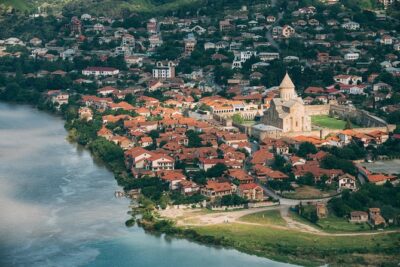
Reviewed · TOURS IN TBILISI
Half-Day Famous Georgian Supra Feast
A Georgian supra is not simply dinner. It is a lesson in how food, wine, stories, toasts, music, and hospitality fit together. This four-hour experience combines a walk through Old Tbilisi with a family meal, cooking class, homemade drinks, folk dancing, and Georgian polyphony.
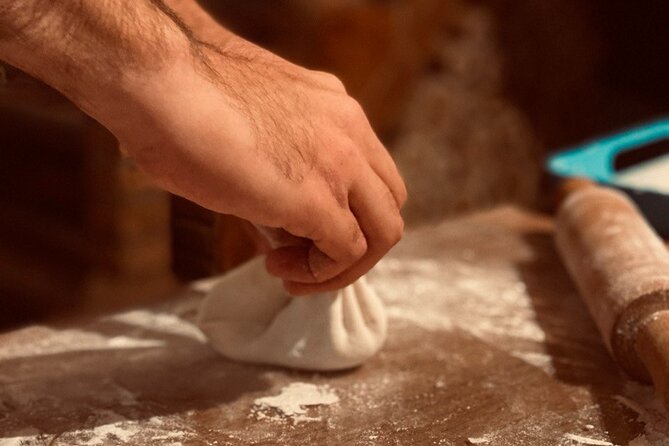
I like the hands-on cooking class, especially because khinkali and Adjarian khachapuri are dishes you can recognize later on a Georgian menu. I also like the small maximum of eight people, private transport, and the chance to learn from a hereditary winemaking family rather than eat in a standard restaurant.
The main thing to consider is language. The experience is offered in English, but one evening was conducted mainly in Russian because most of the group spoke Russian, with only limited English translation. Ask about the language arrangements before booking if clear commentary matters to you.
Key points at a glance
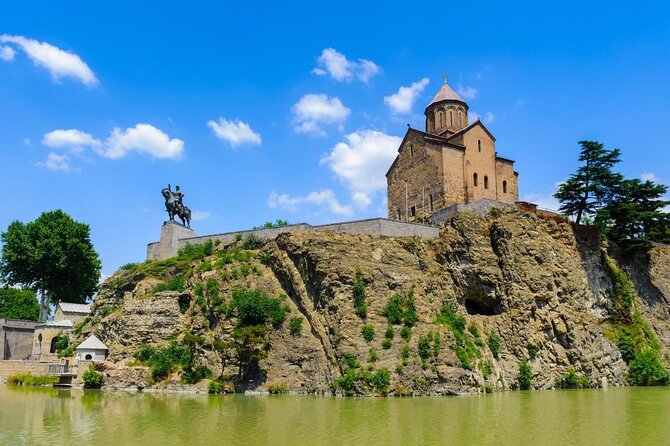
- Old Tbilisi comes first: You walk from Meidan Bazaar toward Metekhi Cathedral, Rike Park, and the Holy Trinity Cathedral while hearing about local customs, legends, and history.
- The cooking class is practical: You help prepare khinkali and khachapuri before the meal begins.
- The supra is the main event: Expect Georgian salad, pickles, aubergine, khinkali, Adjarian khachapuri, mtsvadi, cheese, and churchkhela.
- Drinks are included: Homemade wine, chacha, coffee, and tea are part of the experience.
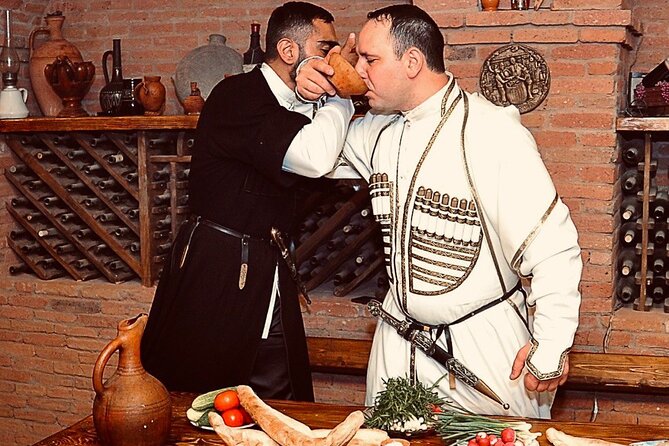
- Culture continues after dinner: You learn toast customs, see how to drink from a horn, try basic Georgian dance movements, and hear Georgian polyphony.
- Small-group value: The price is $150 per person, with private transport and a maximum of eight people included.
Why this is more than a Georgian dinner
The word supra refers to a Georgian feast, but the meal has its own social rules. A tamada, or toastmaster, guides the evening with a sequence of toasts. The food arrives in generous waves, people raise glasses together, and the meal becomes a shared social event rather than a quick stop between sights.
That makes this experience useful for you if you want context, not just a plate of khinkali. You get an explanation of how the feast works, when to drink, and why the toastmaster matters. You also learn about the drinking horn, a traditional object that gives the meal a ceremonial touch.
The experience starts at 5:30 pm and lasts about four hours. That timing works well in Tbilisi. You use the afternoon for sightseeing, then move into an evening of food and entertainment without giving up a full day.
The price is $150 per person, which is not cheap for a meal in Georgia. The value comes from the combination: a guided Old Tbilisi walk, private transportation, a cooking lesson, dinner, alcoholic drinks, cultural instruction, music, and dance. If you only want a filling local meal, you can spend much less elsewhere. If you want a structured introduction to Georgian hospitality, the package makes more sense.
A few more things to do in Tbilisi worth a look
- Half-Day Food Tour of Tbilisi Dezerter’s Bazaar
★ 5.0 · 4 reviews
Old Tbilisi from Meidan Bazaar to Rike Park
The walking portion begins at the I Love Tbilisi sign, identified by the location code MRQ5+WG9. From there, the route includes Meidan Bazaar, Metekhi Cathedral, Rike Park, and Tbilisi Holy Trinity Cathedral.
Meidan Bazaar is a natural starting point for a first look at old Tbilisi. Its location puts you close to the historic center and gives the guide a place to explain local customs before the evening shifts toward food and wine. The guide talks about Georgian history, legends, and traditions during the walk, so this section provides cultural framing for the feast to come.
Metekhi Cathedral adds a religious and scenic stop. Rike Park gives the route a more open urban setting before the group continues to the Holy Trinity Cathedral. These stops are not presented as long museum visits. Think of them as a compact orientation walk, with the guide pointing out major sights and explaining their place in Tbilisi.
That distinction matters. If you want a detailed architectural tour with long interior visits, this is not the right format. The walk is designed to introduce the capital and lead you into the family-hosted meal. Wear comfortable shoes, since the experience begins on foot before private transport takes you onward.
Visiting the hereditary winemakers
After the city walk, you visit a Georgian family known for winemaking and cooking. The description places importance on the welcome, and the evening is meant to feel like a visit to friends rather than a restaurant booking.
That family setting is one of the strongest reasons to choose this experience. You are not only tasting Georgian food. You are seeing how food, wine, family hospitality, and ceremony work together in a domestic setting.
While the hosts prepare for the cooking class, you can look around the property and take photographs. The location is described as having especially fine views, so bring your camera and leave a little time for pictures before sitting down. The views are part of the appeal, but the exact setting and view are not specified, so do not book this solely for a particular panorama.
The group size helps here. With a maximum of eight people, the cooking lesson and meal should feel more personal than a large banquet show. Small groups also make it easier to ask questions, join the toasts, and take part in the dancing later.
Making khinkali and khachapuri
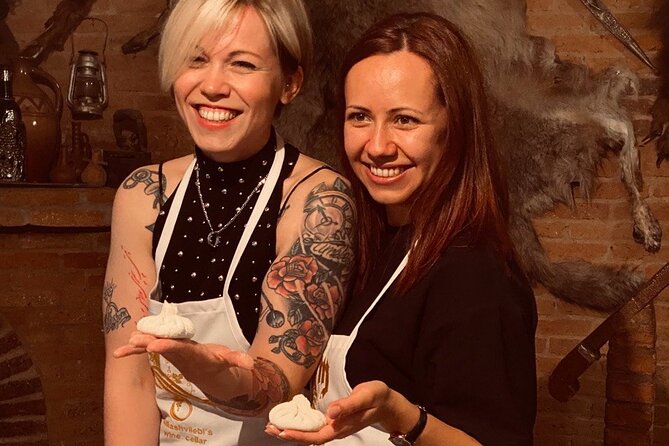
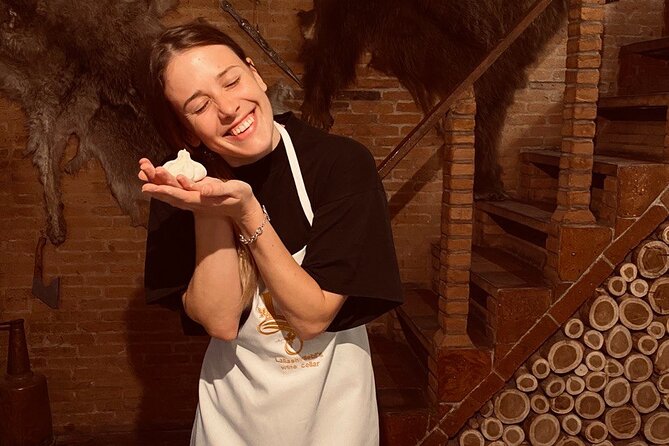
The cooking class focuses on two Georgian essentials: khinkali and khachapuri.
Khinkali are the familiar Georgian dumplings, filled here with meat, mushrooms, or cheese. The class gives you a chance to see how they are made instead of treating them as a dish that simply arrives at the table. That is useful later in your trip, since khinkali appear widely on Georgian menus.
Khachapuri is Georgian cheese bread, and this meal includes the Adjarian style. It is made with dough, cheese, and egg and served hot. The cooking lesson helps you understand why the dish is so filling and why it is best eaten fresh.
This is a participation-focused lesson, but the supplied details do not state how much time you spend cooking or exactly how much of each dish you prepare. Keep your expectations sensible. You are joining a family meal with a cooking demonstration and hands-on work, not signing up for a full professional cooking course.
The class is still a smart part of the package. Food becomes easier to remember when you have folded a dumpling or helped prepare the dough yourself. It also gives you something to do before the main meal, rather than asking you to sit and wait for a long dinner service.
Same base, a different sort of day:
- Day Trip to Kakheti Wine Region Including 9 Wine Tastings
★ 5.0 · 2,774 reviews - Highlights of Caucasus Mountains-Jinvali,Ananuri,Gudauri,Kazbegi(Group tour)
★ 5.0 · 2,682 reviews - Day Trip to Kazbegi and Gudauri
★ 5.0 · 2,009 reviews - Day Trip to Mtskheta Gori and Uplistsikhe
★ 5.0 · 1,801 reviews
What arrives at the supra table
The menu is generous and covers many of the flavors you want to sample in Georgia.
You begin with a Georgian salad of cucumbers, tomatoes, and herbs. Pickles follow, including cucumbers, tomatoes, sauerkraut, and Colchis klekachka. These sharper items help balance the heavier dishes that come later.
The hot food includes aubergine, khinkali with a choice of meat, mushrooms, or cheese, and Adjarian khachapuri. The main course is Georgian shashlik, known as mtsvadi, with meat cooked on skewers over coals.
Dessert is simple and local: Imeretian cheese and churchkhela. Churchkhela is made from grape juice and walnuts, creating a chewy sweet that looks rather like a candle. It is a good reminder that Georgian food is not limited to dumplings and cheese bread.
The menu has enough variety to make the meal feel like a feast, not a single-course cooking activity. It also includes several dishes that can be difficult to judge from a menu alone. You taste the contrast between fresh salad, pickled vegetables, grilled meat, hot bread, filled dumplings, cheese, and a grape-and-walnut sweet in one sitting.
Dietary information is not provided, so contact the provider before booking if you have allergies or strict food requirements. The menu includes meat, dairy, wheat, eggs, nuts, and alcohol.
Wine, chacha, and the rules of the toast
Dinner includes alcoholic beverages, along with coffee and tea. The experience specifically includes homemade wine and chacha, Georgia’s well-known grape spirit.
The drinks are not an extra add-on to the meal. They are part of the lesson in Georgian feast customs. You learn about the order of toasts and how to drink from a horn, under the guidance of the tamada or toastmaster.
The evening can be lively, and one account describes the wine as unlimited. Still, the formal inclusion states alcoholic beverages rather than giving a precise quantity or service policy. If you do not drink alcohol, coffee and tea are included, but the exact nonalcoholic arrangements are not detailed.
Pace yourself. A supra can involve repeated toasts, and chacha is much stronger than wine. You can take part in the cultural side without treating every toast as a challenge. The point is conversation and ceremony, not proving how much you can drink.
Georgian dance and polyphonic singing
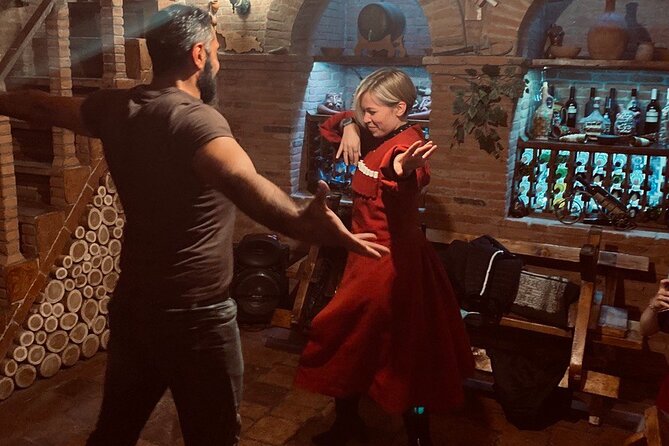
After the food and toasts, the cultural program continues with dancing and singing. You learn basic Georgian dance movements with professional dancers, accompanied by folk music.
This is a good fit for people who prefer active entertainment to a performance where you only watch. You do not need to arrive as a dancer. The stated focus is on basic movements, so the activity is intended for participation at an introductory level.
You also hear Georgian polyphony. Georgian polyphonic singing is listed as part of UNESCO’s cultural heritage, and hearing it in the same evening as a supra gives the meal a stronger cultural setting. The combination of food, toasts, dance, and song helps explain why the supra is a social tradition rather than a formal dinner course.
The exact length of the dance and music portion is not given. It is best to see it as part of the evening’s flow, not as a separate concert with a published program.
Language, transport, and group size

The experience is offered in English, and private transportation is included. Private transport matters because the evening moves from central Tbilisi to a family property and then returns to the original meeting point. You do not need to arrange a taxi between the walk and dinner.
There is one important language caution. On one occasion, the group included 11 Russian-speaking people and only a few Georgian speakers, so much of the event was conducted in Russian with limited translation into English. An excellent English translator was arranged on another occasion, but the name of the translator is not provided and language arrangements may depend on the group.
For a fully English-speaking evening, confirm this point with Georgian Promenade before booking. This is especially important because the toast explanations and cultural stories are central to the experience. Food and dance can still be enjoyed without every word, but the educational side loses value if translation is thin.
The maximum group size is eight people according to the booking details, although the language account describes a larger Russian-speaking group. That difference is worth clarifying before you pay. The smaller stated group limit is a clear advantage if it applies to your date.
The tour begins and ends at the I Love Tbilisi sign. Service animals are allowed, and the meeting point is near public transportation. Confirmation is sent at booking. Free cancellation is available up to 24 hours before the 5:30 pm start time, while cancellations or changes inside that window are not accepted.
Who will get the most from this evening
I would recommend this experience to you if you are visiting Tbilisi for the first time and want food to explain the culture, not just fill your stomach. It suits couples, friends, and solo visitors who enjoy joining a small shared table.
It is also a good choice if you want an evening with several layers: sightseeing, cooking, dinner, wine, toasts, dance, and singing. The international social side can be a plus, since the toastmaster is expected to help people connect around the table.
Families should check the alcohol and evening format before booking. The event is built around wine, chacha, repeated toasts, and adult dinner customs. The activity allows service animals, but no other specific accessibility details are supplied.
You may want a different experience if you dislike group participation, prefer a quiet restaurant meal, or need a guaranteed English-only program. You should also compare the $150 cost with your priorities. The price buys a full cultural evening, but it is not the economical way to eat Georgian food.
Should you book the Famous Georgian Supra Feast?
Book it if you want an active introduction to Georgian food and hospitality, and if you value the cooking lesson and cultural explanation as much as the meal. The strongest elements are the family setting, included transport, small stated group size, generous menu, homemade wine, toast instruction, Georgian polyphony, and dancing.
Before booking, confirm two things: the group size for your date and the language plan. The English experience can be excellent when a strong translator is present, but limited translation would make the stories and toast customs harder to follow.
At $150, this is best viewed as a four-hour cultural program with dinner, not a simple restaurant reservation. If that combination matches your plans, it offers a memorable way to understand why a Georgian feast is an event in itself.
FAQ
Where does the experience begin?
It begins at the I Love Tbilisi sign in Tbilisi, at location code MRQ5+WG9.
What time does the experience start?
The start time is 5:30 pm.
How long does the experience last?
It lasts approximately four hours.
Where does the experience end?
The activity ends back at the original meeting point.
Is transportation included?
Yes. Private transportation is included.
What sights are included in the opening walk?
The route includes Meidan Bazaar, Metekhi Cathedral, Rike Park, and Tbilisi Holy Trinity Cathedral.
What food is included?
The menu includes Georgian salad, pickles, aubergine, khinkali, Adjarian khachapuri, mtsvadi, Imeretian cheese, and churchkhela.
Are drinks included?
Yes. Alcoholic beverages, homemade wine, chacha, coffee, and tea are included.
How far in advance can I cancel?
You can cancel up to 24 hours before the start time for a full refund. Cancellations and changes made less than 24 hours before the start are not accepted.
Just added in Tbilisi
- Private Adorable City Tour of Tbilisi★ 5.0 · 3 reviews
- Tbilisi Airport to Gudauri, Bakuriani, Batumi, Tbilisi★ 5.0 · 3 reviews
- full day Kazbegi-Gudauri-jvari -from Tbilisi★ 5.0 · 6 reviews
- Old tbilisi walking tour & wine tasting★ 5.0 · 9 reviews
- Wine promenade in hospitable Tbilisi★ 5.0 · 17 reviews
- Vardzia. Lake Paravani, Khertvisi & Lomisa castle, Rabati★ 4.5 · 12 reviews
- Your unique photo session in Tblisi, Georgia★ 3.5 · 4 reviews
- Private Wine Tour In Kakheti Region with 7 Wines and Lunch★ 5.0 · 3 reviews
Tours in Tbilisi, compared.
Day Trip to Kakheti Wine Region Including 9 Wine Tastings
Read our review →
Highlights of Caucasus Mountains-Jinvali,Ananuri,Gudauri,Kazbegi(Group tour)
Read our review →

Tbilisi Walking Tour Including Cable Car and Traditional Bakery
Read our review →
Kakheti Wine Region: Signagi and Bodbe Tour with 10 Wine Tastings
Read our review →