
Reviewed · WINE TOURS
Wine promenade in hospitable Tbilisi
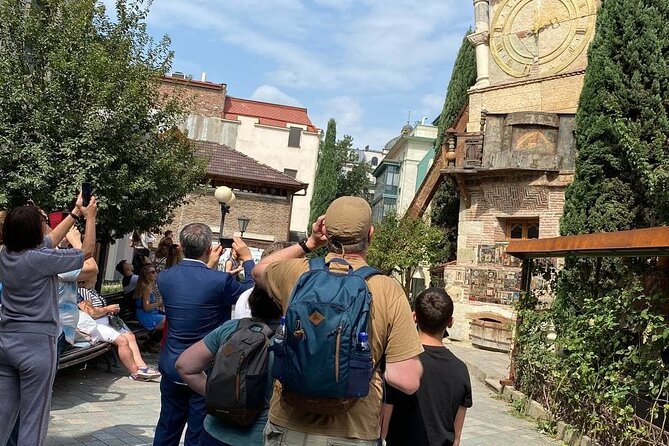
Georgia’s wine story is the star here, but the setting matters just as much. You walk from Freedom Square through Old Tbilisi to two small wine cellars, tasting more than 15 Georgian wines along the way. The best part is the mix of wine and place: the guide explains qvevri winemaking, then ties it to Tbilisi’s streets, customs, and long social tradition of eating and drinking together.
I like the small group limit of eight, which keeps the tasting personal and makes it easy to ask questions. I also like the balance between wine and sightseeing, especially with guides such as Valeri, who is known for warm conversation and strong knowledge of Tbilisi. The main drawback is that this is a walking tour with several tastings, not a full meal or a countryside winery visit, so you should plan your expectations accordingly.
Key points to know before booking
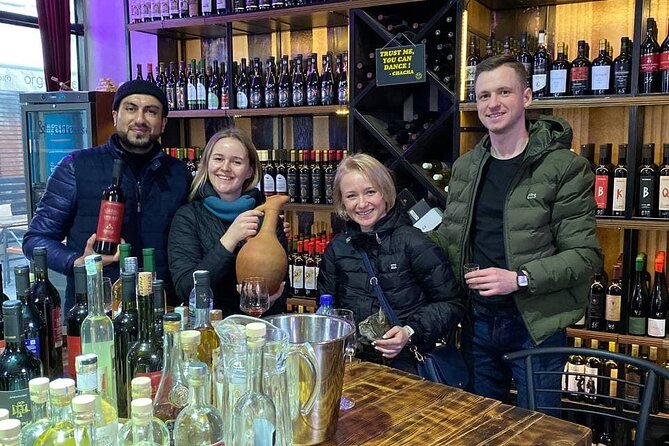
- More than 15 Georgian wines: Taste examples made in both traditional qvevri vessels and European styles.
- Two cellars in Old Tbilisi: The tasting rooms sit in the historic center, so sightseeing is built into the route.
- A small group of up to eight: This is useful if you want personal explanations rather than a large, scripted tasting.
- Chacha is part of the program: Expect a strong grape spirit that can reach roughly 50 degrees.
- Valeri leads the experience: The guide is praised for his friendly manner, city knowledge, and helpful advice.
- Appetizers and dessert included: These add a taste of Georgian hospitality, but dinner is not included.
Starting at Freedom Square

The tour begins at 2 Freedom Square, a handy point in central Tbilisi. The meeting place is near public transportation, and the activity returns there at the end. Since the tour lasts about three hours, a start time that fits your day can make it easy to place this outing between other city plans.
I would use this as an early introduction to Tbilisi, not just a late addition to your itinerary. The walking portion gives you a basic sense of the old center, while the wine stops provide a reason to pause and look more closely at the city around you.
The route is on foot, and private transportation is not included. That is a plus for anyone who wants to see the center at street level, but it also means you should wear comfortable shoes and be ready for a tour that moves through the old city rather than staying in one tasting room.
The group limit of eight is important here. In a tiny cellar, a large group can turn a tasting into a wait for your turn to hear the explanation. With fewer people, you have a better chance to ask about a grape, a winemaking method, or the difference between two bottles without holding up a coachload of people.
Other tastings around Tbilisi:
- Day Trip to Kakheti Wine Region Including 9 Wine Tastings
★ 5.0 · 2,774 reviews - Kakheti Wine Region: Signagi and Bodbe Tour with 10 Wine Tastings
★ 5.0 · 1,019 reviews - Tbilisi:Mtskheta,Jvari,Bazaar,wine tasting,Chronicles of Georgia
★ 5.0 · 730 reviews
How Georgian wine changes the tasting
Georgian wine is not simply European wine with unfamiliar labels. The country has a distinctive old method using qvevri, large cone-shaped clay vessels traditionally placed in the ground. Wine can ferment and mature in contact with grape skins, seeds, and stems, producing a style that can feel fuller, earthier, or more textured than a light modern white.
You taste examples made in this traditional Georgian way alongside wines produced according to European technology. That contrast gives the tasting a useful structure. Instead of trying a long list of unrelated bottles, you can begin to notice how the vessel and production method affect color, aroma, body, and finish.
The tasting portions are described as six to eight pours, while the full selection includes more than 15 Georgian wines from local producers. In practical terms, you should expect a broad sampling rather than a full glass of every wine. This is good news if you want range without turning the afternoon into a blur, though wine fans hoping for generous pours may find the portions modest.
A sommelier or wine specialist helps explain what is in your glass. The focus is not only on identifying flavors. You also learn why Georgian wine is tied so closely to family life, celebration, and the supra, the country’s traditional feast. Wine here is part of social life, not merely a beverage served beside dinner.
The first Old Tbilisi cellar
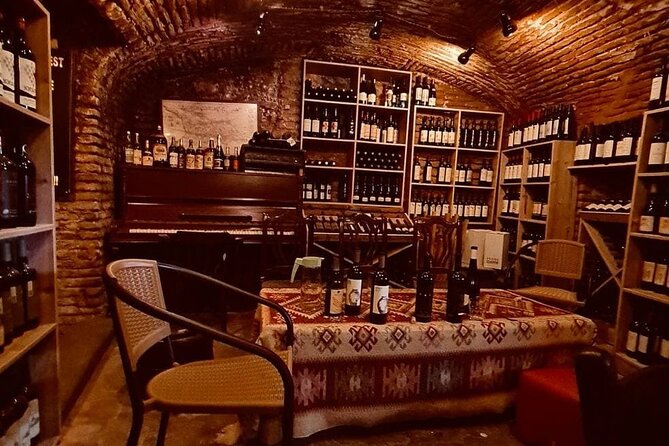
The first cellar gives the tour its foundation. You begin tasting Georgian wines in a small, traditional setting in the heart of Old Tbilisi, rather than in a modern tasting room outside the city. That setting makes the subject feel connected to the place.
Expect an explanation of both qvevri wines and more modern production. The guide can help you compare the two approaches, while the sommelier handles the details of the pours. If you are new to Georgian wine, ask which grapes are most typical, how the clay vessels are used, and why some traditional wines have a deeper color or firmer texture.
The cellar format also suits curious beginners. You do not need to arrive with a polished vocabulary or a firm preference for dry versus sweet wine. The guide’s role is to help you notice what you like and to take your preferences seriously. That makes the experience more useful than a rapid tasting where every glass is treated as a right answer.
There is a small limitation. The experience is described as a visit to two wine cellars, not a working vineyard or a full production facility. You will learn about the methods and taste their results, but you should not expect to walk through vineyards, inspect harvesting equipment, or meet growers in the countryside.
Walking between wine and city history

The stretch between the cellars is not filler. It is the part that turns a tasting into a city tour. Your guide talks about Tbilisi’s past, Georgian culture, and local traditions as you move through the old center.
This format works well for first-time visitors. A tasting alone might teach you what is in the glass but leave you unsure how the city fits together. A standard walking tour might explain the city without giving you a memorable sensory link. Here, the two subjects keep returning to each other.
Valeri is the name most closely associated with this experience, and the supplied details describe him as a warm, well-informed host who gives city tips as well as historical context. His style appears to be conversational rather than stiff. That matters because wine questions often come up naturally: what locals drink, how a toast works, or why a certain wine is made in a particular way.
The route may also point you toward less obvious corners of the old city. Specific sights are not listed, so I would not book this expecting a fixed checklist of major monuments. Think of it as a broad orientation to Tbilisi woven around two tasting stops.
If you are already an expert on the city, the walking section may cover familiar ground. For most visitors, though, it adds welcome context and helps you understand why the old center is such a fitting place for Georgian wine.
Same base, a different sort of day:
- Highlights of Caucasus Mountains-Jinvali,Ananuri,Gudauri,Kazbegi(Group tour)
★ 5.0 · 2,682 reviews - Day Trip to Kazbegi and Gudauri
★ 5.0 · 2,009 reviews - Day Trip to Mtskheta Gori and Uplistsikhe
★ 5.0 · 1,801 reviews - Tbilisi Walking Tour Including Cable Car and Traditional Bakery
★ 5.0 · 1,310 reviews
The second stop, chacha, and the view
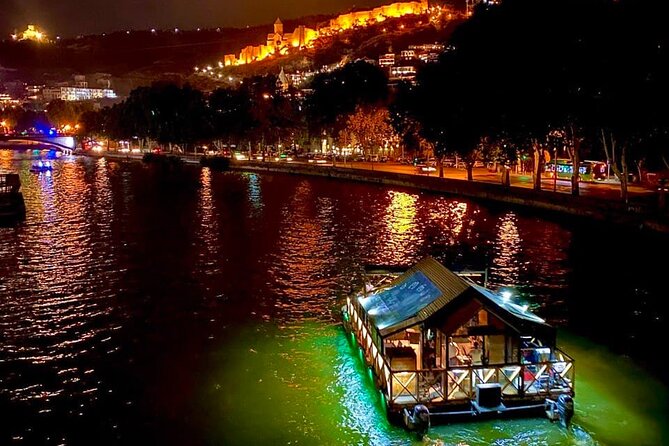
The second wine stop is especially appealing for anyone who wants a more atmospheric setting. One described highlight is a beautiful wine venue with a balcony overlooking the river and the town. The exact seating arrangement can vary, but the setting gives this part of the tour a relaxed pause after the walking sections.
This is also where chacha gets attention. Chacha is Georgia’s grape spirit, and the tasting includes a strong version that can reach around 50 degrees. It is not a gentle afterthought to wine. Treat it as a separate drink, take the small portion seriously, and avoid rushing it.
The chacha stop also seems to have a museum connection, with an owner or sommelier involved in the presentation. That adds a human layer to the tasting. You are not just sampling a high-proof spirit; you are hearing how grape-based drinks fit into Georgian food culture and hospitality.
I would be careful with the order of your day. Even though the pours are tasting portions, more than 15 wines plus chacha can add up. Eat something before you arrive, drink the included bottled water, and use the appetizers as support rather than assuming they replace lunch or dinner.
The balcony view is a pleasant bonus, but it is not the sole reason to book. Weather, seating, and the pace of the group can affect how long you spend there. The lasting value is the combination of the setting, the spirit tasting, and the chance to compare different expressions of Georgian drinking culture.
Appetizers, dessert, and Georgian hospitality
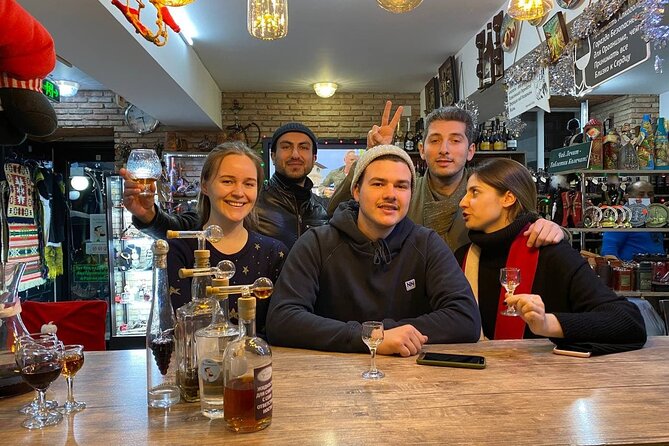
The food included is light: traditional appetizers and a Georgian dessert. This is enough to give you a taste of local hospitality and to pair something savory or sweet with the wines, but dinner is specifically not included.
That distinction matters. Book this as a tasting with snacks, not as a meal. If you plan to continue sightseeing afterward, the appetizers may be all you need for the moment. If you are hungry, arrange a separate meal before or after the tour.
The food also helps explain the social side of Georgian wine. Georgian meals are known for shared plates, long toasts, and a host who keeps offering something to eat or drink. Even a small dessert and a few appetizers can show how wine is meant to sit alongside conversation rather than be judged in silence.
I like that the food is part of the program, because tasting strong or unfamiliar wines on an empty stomach is never wise. Still, anyone seeking a serious food tour should choose a different activity. This outing uses food as context and support, not as its main subject.
Languages, group size, and the guide’s style

Guide service is available in German, French, and Russian. The supplied information does not promise English, so check the language options carefully before booking if English is essential for you.
The guide is central to the experience. Valeri is repeatedly described as friendly, responsive, and able to answer questions about Tbilisi and Georgian customs. One useful detail is that he has helped visitors with city navigation before the tour, which can be valuable if you are still finding your way around.
The tone appears personal. You may feel more like you are walking with a local host than following a guide holding a flag. That is a strength for people who enjoy conversation and spontaneous questions. It can be less ideal if you prefer a strictly timed, lecture-style tour with a precise list of stops.
The maximum group size is eight. Families have used the format, and it can work well for couples, friends, and solo visitors who like meeting a few people without joining a large crowd. Since wine preferences differ, the smaller group also gives the sommelier a better chance to notice what you enjoy.
Is the $100 price fair?
At $100 per person, this is not the cheapest way to drink Georgian wine in Tbilisi. You can certainly find inexpensive glasses and bottles on your own. The value here comes from the combination of tastings, a guide, two cellar visits, city interpretation, chacha, water, appetizers, and dessert.
For a casual wine fan, the price makes sense if you want someone else to organize the comparisons and explain what you are drinking. You are paying for structure and context, not only liquid in a glass. The small group also adds value, especially when the guide and sommelier can respond to individual preferences.
For a serious collector or wine professional, the value depends on your goal. The tour offers breadth, traditional and European styles, and access to local specialists. It does not promise vineyard visits, producer meetings, extensive technical analysis, or full bottles of each wine.
I would compare it with the cost of booking a separate Tbilisi walking tour and several tastings. If you would otherwise pay for both, combining them in three hours is efficient. If you mainly want a large meal or an all-day wine-country excursion, spend your money elsewhere.
Practical advice for a better afternoon
Book this early in your Tbilisi stay if you want help getting oriented. The guide may point out places you want to revisit, and the old-city walk can make later wandering easier.
Wear shoes suited to walking and keep your schedule flexible around the three-hour duration. The tour ends back at the meeting point, but tasting conversations and movement between stops can make the pace feel less exact than a museum visit.
Ask questions. The guide is specifically described as friendly and willing to answer them, and this is where the tour gains much of its value. Ask about the grape varieties, the qvevri method, local toasting customs, and which wines match your own taste.
Remember that free cancellation is available up to 24 hours before the start time. Cancellations or changes made within 24 hours are not refundable, and the cut-off follows local time.
Who should book the wine promenade?
You should book this if you want a small-group introduction to Georgian wine and a first look at Old Tbilisi at the same time. It suits curious beginners, couples, families with older children who can take part in a wine-centered outing, and solo visitors who enjoy meeting a few people over shared tastings.
It is also a good choice if you care about the story behind the drink. The qvevri method, the role of chacha, Georgian feast customs, and the old city setting give the afternoon more substance than a basic bar crawl.
I would skip it if you want a full dinner, a countryside vineyard trip, or a highly technical wine seminar. I would also think twice if you dislike walking or cannot take part in one of the listed guide languages.
For the right visitor, this is a smart way to meet Tbilisi through its glass, its streets, and its famously welcoming table.
FAQ
Where does the wine promenade begin?
The tour begins at 2 Freedom Square in Tbilisi, Georgia.
Where does the activity finish?
The activity ends back at the meeting point at Freedom Square.
How long does the tour last?
The experience lasts approximately three hours.
How many people can join the group?
The tour has a maximum of eight participants.
How many wines will I taste?
The program includes more than 15 Georgian wines overall, with six to eight tasting portions described during the cellar visits.
Are both traditional and modern Georgian wines included?
Yes. You taste wines made using the traditional Georgian qvevri method and wines produced according to European technology.
Is chacha included?
Yes. The tasting includes Georgian chacha, a strong grape spirit described as reaching around 50 degrees.
Is food included?
Traditional appetizers and a Georgian dessert are included. Dinner is not included.
What languages are available for the guide?
Guide service is available in German, French, and Russian.
Is private transportation included?
No. Private transportation is not included. The experience is a walking tour in Old Tbilisi, and the meeting point is near public transportation.
Can I cancel for a full refund?
Yes, if you cancel at least 24 hours before the experience start time. Cancellations made less than 24 hours in advance are not refundable.
Just added in Tbilisi
- Private Adorable City Tour of Tbilisi★ 5.0 · 3 reviews
- Tbilisi Airport to Gudauri, Bakuriani, Batumi, Tbilisi★ 5.0 · 3 reviews
- full day Kazbegi-Gudauri-jvari -from Tbilisi★ 5.0 · 6 reviews
- Old tbilisi walking tour & wine tasting★ 5.0 · 9 reviews
- Vardzia. Lake Paravani, Khertvisi & Lomisa castle, Rabati★ 4.5 · 12 reviews
- Your unique photo session in Tblisi, Georgia★ 3.5 · 4 reviews
- Private Wine Tour In Kakheti Region with 7 Wines and Lunch★ 5.0 · 3 reviews
- Wine Tasting in Tbilisi★ 5.0 · 8 reviews
Wine Tours, compared.
Day Trip to Kakheti Wine Region Including 9 Wine Tastings
Read our review →
Kakheti Wine Region: Signagi and Bodbe Tour with 10 Wine Tastings
Read our review →
Mtskheta,Jvari,Bazaar,wine tasting,Chronicles of Georgia
Read our review →
Evening Walking & Talking Tour with Wine & Boat Ride
Read our review →
Kakheti;City of Love Sighnaghi, Bodbe. KTW. Wine House Group tour
Read our review →
Bodbe, Sighnaghi, Telavi Wine Tour from Tbilisi
Read our review →
Old Tbilisi Highlights walking tour with wine & 10 tastings
Read our review →
Old Tbilisi Tour: Private Walking Tour With Wine Tasting
Read our review →Browse the lists this tour appears in