
Reviewed · MTSKHETA & JVARI TOURS
Tbilisi & Mtskheta city tour
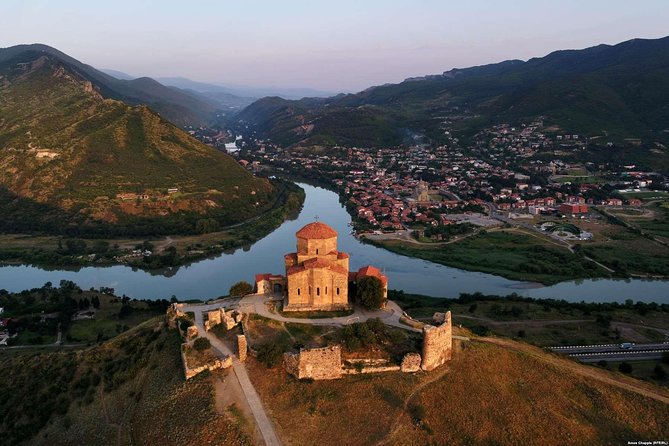
Tbilisi and Mtskheta fit Georgia’s big story into one busy day: hilltop views over the capital, an old fortress, sulfur-bath lanes, grand churches, and the country’s former royal center. The best moment may be the view from Jvari Church, where Mtskheta sits below the meeting point of the Aragvi and Mtkvari rivers.
I like the private format, since your group can move at its own pace, and I like the useful mix of scenery, architecture, and walking. The tour also includes pickup from a hotel, Tbilisi International Airport, or an agreed meeting point.
The main consideration is time. Seven stops in 5 to 7 hours makes this a good first look, but not a slow study of every church, garden, or neighborhood. The Botanical Garden ticket is also extra.
Key points
- Jvari Church gives you the day’s clearest panorama, with Mtskheta and two rivers below.
- Narikala Fortress and Abanot Ubani connect old Tbilisi, from a hilltop ruin to the sulfur-bath district.
- The tour is private, so only your group participates.
- Pickup is flexible, with hotel, airport, or arranged meeting-point service.
- Mtatsminda offers a high view of Tbilisi, reached by cable car as described for the tour.
- Svetitskhoveli Cathedral adds serious religious and royal history in the former capital of Georgia.
A high view of Tbilisi from Mtatsminda
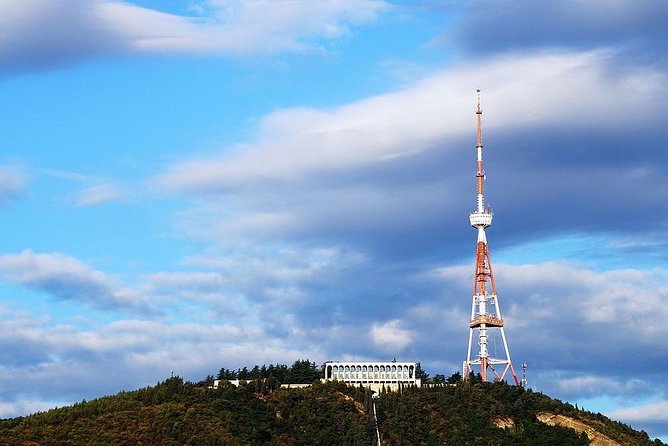
The day begins in Tbilisi, Georgia’s capital, a city built across hills roughly 380 to 600 meters above sea level. Your first stop is Mtatsminda Amusement Park, reached by cable car according to the tour description.
The park itself is less important here than the ride and the view. As you rise, Tbilisi opens below you. From the park, you look across the capital from roughly 200 to 300 meters above the surrounding city. This is a useful first stop because it gives you a sense of Tbilisi’s shape before you begin walking through its older quarters.
You should allow about 30 minutes here. That is enough for photographs and a quick orientation, but not enough for a full visit to the amusement park. The admission ticket is included, which keeps this opening stop simple.
I like beginning with a view rather than a museum. You can see why Tbilisi grew where it did, and you get a practical sense of the city’s steep slopes. If you dislike heights or want a leisurely ride through the park, the short timing may feel rushed.
More old-capital trips from Tbilisi:
- Day Trip to Mtskheta Gori and Uplistsikhe
★ 5.0 · 1,801 reviews - Tbilisi:Mtskheta,Jvari,Bazaar,wine tasting,Chronicles of Georgia
★ 5.0 · 730 reviews - Mtskheta-Gori-Uplistsikhe
★ 5.0 · 112 reviews
Plants and city views at the Botanical Garden
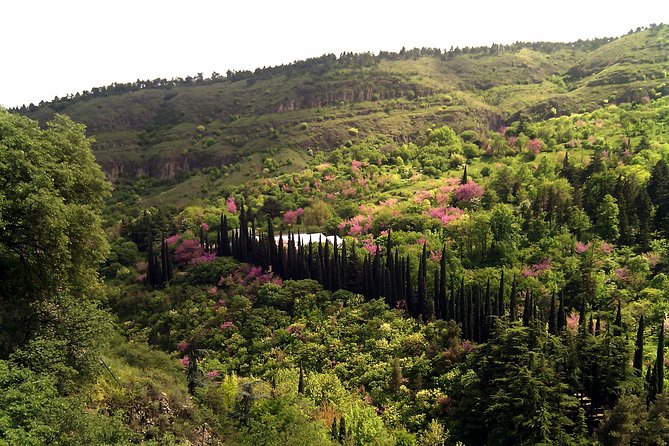
The National Botanical Garden of Georgia sits about 500 meters above sea level and looks over Tbilisi. It contains plants and flowers from many parts of the world, giving you a pause from stone churches and city streets.
The stop is scheduled for about 30 minutes. That is enough to enjoy a small section and take in the setting, but the garden is too large for a full botanical visit in that time. If gardens are a major interest for you, ask your guide how much of the visit can be devoted to walking rather than simply viewing the surroundings.
Admission is not included, so you should budget separately for the garden entrance. The tour information does not give the ticket price, so check the current amount when booking or before arrival.
This stop works best as a change of pace. After the city view from Mtatsminda, you get greenery and open space. I would not choose this tour solely for the garden, but it adds variety to a day otherwise centered on religious buildings, ruins, and old streets.
Narikala Fortress above old Tbilisi
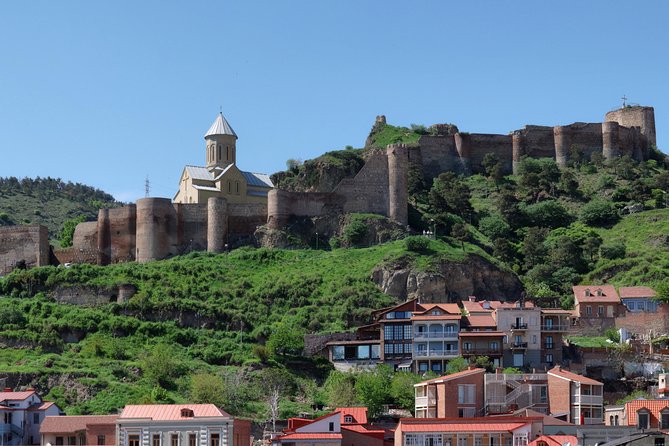
Narikala Fortress is one of the city’s key viewpoints. The fortification was established in the fourth century and expanded in the eleventh century during the reign of King David IV, also known as David the Builder.
It sits around 500 meters above sea level and overlooks old Tbilisi. From here, the city’s mixture of hills, rooftops, churches, and river valley becomes easier to understand. The fortress is free to visit, and the stop lasts about 30 minutes.
Do not expect a fully restored castle with rooms furnished for display. Narikala is mainly about its position, surviving walls, and broad view. Wear shoes suitable for uneven ground, though the tour data does not specify the exact walking conditions.
For me, this is one of the most useful history stops because the setting does much of the explaining. You can see why control of this high point mattered. It also prepares you for the walk down into old Tbilisi.
Through Abanot Ubani to the Bridge of Peace
After the hilltop portion, you go down by cable car toward the center of Tbilisi and European Square. From there, the route continues on foot through Abanot Ubani, one of the city’s oldest districts.
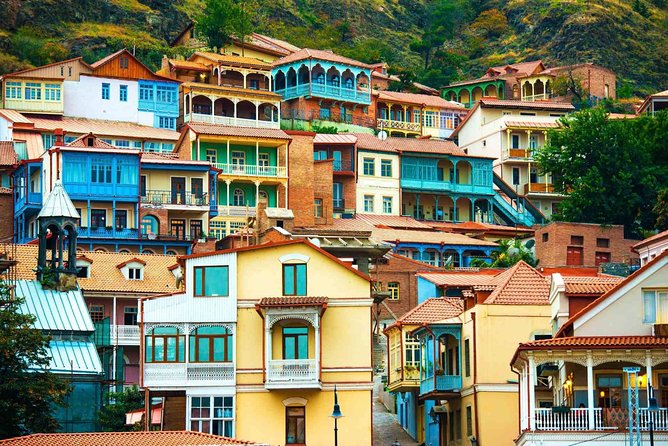
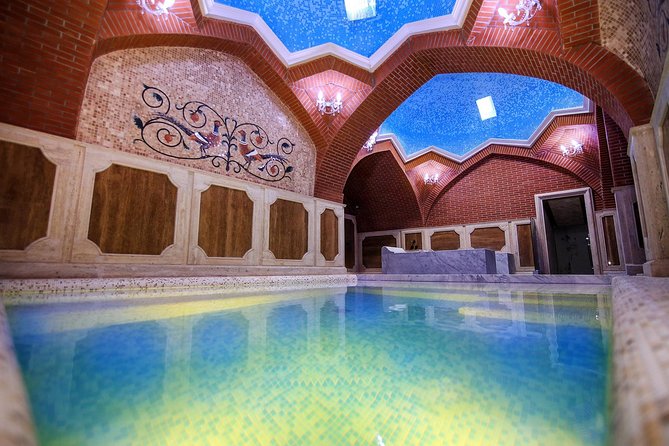
Abanot Ubani is the sulfur-bath quarter, and it is closely tied to Tbilisi’s beginnings. The name Tbilisi is linked to warm water, and this area gives you a sense of the city’s old core through its lanes, buildings, and bath district.
The walk takes about 30 minutes and includes old landmarks and a waterfall. The route is more about seeing the district and getting a feel for historic Tbilisi than checking off a long list of monuments. The Bridge of Peace is part of this central section, giving you a sharp contrast between old neighborhoods and newer city design.
This is where the tour feels most like a city walk rather than a series of viewpoints. You move through the streets, see how the old districts fit together, and get a closer look at daily city life. The short time means you will not explore every lane or enter every bath, but you will get a clear introduction.
A few more things to do in Tbilisi worth a look
- Kakheti;City of Love Sighnaghi, Bodbe. KTW. Wine House Group tour
★ 5.0 · 376 reviews - City tour Tbilisi on red bus
★ 4.5 · 139 reviews - Tbilisi – Mtskheta – Jvari. Full City Tour on Hop On Hop Off Bus
★ 4.5 · 91 reviews - Day tour to Chronicles of Georgia, Gori city, Uplistsikhe cave
★ 5.0 · 86 reviews
Holy Trinity Cathedral and modern Georgian faith
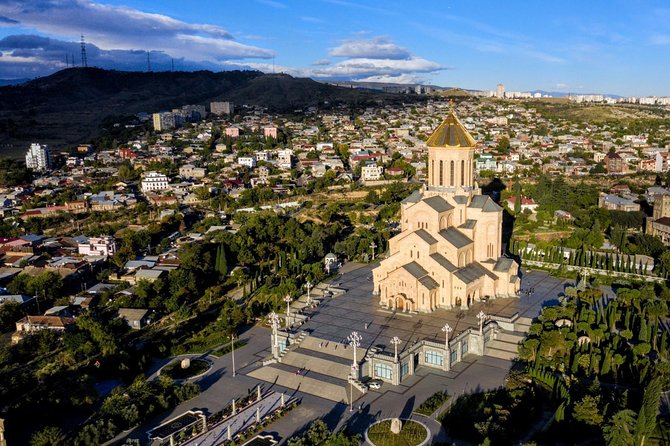
The Holy Trinity Cathedral, or Sameba, closes the Tbilisi portion of the day. Construction began in 1995 and finished in 2003. The cathedral was built in connection with Georgia’s long Orthodox Christian tradition, including 1,500 years of autocephaly and 2,000 years of Christianity.
The building is modern compared with Narikala and the old quarters, but it is designed to express Georgia’s religious identity on a very large scale. The stop lasts about 30 minutes and admission is free.
I find the contrast useful. In one morning, you move from a fourth-century fortress to a recently completed cathedral. That makes it easier to see Georgia as a living country, not just a place of old monuments.
Dress respectfully at religious sites. The supplied information does not spell out a dress code, but you should treat the cathedral as an active place of worship rather than simply an architectural stop.
Jvari Church above Mtskheta
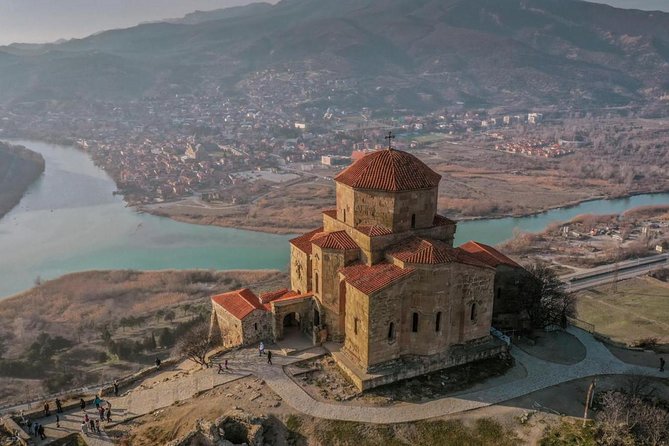
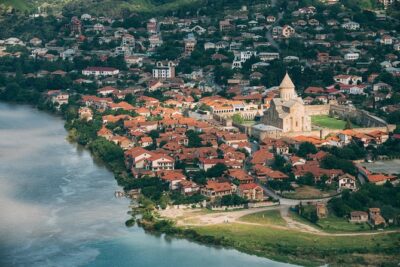
From Tbilisi, the tour heads toward Mtskheta, but first stops at Jvari Church on the mountain above the town. Jvari was begun in the fourth century, soon after Georgia adopted Christianity, while the main church was built in the eleventh century.
This is probably the strongest scenic stop of the entire tour. From the church, you look down on Mtskheta and see the Aragvi and Mtkvari rivers meet. The surrounding mountains form a wave-like line around the town.
The stop lasts about 30 minutes and admission is free. Because the church is above Mtskheta, the view is the main reason to linger. Your guide can connect the panorama to the town below and explain why Mtskheta became such an important religious and political center.
I would pay close attention to the weather here. The tour information does not promise clear visibility, and the value of this stop depends partly on what you can see from the mountain. Even so, Jvari is worth keeping on the schedule for its setting and its place in Georgia’s early Christian story.
Svetitskhoveli Cathedral in Georgia’s former capital
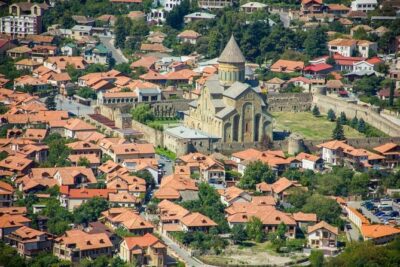
Mtskheta has been recorded for roughly 2,000 to 3,000 years, with dense settlement dating to around the third or fourth century BC. It served as an important early center of Georgian life before Tbilisi took over as the capital.
Svetitskhoveli Cathedral is the main stop in town. Construction began in 1010 and ended in 1029. The cathedral is free to enter, and the visit lasts about an hour, making it the longest stop of the day.
The church is important not only for its age and architecture, but also for the sacred objects associated with it. The tour information identifies four major Orthodox relics: the mantle of the prophet Isaiah, the robe of Jesus Christ, a particle associated with Andrew the Apostle, and pieces of the wooden cross connected with the Crucifixion.
You should treat these claims as part of Orthodox religious tradition and listen to the guide’s explanation in that context. The cathedral is still a religious place, so the atmosphere may be more reflective than at the outdoor viewpoints.
An hour here is welcome. It gives you time to look at the building, hear the story of Mtskheta, and understand why the town remains central to Georgian Christianity. If you want only modern city sights, this stop may feel heavy on religion. If you want Georgia’s historical foundations, it is essential.
What the private format means for your day
This is a private tour, so only your group participates. That matters more here than it would on a simple bus ride. The day includes hilltop viewpoints, a walking district, churches, and a trip outside Tbilisi. A private guide can help connect those pieces instead of leaving you to work out the story alone.
Pickup is offered from your hotel, Tbilisi International Airport, or a meeting point arranged the day before. The listed starting point is in old Tbilisi, and the activity ends back at the meeting point.
The tour is offered in English. Past operator experiences name guides including Nina, Beso, and George. Nina is described as patient, courteous, obliging, and very good in English. Beso is associated with city and regional touring, while George is described as kind, punctual, thoughtful, and careful about guest needs. Those names give you a sense of the guiding style associated with the company, but you should not assume a particular guide will be assigned to your booking.
The wider service also receives praise for airport coordination, quick responses, and attention to safety. One detailed experience included a homemade wine welcome, though that should not be treated as a guaranteed part of this specific day tour.
Is $54 a fair price?
At $54 per person, the value depends mainly on how much your group values private transport, guiding, and a planned route. You are not paying only for entry tickets. Most listed stops are free, Mtatsminda admission is included, and the Botanical Garden ticket is extra.
The price covers a full half-day or longer, with seven major stops and transport between Tbilisi and Mtskheta. For a first visit, that is a useful amount of ground to cover without arranging each connection yourself.
The strongest value comes from the combination. A self-guided day could certainly visit several of these places, but you would need to organize the hilltop rides, the old-city walk, and the trip to Mtskheta. You would also miss some of the historical links unless you prepared carefully.
The weak point is that the schedule is tight. You get a well-shaped introduction, not a long, unhurried exploration. If your group has limited mobility, young children, or a strong dislike of changing locations often, ask for a clear explanation of the walking and transport plan before booking.
Who should book this Tbilisi and Mtskheta tour?
I would choose this tour for a first visit to Georgia when you want the main sights explained in one day. It suits you if you value private touring, English guidance, panoramic views, and a mix of city and religious history.
It is also a good choice if you are arriving through Tbilisi International Airport and want pickup arranged, though the schedule may be tiring on arrival day. The tour works best when you can give it 5 to 7 hours without rushing to another fixed appointment.
I would look elsewhere if you want a slow botanical visit, extended time in the sulfur baths, or a detailed architectural study of every church. This route gives you a broad first picture, with short stops and one longer visit at Svetitskhoveli Cathedral.
Free cancellation is available if you cancel at least 24 hours before the start time. Changes or cancellations inside that window are not refunded, and the activity may be rescheduled or refunded if its minimum number of participants is not reached.
Should you book it?
Book this tour if you want Tbilisi’s best views and Mtskheta’s major churches in one private outing. The strongest parts are the Jvari panorama, the old-city walk through Abanot Ubani, Narikala Fortress, and the long visit at Svetitskhoveli Cathedral.
Skip it if your priority is slow travel. The route is packed, and the Botanical Garden receives only about 30 minutes. For most first-time visitors, though, $54 is a sensible price for a guided introduction that joins Georgia’s capital with its former religious center.
FAQ
How long does the Tbilisi and Mtskheta tour last?
The tour lasts approximately 5 to 7 hours.
What places are included?
The route includes Mtatsminda Amusement Park, the National Botanical Garden of Georgia, Narikala Fortress, the Bridge of Peace and Abanot Ubani area, Holy Trinity Cathedral, Jvari Church, and Svetitskhoveli Cathedral.
Is hotel pickup available?
Yes. Pickup is offered from your Tbilisi hotel, Tbilisi International Airport, or a meeting point arranged the day before.
Is this a private tour?
Yes. Only your group participates in the activity.
Is the tour offered in English?
Yes. English is the listed tour language.
Is the Botanical Garden admission included?
No. Admission to the National Botanical Garden of Georgia is not included.
Are the other entrance tickets included?
Mtatsminda admission is included. Narikala Fortress, Holy Trinity Cathedral, Jvari Church, and Svetitskhoveli Cathedral are listed with free admission.
Can most people participate?
Yes. The tour information says most people can participate, and service animals are allowed.
What is the cancellation policy?
You can cancel at least 24 hours before the start time for a full refund. Cancellations or changes made less than 24 hours before the start time are not accepted for a refund.
Just added in Tbilisi
- Private Adorable City Tour of Tbilisi★ 5.0 · 3 reviews
- Old tbilisi walking tour & wine tasting★ 5.0 · 9 reviews
- Tbilisi Airport to Gudauri, Bakuriani, Batumi, Tbilisi★ 5.0 · 3 reviews
- full day Kazbegi-Gudauri-jvari -from Tbilisi★ 5.0 · 6 reviews
- Wine promenade in hospitable Tbilisi★ 5.0 · 17 reviews
- Vardzia. Lake Paravani, Khertvisi & Lomisa castle, Rabati★ 4.5 · 12 reviews
- Your unique photo session in Tblisi, Georgia★ 3.5 · 4 reviews
- Private Wine Tour In Kakheti Region with 7 Wines and Lunch★ 5.0 · 3 reviews
Mtskheta & Jvari Tours, compared.
Mtskheta,Jvari,Bazaar,wine tasting,Chronicles of Georgia
Read our review →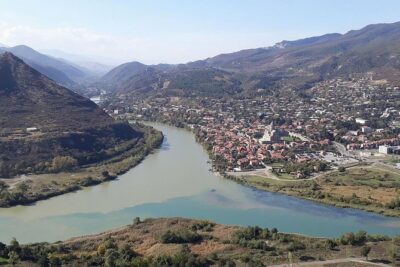
Mtskheta, Jvari, gori, uflistsikhe, history and panorama (group tours)
Read our review →
Jvari-Uplistsike-Chronicle of Georgia, PRIVATE Trip
Read our review →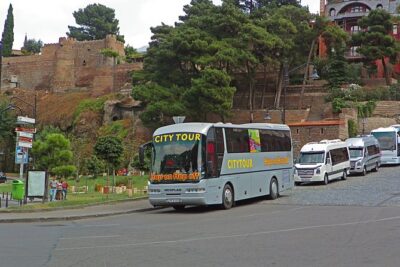
Mtskheta – Jvari. Full City Tour on Hop On Hop Off Bus
Read our review →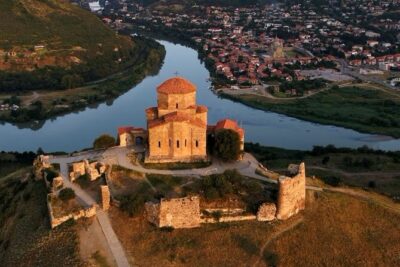
Ancient Georgia Group Tour: Mtskheta,Jvari, Gori, Uplistsikhe
Read our review →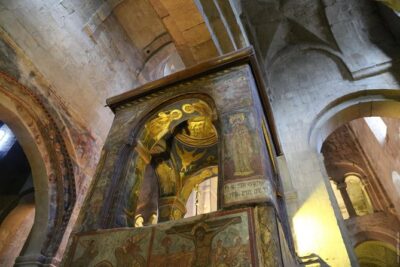
Ancient Mtskheta and Chronicle of Georgia half day tour
Read our review →Browse the lists this tour appears in