
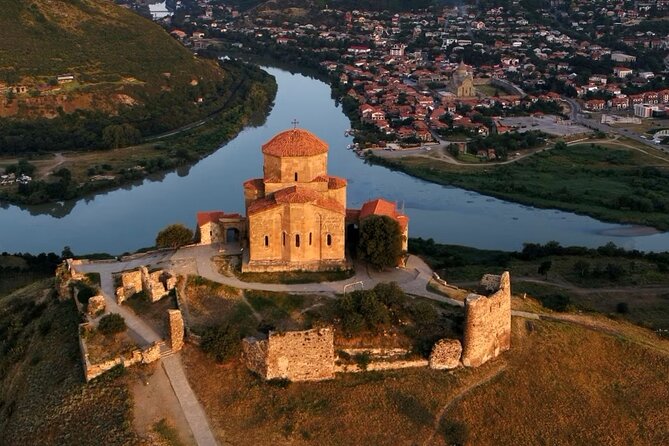
Reviewed · MTSKHETA & JVARI TOURS
Ancient Georgia Group Tour: Mtskheta,Jvari, Gori, Uplistsikhe
Georgia packs several very different chapters into this day: a hilltop monastery above two rivers, the country’s most important cathedral, Stalin’s birthplace, and an ancient cave town cut into rock. The appeal is the contrast. You move from Christian pilgrimage to Soviet memory and then into a settlement that began in the Early Iron Age.
I especially like the strong mix of major sights and the small-group format, capped at 15 people. I also like the guides’ practical attention, with David, Natalia, Lasha, Tami, Diana, Mamu, and Omar all praised for clear explanations and good group management. The main drawback is the length: a bilingual tour may take much longer, and Uplistsikhe requires steady walking over uneven rock.
Key points at a glance
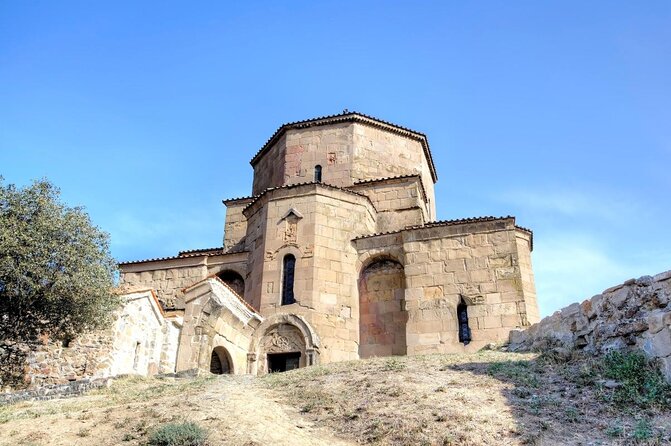
- Jvari’s river meeting point: Look down over the confluence of the Mtkvari and Aragvi from one of Georgia’s most striking monastery settings.
- Svetitskhoveli’s sacred importance: See the church at the center of Old Mtskheta, linked to Saint Nino and several revered relics.
- Stalin in Gori: Visit the museum complex built around the house where Stalin was born, with admission paid separately.
- Uplistsikhe under your feet: Explore chambers, passages, and rock-cut structures from pagan and Christian periods.
- A full day for $24: The price covers transport, air conditioning, and onboard WiFi, but not lunch or the two paid attractions.
- Dress and shoes matter: Carry a head covering if you wish, cover your legs for church visits, and wear shoes with good grip.
Why this day gives you a useful picture of Georgia
This is not a gentle town stroll. It is a packed regional outing that puts four major stops into about nine or ten hours, including driving time from Tbilisi. You spend enough time at each place to understand its importance, yet you do not have to arrange several separate trips.
The route works because the subjects do not blur together. Jvari and Svetitskhoveli explain Georgia’s Christian identity. Gori introduces the country’s most internationally controversial son. Uplistsikhe reaches much farther back, to a time when people carved homes, halls, religious spaces, and passageways into a cliff above the Mtkvari River.
That range makes the day especially useful early in a Georgia visit. You get places of worship, national history, Soviet memory, archaeology, and views beyond the capital. The guides are a major part of the experience. David is praised for handling a group with care and switching between English and Russian. Other guides, including Mamu, Omar, Natalia, Lasha, Tami, and Diana, are described as friendly, patient, clear, and attentive.
Still, do not expect a quiet private tour. The group can include different ages and language abilities. One English booking became a dual-language outing, with explanations repeated in another language. That can stretch a day that already has a lot of road time. Ask about the language arrangement when you book if this would bother you.
More old-capital trips from Tbilisi:
- Day Trip to Mtskheta Gori and Uplistsikhe
★ 5.0 · 1,801 reviews - Tbilisi:Mtskheta,Jvari,Bazaar,wine tasting,Chronicles of Georgia
★ 5.0 · 730 reviews - Mtskheta-Gori-Uplistsikhe
★ 5.0 · 112 reviews
Jvari Monastery above the Mtkvari and Aragvi
Your first major stop is Jvari Monastery, perched above the meeting point of the Mtkvari and Aragvi rivers. The view is the star here. From the hill, you can see the two waterways come together and get your bearings in the wider region around Mtskheta.
The monastery itself is an important early Christian site. It gives you a sense of how Georgian churches use high ground, stone, and wide views to create a powerful setting. You have about 40 minutes, which is enough for the main visit and photographs without turning the stop into a long architectural study.
The free admission keeps the first stop simple. What matters most is the setting and the guide’s explanation. Several guides on this route are praised for explaining not only the building but also Georgia’s wider religious story, so listen before rushing to the viewpoint.
Church etiquette matters. Women may want to carry a scarf for head covering, although scarves are available at the religious sites. Men should wear long trousers or bring something large enough to cover their legs. A small scarf may not be enough, as some men have found.
Gori and the difficult story of Stalin
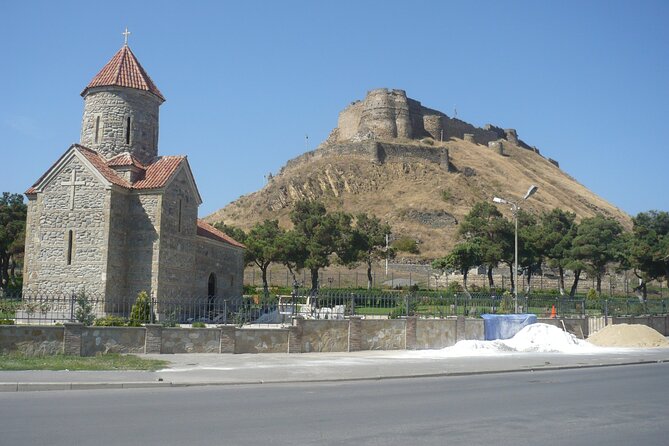
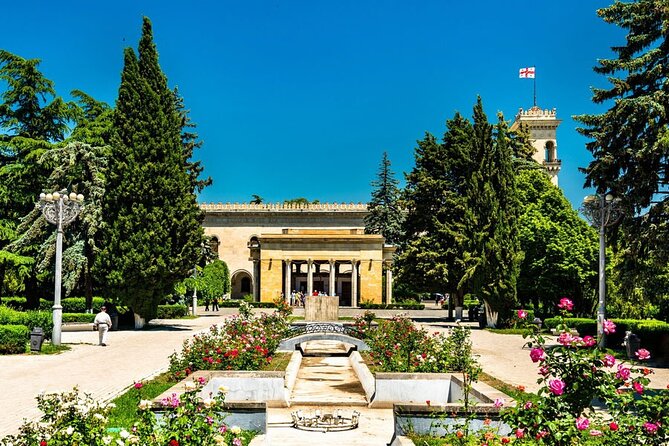
The road then leads to Gori, the town where Joseph Stalin was born. The State Stalin Museum opened in 1957, while the memorial museum in his birth house opened in 1937, during Stalin’s lifetime. The complex is therefore not only about Stalin’s life. It also reflects the way he was presented and honored during the Soviet period.
You have around an hour here, and admission costs 15 GEL per person. That fee is not part of the $24 tour price. The museum’s presentation is a consideration: there is no audio-headphone option, so much of what you learn depends on the guide and the displays.
This stop can feel politically and emotionally different from the churches. It is worth approaching with a critical eye. You will see the place connected to Stalin’s early life, but the visit does not erase the violence and damage associated with his rule. The contrast becomes sharper later, when the route returns to Georgia’s religious heritage and sites that suffered under Soviet power.
The museum is best for you if you want context rather than a quick photo outside Stalin’s birth house. If your interest in Soviet history is limited, the one-hour stop may feel long. If you want to understand why Gori remains tied to Stalin’s name, it adds an important layer to the day.
Lunch and the road to Uplistsikhe
Lunch takes place at a local restaurant near the Uplistsikhe stop. Food and drinks are not included, so keep money available. The meal is a useful pause before the most physical part of the outing, but the tour information does not give a fixed menu or meal price.
The timing is sensible. Uplistsikhe involves walking across exposed rock, climbing, and passing through uneven areas. Eating before the visit gives you a chance to recharge, though you should not treat lunch as a long, leisurely restaurant experience unless the day’s timing allows it.
The vehicle includes air conditioning and WiFi. Those details matter on a route with several drives between sites. The van is described as comfortable enough, and the drivers are praised for courteous service and safe handling. Comfort will still depend on the size of the group and how much time you spend on the road.
Other trips west of Tbilisi:
- Mtskheta, Jvari, gori, uflistsikhe, history and panorama (group tours)
★ 4.5 · 107 reviews - Day tour to Chronicles of Georgia, Gori city, Uplistsikhe cave
★ 5.0 · 86 reviews - Mtskheta – Jvari + Gori – Uplistsikhe Tour
★ 5.0 · 49 reviews - Mtskheta – Gori – Uplistsikhe caves • Private tour
★ 5.0 · 24 reviews
Uplistsikhe, Georgia’s rock-cut town
Uplistsikhe is the physical highlight for many people. Built into a high rocky bank above the Mtkvari River, it contains structures from the Early Iron Age through the Late Middle Ages. You will walk among chambers and carved spaces rather than through a conventional enclosed museum.
The site is notable for its mixture of traditions. Rock-cut forms influenced by Anatolia and Iran appear alongside pagan and Christian architecture. That combination gives Uplistsikhe a rough, layered character. The stone does not present a neat story in one style. It shows how the site changed as beliefs, rulers, and daily life changed.
You have about an hour to explore. That is enough to see the main areas and take photographs, but it is not enough for a slow archaeological study of every passage. Listen carefully to the guide’s explanation, then allow yourself time to look at the rock surfaces, openings, and views over the river.
This is where practical preparation makes a real difference. The stone can be slippery when wet, and some parts are treacherous without good traction. Anyone with mobility issues may not be able to experience the site fully. You do not need to be an athlete, but you should be comfortable walking and climbing over uneven ground.
Do not wear smooth-soled fashion shoes. Good grip matters more than appearance. A wet day can change the feel of the visit considerably, which is one reason the operator may cancel for poor weather.
Mtskheta and the great Svetitskhoveli Cathedral
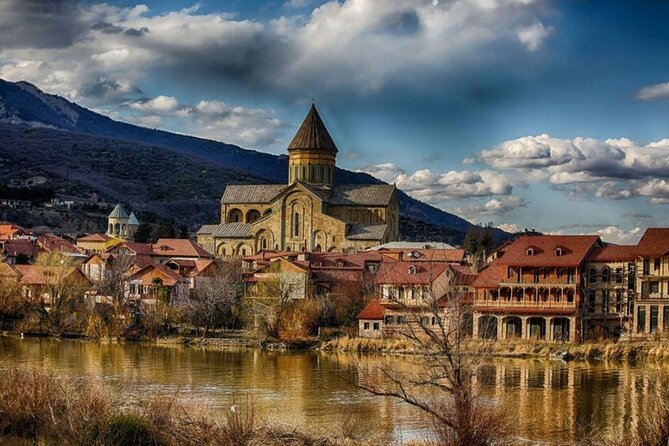
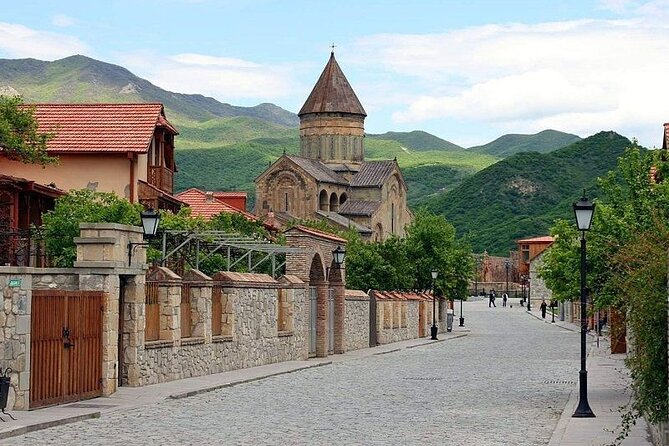
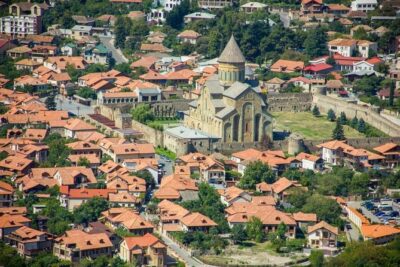
The final major stop is Svetitskhoveli Cathedral in the heart of Old Mtskheta. This is more than a beautiful church visit. Mtskheta is central to Georgian Christianity, and Svetitskhoveli is known as the First Georgian Church, built on a place associated with Saint Nino.
The cathedral is linked to several precious objects and relics, including what is believed to be Christ’s Mantle, a fourth-century baptismal font, and a piece of cedar wood saved from the original structure. You do not need to accept every religious tradition as historical fact to understand why the site matters. These beliefs have shaped Georgian worship and national identity for centuries.
The visit lasts about 30 minutes and admission is free. That may sound brief, but a focused explanation makes the time worthwhile. The cathedral is also a good place to slow the pace after Uplistsikhe’s rough paths.
Dress rules apply here too. Bring a scarf for your head if needed, and cover your legs before entering. The available coverings are helpful, but carrying your own is more comfortable and avoids a last-minute scramble.
How the $24 price works in practice
At $24 per person, this is strong value if you want transport and a guide for four important places outside Tbilisi. A private car, fuel, driver, and separate guiding would cost far more, while public transport would make this route difficult to combine in one day.
The low headline price does not include everything. Budget for:
- 15 GEL admission to the Stalin Museum
- 15 GEL admission to Uplistsikhe
- Lunch and drinks
- Any personal purchases
That makes the extra admission total 30 GEL per person, before food. The free entry at Jvari and Svetitskhoveli helps keep the added costs reasonable.
You are paying mainly for efficient transport and interpretation. The guides receive especially strong praise for explaining Georgian culture and history, keeping track of the group, and making sure no one gets left behind. That matters on a route with several stops and changing needs.
The tradeoff is flexibility. You follow a fixed schedule, spend limited time at each location, and may share explanations with people speaking another language. If you want long museum visits or private photo stops, arrange a custom outing instead.
Timing, group size, and what to bring
The meeting point is 15 Abano Street in Tbilisi, with a 9:00 am start and return to the same place. The group can contain up to 15 people. That is small enough for a more personal feel than a large coach, but not so small that everyone can choose their own pace.
Plan for a full day. The stated duration is about nine to ten hours, and one bilingual departure lasted around eleven hours because each explanation was repeated. Transport time is already included in the total, so the schedule is not nine or ten hours of sightseeing.
Bring:
- Comfortable shoes with good grip
- A scarf for church visits
- Long trousers or a leg covering for men entering churches
- Cash for admission, lunch, and drinks
- Water and weather-appropriate clothing
The tour is offered in English, but language arrangements can vary in a mixed group. Confirm that point before booking if you want every explanation in English only.
The activity is described as suitable for most people, with service animals allowed and public transportation near the meeting point. It is not a good match for anyone who cannot manage uneven ground, climbing, or a long day in a vehicle. Uplistsikhe is the key limitation.
Who should book this Ancient Georgia tour?
Book it if you want a broad first look at the region without renting a car. You will see major religious sites, an important museum, an ancient rock settlement, and countryside beyond Tbilisi in one organized day.
It suits first-time visitors, history fans, photographers, and anyone with limited time in Georgia. The route gives you plenty of visual variety, from the river confluence at Jvari to the carved stone of Uplistsikhe. It also works for mixed-age groups when everyone can manage the walking.
Think twice if you dislike fixed schedules, shared transport, or bilingual guiding. The day can feel long, and the museum and churches require different kinds of attention. People with mobility issues may need to skip much of Uplistsikhe, which removes one of the tour’s best parts.
The cancellation terms are useful: you can cancel at least 24 hours before the start for a full refund. Poor weather or failure to meet the minimum group size can lead to a new date, another experience, or a full refund.
Final verdict
I would book this tour for its range and price. In one day, you move from Georgia’s Christian heartland to Stalin’s birthplace and then into a remarkable ancient cave town. The guides are often the difference between simply seeing these places and understanding why they matter.
Choose it with realistic expectations. Bring the right clothing and shoes, budget for 30 GEL in entry fees plus lunch, and confirm the language setup. If you can handle a long day and uneven rock, this is one of the more useful ways to see Ancient Georgia from Tbilisi.
FAQ
Where does the tour start and end?
It starts at 15 Abano Street in Tbilisi at 9:00 am and ends back at the same meeting point.
How long does the tour last?
The scheduled duration is approximately nine to ten hours, including transportation. A bilingual group may take longer because explanations can be repeated in another language.
What attractions are included?
The route visits Jvari Monastery, the Stalin Museum in Gori, Uplistsikhe Cave Town, and Svetitskhoveli Cathedral in Mtskheta. Lunch takes place at a local restaurant.
Are entrance fees included?
No. Admission to the Stalin Museum is 15 GEL per person, and admission to Uplistsikhe is also 15 GEL per person. Jvari Monastery and Svetitskhoveli Cathedral have free admission.
Is lunch included in the price?
No. Food and drinks at the local restaurant are paid separately.
Is the tour suitable for people with mobility issues?
The tour is suitable for most people, but Uplistsikhe requires walking and climbing over uneven rock. People with mobility issues may not be able to explore that site fully.
Can I cancel for a full refund?
Yes, if you cancel at least 24 hours before the experience start time. Poor weather or failure to meet the minimum number of participants may also result in a different date or a full refund.
Just added in Tbilisi
- 8-Day Trekking Group Tour in Svaneti★ 5.0 · 21 reviews
- Private five days tour to Svaneti-Mestia, Ushguli, Becho,Chalaadi★ 5.0 · 21 reviews
- Join a Local for a Market Tour, Cooking Class and Meal in her Tbilisi Home★ 5.0 · 15 reviews
- Chiatura and Katskhi Pillar One Day Urbex Tour★ 5.0 · 14 reviews
- Soviet Story – Private day trip to Chiatura, Stalin’s museum and Katskhi pillar★ 4.5 · 15 reviews
- Full Day Tbilisi City Tour with Wine Tasting & Cable Car Ride★ 5.0 · 18 reviews
- Tbilisi Walking Tour Including Cable Car and Wine Tasting★ 5.0 · 16 reviews
- Mtskheta, Ananuri, Gudauri and Kazbegi Full Day Tour from Tbilisi★ 4.5 · 25 reviews
Mtskheta & Jvari Tours, compared.
Mtskheta,Jvari,Bazaar,wine tasting,Chronicles of Georgia
Read our review →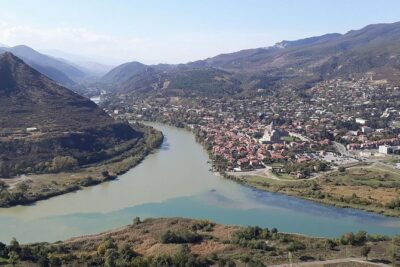
Mtskheta, Jvari, gori, uflistsikhe, history and panorama (group tours)
Read our review →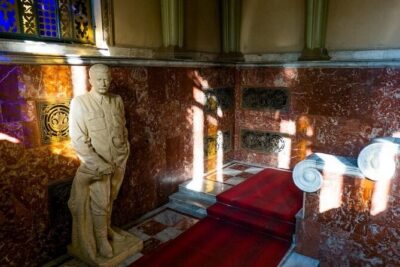
Jvari-Uplistsike-Chronicle of Georgia, PRIVATE Trip
Read our review →
Mtskheta – Jvari. Full City Tour on Hop On Hop Off Bus
Read our review →
Ancient Mtskheta and Chronicle of Georgia half day tour
Read our review →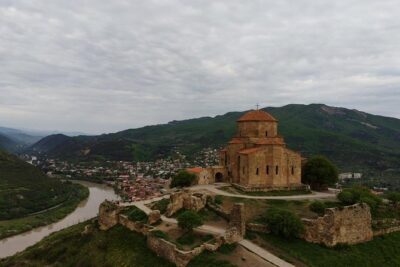
Private Day Trip to Gudauri and Kazbegi from Tbilisi via Jvari and Mtskheta
Read our review →Browse the lists this tour appears in