
Reviewed · GORI & UPLISTSIKHE TOURS
Soviet tour of Georgia – Gori, Tskaltubo, Chiatura, Enguri Dam.
Georgia’s Soviet past is not kept behind glass. You see it in Tbilisi’s concrete districts, Gori’s Stalin museum, Chiatura’s worn mining town, Tskaltubo’s abandoned sanatoriums, and the huge Enguri Dam. This is an unusual route for anyone drawn to brutalist buildings, fading state grandeur, and places where nature is taking back the concrete.
I like the private format, since your group can spend more time at the sites that matter most to you. I also like the mix of famous and obscure stops, especially Tskaltubo and Chiatura, which give the trip more character than a standard city tour. The main caution is practical: the published information describes both a four-day Soviet tour and a separate six-day Svaneti trip, so you should confirm the exact program before paying.
Key points at a glance
- Stalin’s birthplace and museum in Gori: A focused stop that adds political context to the journey.
- Chiatura’s former mining town: One of Georgia’s most distinctive Soviet-era settings, with rough industrial character.
- Tskaltubo’s abandoned sanatoriums: The strongest stop for architecture, decay, and photography.
- Enguri Dam near Zugdidi: A major Soviet hydropower project with a striking dome-shaped structure.
- Private transport with a driver: Your group travels together, but an English-speaking guide costs extra.
- Confirm the itinerary: The four-day route does not match the separate six-day Svaneti description shown in the supplied details.
What this Soviet Georgia tour is really about
This is not a conventional sightseeing trip built around polished monuments and tidy museums. It is a look at the physical remains of the Soviet system, from apartment districts and public buildings to industrial infrastructure and abandoned resort architecture.
You start in Tbilisi and Rustavi, then move west through Gori, Chiatura, Tskaltubo, and the Enguri area. Each place gives you a different piece of the story. Tbilisi shows how Soviet planning was folded into a living capital. Gori focuses on Stalin and political memory. Chiatura is tied to mining and industry. Tskaltubo reveals how the Soviet state built grand health resorts for ordinary workers, military personnel, and party officials. Enguri shows the scale of Soviet engineering.
I like that this route is not limited to the best-known monuments. The appeal is in the contrast between intended purpose and present condition. A sanatorium designed for rest may now have broken windows and plants pushing through its rooms. A major dam still works as infrastructure, even though the political system that built it is gone.
The trip is private, and that matters here. Soviet architecture is rarely experienced through a neat, fixed route. In Tskaltubo, several abandoned buildings may be possible, and the choice can be made on site. A private vehicle also makes the long day to Gori and Chiatura more manageable than trying to piece together public transport.
Other trips west of Tbilisi:
- Day Trip to Mtskheta Gori and Uplistsikhe
★ 5.0 · 1,801 reviews - Mtskheta-Gori-Uplistsikhe
★ 5.0 · 112 reviews - Mtskheta, Jvari, gori, uflistsikhe, history and panorama (group tours)
★ 4.5 · 107 reviews
Tbilisi and Rustavi: starting with everyday Soviet Georgia
The first day covers Soviet buildings in Tbilisi and Rustavi, with about six hours set aside and no admission fee listed. This is a useful opening because it places Soviet architecture in a working urban setting rather than treating it as an isolated curiosity.
Tbilisi is a layered city. You may see older neighborhoods, newer development, and Soviet districts in the same broad trip. The focus here is not a single landmark. It is the way apartment blocks, public buildings, and urban planning shaped daily life.
Rustavi adds a different mood. It was developed as an industrial city, so the Soviet imprint is more direct. You should expect a tour based on exterior viewing and urban context rather than a sequence of formal museum visits.
One important detail: an English-speaking guide is not included. The driver is included, but driving and explaining are not the same job. If you want architectural background, political context, or help identifying styles, arrange the guide in advance. Zviad is named in the supplied information as the person who led one Tbilisi and Gori visit, but you should confirm who will accompany your group.
The first day is also where the itinerary may feel least dramatic. Tbilisi’s Soviet buildings are part of a living city, not abandoned movie sets. That can be valuable if you care about how the past remains part of ordinary life, but it may feel slower if your main goal is derelict buildings.
Gori and the Stalin Museum
The second day is the longest, listed at about 12 hours. It includes the Stalin Museum in Gori before continuing toward Chiatura and Tskaltubo. Plan for a full day in the vehicle, with several changes in tone along the way.
Gori is best known as Stalin’s birthplace, and the museum gives the city a strong political focus. The visit includes the museum and is listed as an included admission. It is an important stop because it forces you to think about how Stalin is presented in Georgia, a country that suffered under Soviet rule but also produced one of the Soviet Union’s most powerful leaders.
The museum is not simply a collection of old objects. Its value lies in the questions it raises. How is a dictator remembered in his birthplace? How does a museum frame power, victory, and personal myth? You will get more from the stop if you approach it with those questions in mind.
The visit can also be emotionally and politically complicated. Do not expect a neutral presentation in the same way you might find at a modern human rights museum. The Stalin focus is one reason an English-speaking guide could make a difference, especially if you want help with context rather than just transport.
The long driving day is the main drawback. Gori, Chiatura, and Tskaltubo are not a compact group of sights, so this schedule favors coverage over a slow pace. If you like seeing a lot in one day, that is a fair trade. If you prefer long walks and time inside each building, ask how much time is planned at every stop.
Chiatura, a mining town shaped by Soviet industry
Chiatura is one of the most distinctive places on the route. The town grew around mining, and its setting and industrial character make it a strong match for anyone interested in Soviet infrastructure and working cities.
The appeal is not polished beauty. Chiatura gives you a sense of a place built around production, transport, and labor. The town’s identity is tied to mining, and the Soviet imprint is easier to read here than in a mixed historic center.
You should expect an atmospheric stop rather than a conventional attraction with a simple entrance, display panels, and a gift shop. The experience depends on what is accessible and on the condition of the sites when you visit. That uncertainty is part of the appeal, but it also means the tour cannot promise the same experience every day.
The route pairs Chiatura with Tskaltubo, and that is a smart combination. Chiatura shows the industrial side of Soviet Georgia. Tskaltubo shows the leisure and medical side. Together, they make the system feel broader than a collection of concrete buildings.
A few more things to do in Tbilisi worth a look
- Soviet past – Private day tour to Chiatura, Katskhi pillar and Chronicles
★ 5.0 · 29 reviews - Soviet Story – Private day trip to Chiatura, Stalin’s museum and Katskhi pillar
★ 4.5 · 15 reviews - Chiatura and Katskhi Pillar One Day Urbex Tour
★ 5.0 · 14 reviews - Chiatura. Soviet Past in the present. + Katskhi pillar
★ 5.0 · 9 reviews
Tskaltubo’s abandoned sanatoriums
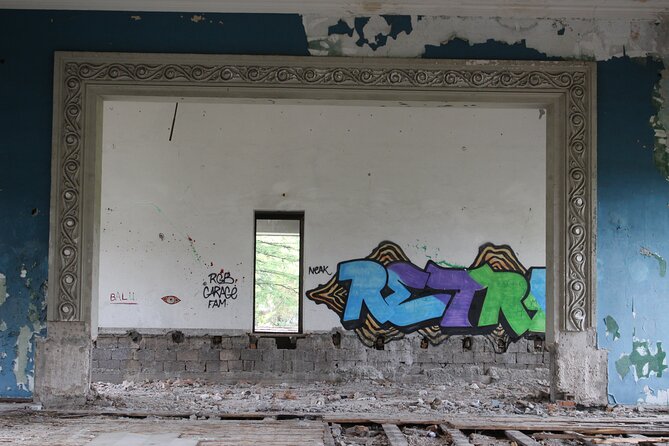
Tskaltubo is likely to be the highlight for anyone interested in abandoned architecture. Once a Soviet spa town, it contains former sanatoriums and other large buildings where time and weather have done much of the work.
The town’s former sanatoriums were designed for health, rest, and organized leisure. Their size tells you something about the Soviet idea of public welfare. These were not small private retreats. They were large facilities built to serve groups, with grand spaces and a formal style that now feels very different from their condition.
The visual contrast is the reason to come. Tall halls, empty rooms, aging decorative details, and plants entering through damaged areas can make the buildings feel like frozen pieces of another era. You may find the most memorable moments in the gaps between rooms, where the original purpose is still visible but no longer controls the space.
There are many possible sites in Tskaltubo, and the final choice is made locally. That flexibility is useful. It means the driver can help select buildings that fit the day and current access conditions. It also means you should not expect a precise list of interiors before departure.
Take sensible care inside abandoned structures. The supplied information does not promise that every building is restored, maintained, or fully accessible. Wear practical shoes, follow instructions, and do not assume that every stairway or floor is safe. This is especially important if you want photographs and find yourself watching the view through a camera instead of watching your footing.
The overnight stay is described as a former Soviet sanatorium for the navy. That gives the accommodation an added link to the theme, but confirm the exact property and room arrangements before booking. The supplied details also mention Old House in Mestia or an equivalent hotel, which belongs to the separate Svaneti description and does not fit neatly with the four-day Tskaltubo itinerary.
Enguri Dam and the Soviet engineering story
On the third day, the route goes from Tskaltubo toward Zugdidi and the Enguri hydropower station. The stop is listed at about six hours for the day, with admission included.
Enguri Dam gives the tour a change of scale. Tskaltubo is about interiors and decay. Enguri is about function, mass, and engineering. The dam is described as one of the highest dome-shaped dams, and it remains a powerful sight because it was built to serve a practical purpose rather than to impress visitors.
This is also a good reminder that Soviet architecture was not limited to apartments and monuments. Hydropower stations, factories, mines, transport systems, and planned towns were all part of the same state project. Enguri lets you see that project at its most ambitious.
The stop is especially worthwhile if you enjoy infrastructure. If your interest is limited to abandoned buildings, Enguri may feel less atmospheric than Tskaltubo. I would still keep it in the program because it gives the tour balance and shows the working side of Soviet Georgia.
The route toward Zugdidi also helps connect the urban and industrial stops with western Georgia. The trip is not only a set of isolated sites. It follows a broad journey through different kinds of Soviet development.
The confusing Svaneti details
The supplied tour information contains a major mismatch that you should not ignore. The itinerary describes a four-day Soviet tour through Tbilisi, Gori, Chiatura, Tskaltubo, and Enguri Dam. The overview, however, describes a private six-day, five-night trip to Svaneti with flights to and from Tbilisi.
That second description includes two hikes, one in Becho Gorge to Ushba waterfalls and another to Chalaadi Glacier. It also includes Ushguli, views toward the Shkhara range, horse riding to Qoruldi Lakes, airport transfers, and accommodation in Mestia with meals. Those are attractive features, but they are not part of the four-day Soviet route as described in the daily schedule.
Do not assume you are getting both tours for the listed price. Ask Travelist Georgia to confirm the exact number of days, destinations, flights, hotels, meals, and transfers included in your booking. This is the single most important planning point.
Is $850 a fair price?
The listed price is $850 per person. That can be reasonable for a private route covering several widely separated places, but the value depends on what the price actually includes.
The price is easier to justify if it covers private vehicle service for your group, the long driving days, included admissions, accommodation, and the stated meals. A private trip also gives you more control than a fixed group departure. You are not paying only for entrance tickets. You are paying for a vehicle, a driver, route planning, and the ability to connect places that are awkward to combine independently.
The value is harder to judge because the published details do not clearly align. The tour is described as about four days in one place and six days in another. The Svaneti version includes flights and a Mestia hotel, while the Soviet itinerary lists Gori, Chiatura, Tskaltubo, and Enguri. An English-speaking guide is extra, which is important if interpretation is central to your plans.
Before booking, request a written breakdown of:
- The exact number of days and nights
- The vehicle and driver service
- Hotel names and room arrangements
- Included meals
- Admission fees
- The cost of an English-speaking guide
- Any flights or airport transfers
- The exact Tskaltubo buildings planned
That small amount of checking can turn a confusing offer into a clear value comparison.
Who will get the most from this tour?
I would choose this experience if you are interested in brutalist architecture, industrial sites, Soviet politics, abandoned buildings, or the way old systems remain visible in modern Georgia.
It also suits a small group that wants a private schedule. Friends with similar interests will get more from the route than a family looking for light sightseeing and easy attractions. The long second day demands stamina, and Tskaltubo requires care around aging structures.
You do not need to be an architecture specialist. Curiosity is enough. But you should enjoy places that are rough around the edges. This is not a polished sightseeing circuit, and some stops may depend on access and conditions.
A guide is worth considering if you want more than a drive and a photo stop. The driver can handle the route, but an English-speaking guide can explain Soviet planning, Stalin’s place in Georgian memory, and the purpose of the sanatoriums.
The tour offers pickup from Rose Revolution Square in Tbilisi at 8:00 a.m. and returns to the same meeting point. It is a private activity, and most people can participate. Service animals are allowed, and the starting point is near public transportation.
Should you book it?
Book this tour if you want Georgia’s Soviet past in several different forms, not just one museum or a quick look at an apartment block. Tskaltubo is the strongest reason to go, while Chiatura and Enguri Dam add industrial and engineering context. Gori gives the route its political center.
I would not book until the duration and inclusions are confirmed in writing. The four-day Soviet itinerary and six-day Svaneti description clearly need sorting out. Once that is settled, the private format, broad route, and unusual stops make $850 worth considering for a group that values access and convenience over a standard sightseeing plan.
Free cancellation is available up to 24 hours before the start time for a full refund. Changes made within 24 hours are not accepted, and poor weather or failure to meet the minimum number of participants can lead to a new date or refund.
FAQ
Where does the tour start?
It starts at Rose Revolution Square in Tbilisi, Georgia.
What time does the tour begin?
The stated start time is 8:00 a.m.
Where does the tour finish?
The activity ends back at the meeting point at Rose Revolution Square.
Is this a private tour?
Yes. Only your group participates in the activity.
Is an English-speaking guide included?
No. An English-speaking guide is not included, but one can be arranged on request.
Is a driver included?
Yes. Driver service is included throughout the tour.
Which places are covered by the four-day Soviet itinerary?
The listed route includes Tbilisi, Rustavi, Gori, Chiatura, Tskaltubo, and Enguri Dam near the River Enguri.
Is admission to the Stalin Museum included?
Yes. The Stalin Museum stop is listed with admission included.
What meals are included?
The supplied details list dinner, two breakfasts, and two lunches as included.
Can I cancel for a full refund?
Yes, if you cancel at least 24 hours before the experience start time. Cancellations made less than 24 hours in advance are not refunded.
More Soviet-era tours in Tbilisi
- 1 Day Private Armenia: UNESCO, Soviet & Curated Family Lunch
★ 5.0 · 106 reviews - Tbilisi old town & soviet heritage – Private driver-guided Tour
★ 5.0 · 83 reviews - Armenia: 1 Day Soviet gems, UNESCO + Family lunch (Small group)
★ 5.0 · 68 reviews - Soviet Tbilisi Tour – Off the beaten path
★ 5.0 · 45 reviews
Just added in Tbilisi
- Private Adorable City Tour of Tbilisi★ 5.0 · 3 reviews
- Old tbilisi walking tour & wine tasting★ 5.0 · 9 reviews
- Tbilisi Airport to Gudauri, Bakuriani, Batumi, Tbilisi★ 5.0 · 3 reviews
- full day Kazbegi-Gudauri-jvari -from Tbilisi★ 5.0 · 6 reviews
- Wine promenade in hospitable Tbilisi★ 5.0 · 17 reviews
- Vardzia. Lake Paravani, Khertvisi & Lomisa castle, Rabati★ 4.5 · 12 reviews
- Your unique photo session in Tblisi, Georgia★ 3.5 · 4 reviews
- Private Wine Tour In Kakheti Region with 7 Wines and Lunch★ 5.0 · 3 reviews
Gori & Uplistsikhe Tours, compared.
Mtskheta, Jvari, gori, uflistsikhe, history and panorama (group tours)
Read our review →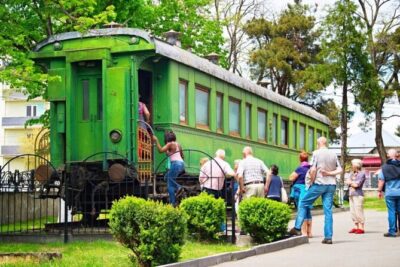
Day tour to Chronicles of Georgia, Gori city, Uplistsikhe cave
Read our review →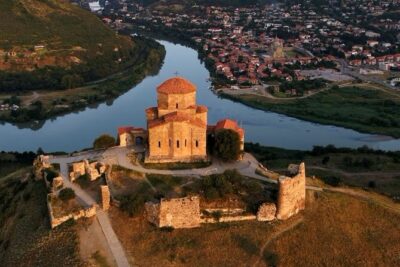
Ancient Georgia Group Tour: Mtskheta,Jvari, Gori, Uplistsikhe
Read our review →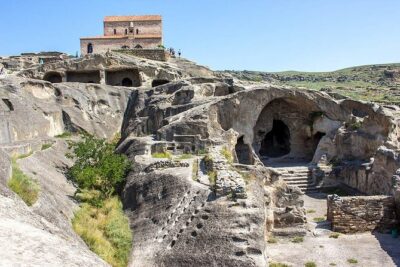
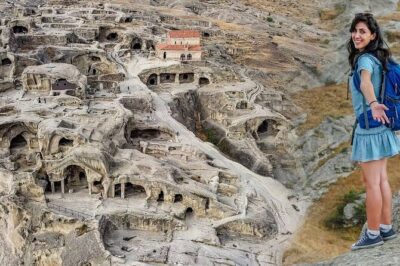
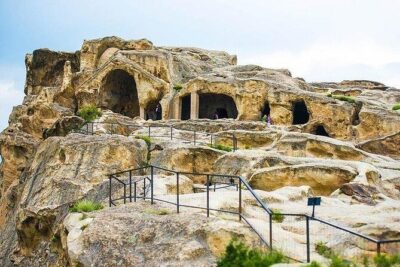
Mtskheta, Gori & Uplistsikhe Private Day Tour from Tbilisi
Read our review →Browse the lists this tour appears in