
Reviewed · MTSKHETA & JVARI TOURS
Mtskheta, Gori, Uplistsikhe Guided Tour
Georgia packs a surprising amount into the road west from Tbilisi. In one day, you move from Jvari’s hilltop church and the old capital of Mtskheta to a cave-carved fortress and Stalin’s birthplace in Gori. It is a brisk introduction to Georgian faith, archaeology, food, and 20th-century politics.
I like the clear mix of stops, especially Uplistsikhe and the Stalin Museum, which offer very different views of Georgia’s past. I also like the low base price of $19.50, the small maximum group of 18, and guides such as Jimmy and Russalina, who are praised for lively, helpful explanations.
The main drawback is the long day and roughly three hours spent driving between sites. Lunch is extra, and the designated restaurant may not suit everyone, so you should treat the meal as convenient rather than the main reason to book.
Key points at a glance
- Four major sights in one day: See Jvari, Mtskheta, Uplistsikhe, and Gori without arranging separate transport.
- A strong first-day introduction: The route connects Georgian Orthodox Christianity, ancient settlement life, and Soviet history.
- Jvari offers the best opening view: Look down on Mtskheta and the meeting point of the Mtkvari and Aragvi rivers.
- Uplistsikhe requires an extra fee: Allow about $6.50 per person for entry, plus another $6.50 for the Stalin Museum.
- Lunch is not included: Expect to pay about 20 to 30 GEL or more, with the restaurant choice receiving mixed feedback.
- The group is capped at 18: You get a guided outing without the feel of a large coach tour.
Why this route works as a first full day from Tbilisi
This tour gives you a useful map of Georgia’s past without asking you to plan several transfers. Mtskheta shows the country’s spiritual roots, Uplistsikhe reveals an ancient settlement cut into volcanic rock, and Gori brings you into the complicated story of Joseph Stalin.
The route also has a good rhythm. You begin with a view, move into a sacred city, spend time among ruins, stop for lunch, then finish with a museum that demands more thought than sightseeing. The subjects change often enough to keep the day moving.
You should still set aside most of your day. The tour begins at 8:45 am at 5 Samghebro Street in Tbilisi and lasts around nine to ten hours, returning to the same meeting point. The driving time totals about three hours, so this is not a slow village-to-village outing.
The air-conditioned vehicle matters, especially on a full day that includes outdoor walking. The tour is offered in English, and the group can include up to 18 people. That size should allow for a more personal guide experience than a large bus, though it is not a private tour.
More old-capital trips from Tbilisi:
- Day Trip to Mtskheta Gori and Uplistsikhe
★ 5.0 · 1,801 reviews - Tbilisi:Mtskheta,Jvari,Bazaar,wine tasting,Chronicles of Georgia
★ 5.0 · 730 reviews - Mtskheta-Gori-Uplistsikhe
★ 5.0 · 112 reviews
Jvari Church and the meeting of two rivers
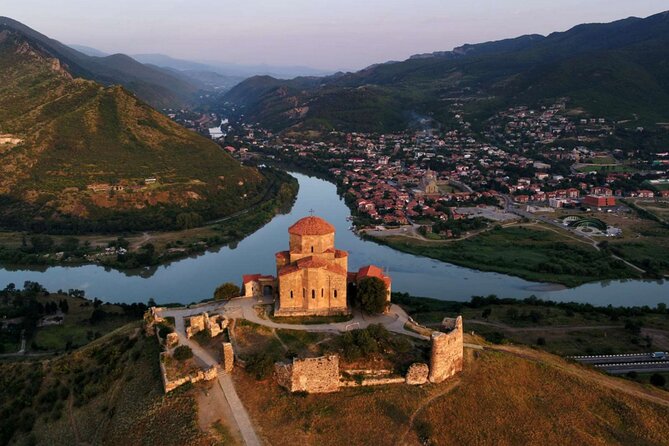
Your first stop is Jvari Monastery, set above Mtskheta. This is a powerful place to begin because you can understand the geography before walking through the old capital below.
From the church area, you get views over Mtskheta and the meeting point of the Mtkvari and Aragvi rivers. The sight gives the next stop some context: Mtskheta was not placed at random. It developed at an important river junction and became Georgia’s first capital and religious center.
The visit lasts about an hour, with no admission fee. You will need to be ready for an outdoor viewpoint and a church visit, so practical shoes and clothing suited to changing weather make sense. The tour requires good weather, and poor conditions can lead to a new date or a full refund.
Jvari is not just a photo stop. It introduces Georgian Orthodox Christianity in a setting where the church, hill, rivers, and old capital all make sense together. I would pay close attention to the guide here, since the view is easier to appreciate once you know why Mtskheta matters.
Mtskheta and Svetitskhoveli Cathedral
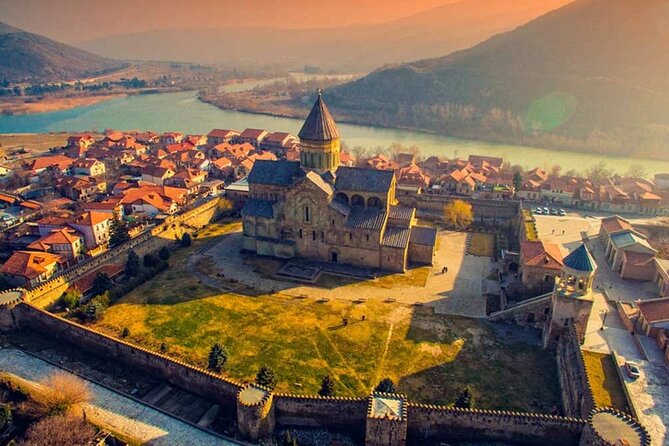
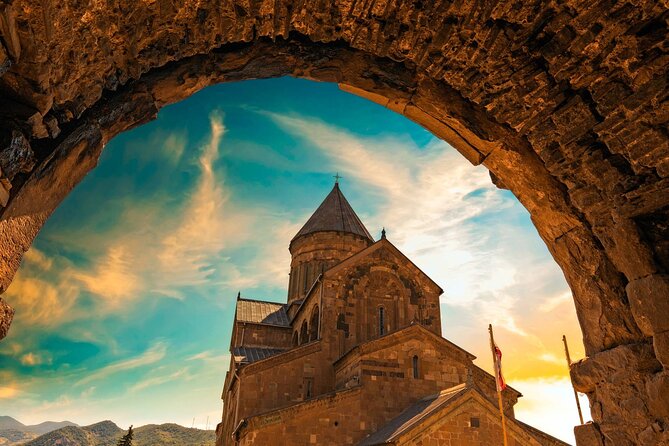
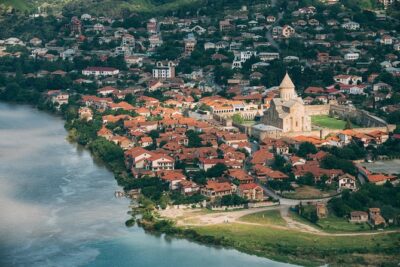
The tour then drops into Mtskheta, the former capital and a central religious place for Georgia. You have about 40 minutes in the town before a separate 30-minute visit to Svetitskhoveli Cathedral.
The schedule gives you enough time to understand the importance of the city and see its main landmark, but not enough for an unhurried exploration of every street. You should think of this as a focused introduction rather than a full town visit.
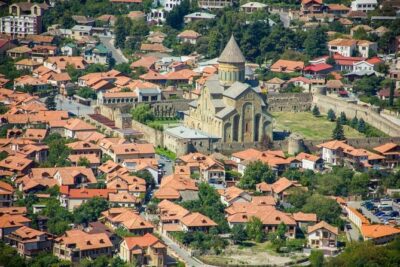
Svetitskhoveli is the key stop. The cathedral is associated with the chiton of Christ, a sacred relic in Georgian tradition. That detail explains why this building carries such weight in the country’s religious life.
The cathedral visit is included without an extra admission fee. Listen for the guide’s explanation of the building and its place in Georgian Christianity, then allow yourself a quiet moment inside. Even if you are not religious, the cathedral helps explain why Mtskheta remains important long after it stopped being the capital.
The two Mtskheta stops can feel slightly repetitive on paper, but they serve different purposes. The town gives you the setting and story. The cathedral gives you the main religious focus. Together, they make a more useful visit than simply stopping for a photograph outside the church.
Uplistsikhe, a town carved into volcanic rock
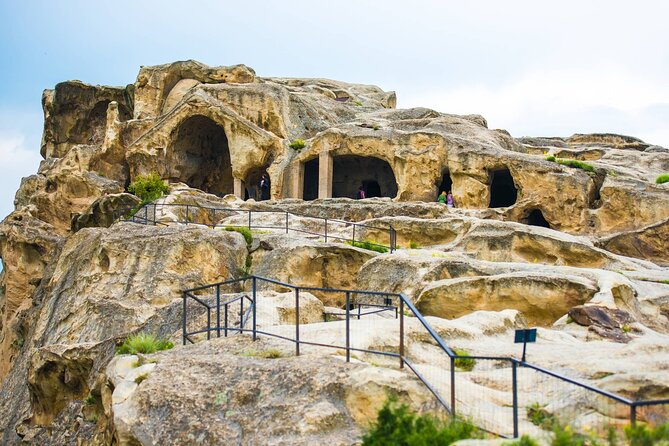
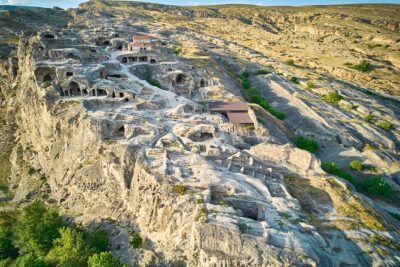
Uplistsikhe is the most unusual stop on the route. Here, you walk through an ancient fortress city cut into volcanic rock, passing the remains of temples, homes, streets, and open squares.
You get about 90 minutes at the site. That is a sensible amount of time for a guided visit, though the uneven terrain means you should expect walking rather than a quick museum-style stop. The point is to picture daily life in a settlement built directly into the rock.
Uplistsikhe rewards curiosity. Look at how rooms connect, how streets pass through the site, and how public and religious spaces fit together. The remains are incomplete, so the guide’s explanation helps you imagine what the city once was without mistaking bare rock for a perfectly preserved town.
Entry costs about $6.50 per person and is not included in the tour price. This is worth adding to your budget before booking. The site is one of the strongest reasons to choose this route, especially if you like archaeology, unusual places, and ruins that require you to use your imagination.
The visit also gives the day a change of mood. Jvari and Svetitskhoveli are active religious places. Uplistsikhe feels more open, exposed, and archaeological. You are not just looking at one grand building. You are walking through the outline of a settlement.
Other trips west of Tbilisi:
- Mtskheta, Jvari, gori, uflistsikhe, history and panorama (group tours)
★ 4.5 · 107 reviews - Day tour to Chronicles of Georgia, Gori city, Uplistsikhe cave
★ 5.0 · 86 reviews - Ancient Georgia Group Tour: Mtskheta,Jvari, Gori, Uplistsikhe
★ 4.5 · 73 reviews - Mtskheta – Jvari + Gori – Uplistsikhe Tour
★ 5.0 · 49 reviews
Lunch and the practical trade-off
Lunch is planned at a local restaurant after Uplistsikhe. The meal costs about 20 to 30 GEL or more and is paid separately.
This is a practical arrangement on a long day. You do not need to search for food between sites, and Georgian dishes can make the middle of the tour feel generous rather than rushed. One guide also offers advice on where to eat dinner in Tbilisi and where to find good Georgian wine, which can be useful if this is your first stay in the country.
Still, keep your expectations measured. The restaurant choice has received mixed feedback, with the main concern being mediocre food paired with high prices. Georgian cooking is one of the pleasures of visiting the country, so an average meal can feel like a missed chance.
I would book this tour for its route, not for a promised culinary highlight. If the meal turns out well, it is a bonus. If you are particular about restaurants, ask the guide what is being served and what the approximate cost will be. Since lunch is not included, you are paying for convenience and should judge it on that basis.
Gori and the Stalin Museum
The final major stop is Gori, home to Stalin’s House-Museum. You visit the small house where he was born and lived, see personal belongings, and view the armored railway carriage associated with his journeys.
The museum adds a complicated political layer to the day. After churches and an ancient settlement, you confront the life and image of one of the 20th century’s most controversial leaders. This is not simply a celebration of a famous local figure. The visit works best when you pay attention to what is displayed, what is emphasized, and what is left for you to consider.
You have about an hour here. The museum admission costs around $6.50 per person and is not included. Add it to the total if you want the complete visit described by the tour.
Some people will find the museum fascinating, while others may prefer more time at the ancient sites. That is one reason the itinerary suits people who want variety more than a single subject. You are not spending the whole day on churches or archaeology. Gori changes the subject again.
The armored railway carriage is a distinctive part of the visit. It connects the museum’s personal story with the practical world of political power and travel. The house gives you a personal starting point, while the carriage hints at the scale and security surrounding Stalin later in life.
What the guides add to the day
The quality of a day like this depends heavily on the guide. There are long stretches in the vehicle, several places where context matters, and a lot of history to fit into one schedule.
Jimmy is described as an entertaining guide who represents Georgia warmly and answers questions well. Russalina is also praised for making the time feel personal and connecting with everyone in the group. Another guide handled questions in both English and Russian and gave useful advice about dinner and wine in Tbilisi.
Those details matter because the route covers subjects that can become dry when presented as dates alone. A good guide can connect the river junction at Jvari to Mtskheta’s importance, explain how people used Uplistsikhe, and give the Stalin Museum some needed context.
The tour is conducted in English. If you want a quiet, independent day with no commentary, this may feel too structured. If you want help understanding what you are seeing, the guide is a major part of the value.
The real cost and overall value
The advertised price is $19.50 per person, which is low for an all-day outing from Tbilisi in an air-conditioned vehicle. You also get a guide and transport to four major stops without arranging taxis or regional connections yourself.
Your actual cost will be higher. Add about $6.50 for Uplistsikhe, about $6.50 for the Stalin Museum, and 20 to 30 GEL or more for lunch. The two religious sites have no separate admission charge.
That still makes the tour a good-value way to cover this route, especially if you are in Tbilisi for a short stay. The value is strongest for someone who would otherwise need to organize a driver, compare routes, and work out how to reach Uplistsikhe and Gori in one day.
The price does not buy a private experience or a flexible schedule. You follow a set route, spend around three hours on the road, and accept the chosen lunch stop. The group limit of 18 keeps it from becoming enormous, but you should not expect the freedom of traveling alone.
Who should book this day trip
I would recommend this tour to you if you want a broad first look at the area around Tbilisi. It suits people interested in religious buildings, ancient sites, Soviet history, and Georgian food, all in one day.
It is also a good fit if you prefer a guide to handle the transport. The English-language explanations and the advice about restaurants and wine can be especially useful early in your trip.
You may want another plan if you dislike long road days, want to set your own pace, or care strongly about choosing your own restaurant. The 90-minute Uplistsikhe visit and the one-hour Stalin Museum visit are enough for an introduction, but not for a slow, detailed study.
Wear comfortable shoes, bring money for the two paid attractions and lunch, and leave room for changing weather. The tour requires a minimum number of participants, and poor weather can lead to a different date or a full refund. Free cancellation is available up to 24 hours before the start time.
Should you book the Mtskheta, Gori, and Uplistsikhe tour?
Book it if you want the most efficient route through several important Georgian sites and are happy to trade flexibility for transport, commentary, and a low starting price. Jvari’s views, Svetitskhoveli Cathedral, the rock-cut streets of Uplistsikhe, and Stalin’s house create a memorable range of subjects.
Skip it if the restaurant choice, fixed timing, or three hours of driving would bother you more than the convenience helps. For most first-time visitors with one free day outside Tbilisi, this is a strong value, provided you budget for the extra tickets and keep lunch expectations modest.
FAQ
How long does the tour last?
The tour lasts approximately nine to ten hours. It begins at 8:45 am and ends back at the meeting point in Tbilisi.
Where does the tour start and finish?
It starts at 5 Samghebro Street in Tbilisi, Georgia. The tour returns to the same meeting point at the end of the day.
Is the tour offered in English?
Yes. The activity is offered in English.
Are entrance tickets included?
Admission to Jvari Church, Mtskheta, and Svetitskhoveli Cathedral is listed as free. Uplistsikhe costs about $6.50 per person, and the Stalin Museum costs about $6.50 per person. These two tickets are not included.
Is lunch included?
No. Lunch is paid separately and costs about 20 to 30 GEL or more. The tour includes a stop at a local restaurant.
How many people can join the tour?
The tour has a maximum group size of 18 people.
What happens if the weather is poor or the tour does not reach its minimum group size?
If poor weather causes cancellation, you can choose a different date or receive a full refund. If the minimum number of participants is not reached, you will be offered a different date or experience, or a full refund.
Just added in Tbilisi
- Private Adorable City Tour of Tbilisi★ 5.0 · 3 reviews
- full day Kazbegi-Gudauri-jvari -from Tbilisi★ 5.0 · 6 reviews
- Old tbilisi walking tour & wine tasting★ 5.0 · 9 reviews
- Tbilisi Airport to Gudauri, Bakuriani, Batumi, Tbilisi★ 5.0 · 3 reviews
- Wine promenade in hospitable Tbilisi★ 5.0 · 17 reviews
- Vardzia. Lake Paravani, Khertvisi & Lomisa castle, Rabati★ 4.5 · 12 reviews
- Your unique photo session in Tblisi, Georgia★ 3.5 · 4 reviews
- Private Wine Tour In Kakheti Region with 7 Wines and Lunch★ 5.0 · 3 reviews
Mtskheta & Jvari Tours, compared.
Mtskheta,Jvari,Bazaar,wine tasting,Chronicles of Georgia
Read our review →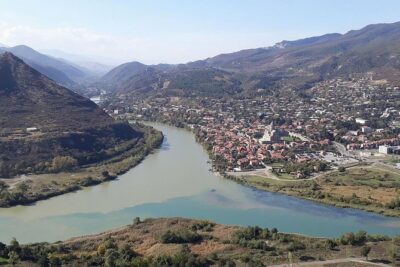
Mtskheta, Jvari, gori, uflistsikhe, history and panorama (group tours)
Read our review →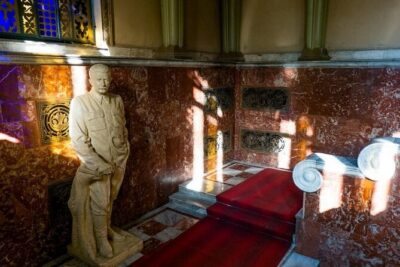
Jvari-Uplistsike-Chronicle of Georgia, PRIVATE Trip
Read our review →
Mtskheta – Jvari. Full City Tour on Hop On Hop Off Bus
Read our review →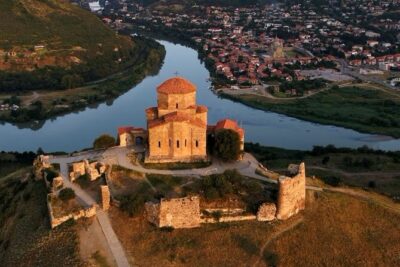
Ancient Georgia Group Tour: Mtskheta,Jvari, Gori, Uplistsikhe
Read our review →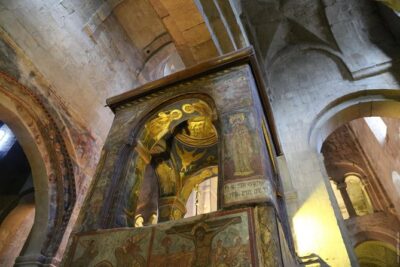
Ancient Mtskheta and Chronicle of Georgia half day tour
Read our review →Browse the lists this tour appears in