
Reviewed · MTSKHETA & JVARI TOURS
Sacred Sites and Ancient Wonders: Jvari, Mtskheta and Uplistsikhe
The most striking thing about this day is the range of Georgia’s past packed into one outing. You move from the hilltop Jvari Monastery and the sacred center of Mtskheta to Stalin’s birthplace in Gori, then finish among the carved chambers of ancient Uplistsikhe.
I like the private vehicle and hotel pickup, since your group does not have to manage regional transport. I also like the mix of spiritual sites, royal history, Soviet history, and archaeology. The main drawback is the pace: seven hours is enough for the route, but not for long, unhurried visits at every stop.
Key points to know before booking
- Four very different sights in one day: Jvari, Mtskheta, the Stalin Museum, and Uplistsikhe each tell a separate chapter of Georgian history.
- Private touring: Only your group takes part, with a driver-guide and hotel pickup and drop-off in Tbilisi.
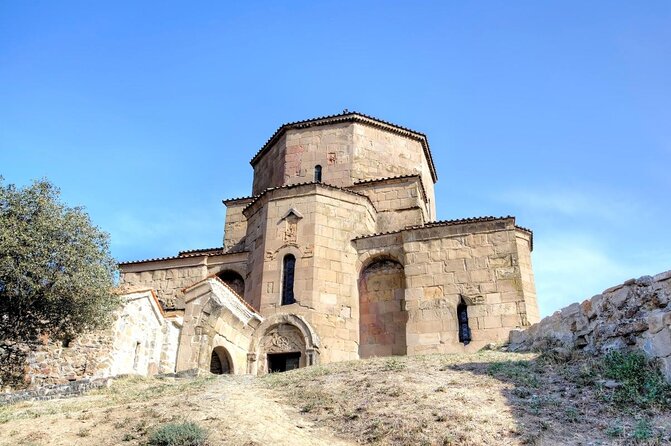
- Jvari’s hilltop view: The monastery looks toward Mtskheta and the meeting point of the Aragvi and Mtkvari rivers.
- Two entrance fees are extra: The Stalin Museum and Uplistsikhe each cost 15 GEL per person.
- A useful guide can shape the day: Guides named in past tour details include Irakli and Davit, both associated with strong communication and added historical explanation.
- Seven hours requires sensible expectations: You get a broad overview rather than a slow, scholarly examination of each site.
Why this route works as a Georgia day trip
This is a good choice if you want more than another day around Tbilisi but do not want to arrange several separate excursions. The route links places that are close enough to combine, yet different enough to keep the day from feeling repetitive.
Mtskheta gives you Georgia’s religious and royal story. Gori brings in the complicated Soviet chapter through Stalin’s birthplace and museum. Uplistsikhe reaches much farther back, to a rock-hewn settlement connected with the old Silk Road. Jvari provides the broadest view and a strong opening to the day.
You leave Tbilisi at 10:00 a.m. and return to the meeting point after about seven hours. Since this is a private activity, you can ask your guide for context as you go, rather than follow a fixed group with strangers. That matters on a route with several major subjects and very different kinds of monuments.
The price is $100 per person. That includes fuel, a private vehicle, a driver-guide, and hotel pickup and drop-off. It does not include lunch, drinks, or admission fees. Add 15 GEL per person for the Stalin Museum and 15 GEL for Uplistsikhe, then budget separately for food.
For a private full-day outing from Tbilisi, the value is reasonable if your group wants convenience and a guide. It is less attractive if you are only interested in one place, or if you prefer to spend hours at a single museum or historic site.
More old-capital trips from Tbilisi:
- Day Trip to Mtskheta Gori and Uplistsikhe
★ 5.0 · 1,801 reviews - Tbilisi:Mtskheta,Jvari,Bazaar,wine tasting,Chronicles of Georgia
★ 5.0 · 730 reviews - Mtskheta-Gori-Uplistsikhe
★ 5.0 · 112 reviews
Jvari Monastery and the meeting of two rivers
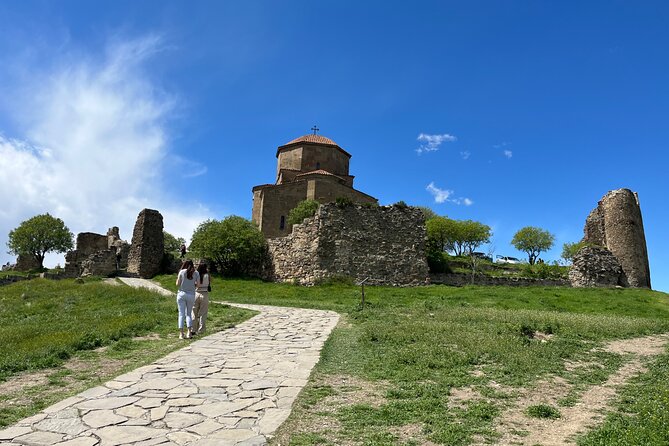
The first stop is Jvari Monastery, a sixth-century Georgian Orthodox monastery near Mtskheta. You have about 30 minutes here, and the setting is the main event.
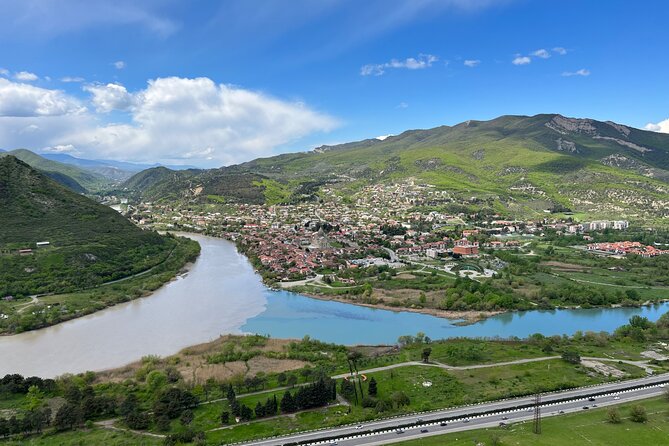
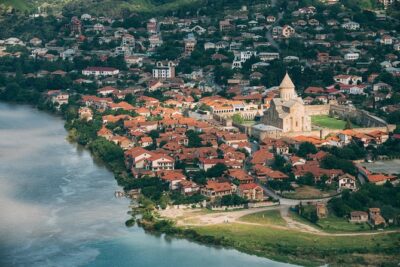
Jvari sits on a hill above the old capital. From the viewpoint, you can look over Mtskheta and toward the meeting point of the Aragvi and Mtkvari rivers. This gives you a quick sense of why the area mattered: the town below sits at a natural meeting place, with routes leading through an important part of Georgia.
The monastery itself is a major religious site, but the visit is also about orientation. From above, Mtskheta’s position becomes clear before you enter its streets and cathedral. I would use these 30 minutes for the view, the exterior, and a short look inside if access allows.
The time is brief. You should not expect a long architectural study or a quiet period for extended prayer. Still, Jvari is a strong opening because it gives the rest of the day a physical and historical setting.
Wear shoes that feel secure on uneven ground. The tour information does not promise a specific walking surface or special access arrangements, so it is sensible to expect some standing and walking around an old hilltop monument.
Mtskheta and Svetitskhoveli Cathedral
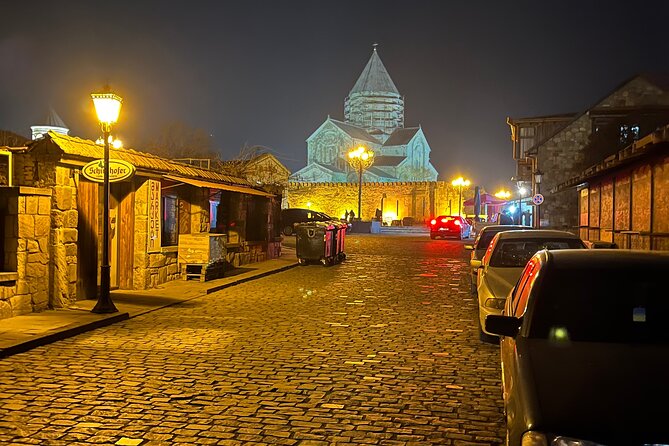
From Jvari, the tour continues to Mtskheta, founded in the fifth century BC. The town served as the capital of the early Georgian Kingdom of Iberia from the third century BC to the fifth century AD. Even after the capital moved to Tbilisi, Mtskheta remained the coronation and burial place for many Georgian kings.
That makes this more than a quick old-town stop. Mtskheta is tied to the country’s religious and royal identity, and your guide can help connect the cathedral to the larger story.
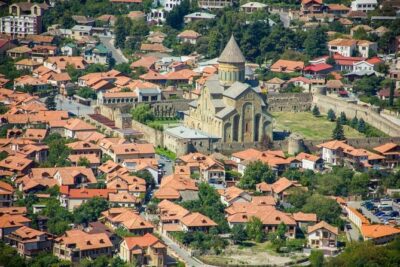
You have about an hour for the visit. The center of attention is Svetitskhoveli Cathedral, an early medieval masterpiece recognized by UNESCO as a World Heritage site. Georgian tradition holds that Christ’s robe lies beneath the cathedral, adding a major spiritual dimension to the building.
I like the contrast between Jvari and Svetitskhoveli. Jvari gives you the hilltop view and the sense of a monastery placed above the town. Svetitskhoveli gives you a closer look at the religious center below, with a history tied to kings, coronations, burials, and sacred tradition.
An hour is enough to see the cathedral and gain a clear sense of Mtskheta’s importance. It is not much time for a slow visit to every corner of the town. If you want a long café stop or extensive wandering, this tour may feel brisk.
Dress and behave respectfully inside the cathedral. This is an active Georgian Orthodox religious site, not only a monument for sightseeing. Your guide is included, so ask for the meaning behind what you see rather than treating the stop as a quick photograph.
Gori and the Stalin Museum
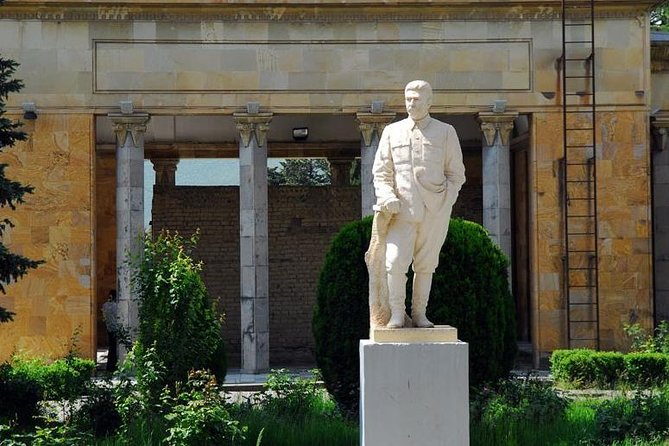
The route then shifts sharply from medieval Georgia to the Soviet period. Gori is the birthplace of Joseph Stalin, and the Stalin Museum is built around that fact. The visit includes the house where Stalin was born and grew up, along with his armored train.
You have about an hour here, and admission is not included. The entry fee is 15 GEL per person. Food and drinks are also separate, so keep your spending plan in mind before the day begins.
This stop is useful because it introduces a historical figure who shaped much of the twentieth century. It can also be the most emotionally complicated part of the day. The site is tied to Stalin’s early life and public legacy, so you should expect a museum focused on that subject rather than a general introduction to Georgian history.
I would ask your guide to explain how the museum presents Stalin and how his birthplace fits into Gori’s story. The supplied tour details do not promise a particular exhibit list or a specific museum presentation, so avoid arriving with expectations about exactly what you will see beyond the birthplace house and armored train.
The visit may appeal most to anyone interested in Soviet history, political history, or the personal stories behind major figures. If Stalin is not a subject you want to spend time on, this hour may feel less rewarding than the cathedral or cave city.
Past guide names connected with this experience include Irakli and Davit. The available comments point to patient communication and guides who added sites or stories that were not expected. Since the booking information does not guarantee a particular guide, treat those names as useful context, not a promise.
Other trips west of Tbilisi:
- Mtskheta, Jvari, gori, uflistsikhe, history and panorama (group tours)
★ 4.5 · 107 reviews - Day tour to Chronicles of Georgia, Gori city, Uplistsikhe cave
★ 5.0 · 86 reviews - Ancient Georgia Group Tour: Mtskheta,Jvari, Gori, Uplistsikhe
★ 4.5 · 73 reviews - Mtskheta – Jvari + Gori – Uplistsikhe Tour
★ 5.0 · 49 reviews
Uplistsikhe Cave Town and the old Silk Road
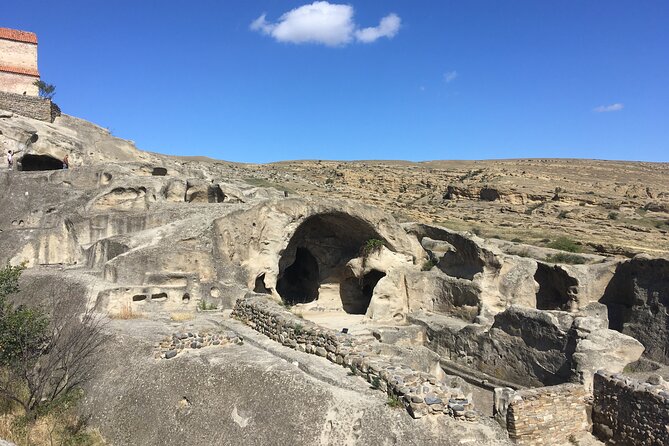
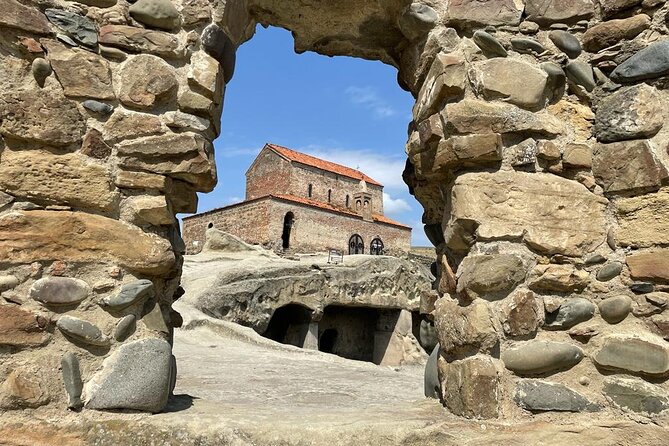
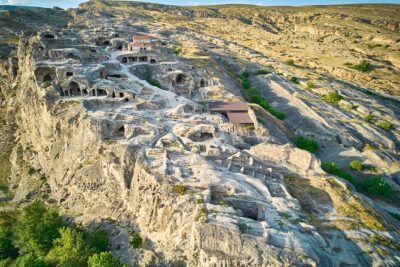
The final major stop is Uplistsikhe, whose name means Fortress of the Lord. This ancient rock-hewn town stood on the path of the old Silk Road and served as a strategic and commercial center. At the height of its prosperity, it had a population of about 20,000.
You have about an hour at the site, with a 15 GEL entrance fee per person. The tour does not include that ticket, so plan for it along with the museum admission.
Uplistsikhe is the most unusual stop on the route. Instead of entering a single church or museum, you walk through a settlement cut directly into rock. Its spaces once formed part of a functioning town, tied to trade and movement across the region.
The name can sound grand, but the appeal is very physical. You can see how rooms, passages, and public spaces were shaped from stone. The setting also helps explain the site’s importance: this was not an isolated cave refuge with no wider role. It sat along a major route and supported commercial and strategic activity.
One hour gives you a strong introduction, though the site can reward a slower pace. You may find yourself wishing for more time to examine the rock-cut spaces and understand how the settlement worked. The surface is an ancient archaeological site, so expect walking and uneven terrain. The supplied information does not state that the route is fully accessible, so anyone with mobility concerns should ask the provider before booking.
Uplistsikhe is a fine final stop because it changes the mood again. After sacred buildings and a modern political museum, you finish with archaeology spread across open rock. It is also the place where sturdy footwear and a little care with your footing matter most.
What the private format changes
This is a private tour, meaning only your group participates. That is a real advantage when you want to ask questions about religion, Georgian kings, Stalin, or the Silk Road without worrying about a large group’s schedule.
The private vehicle also removes the need to piece together separate transport from Tbilisi to Mtskheta, Gori, and Uplistsikhe. Fuel is covered, and pickup and drop-off at your hotel are included. The activity begins in Tbilisi at 10:00 a.m. and ends back at the meeting point.
The tradeoff is that private touring does not automatically mean a slow tour. The route includes four substantial stops within roughly seven hours, with travel between them. I would think of this as an efficient overview, not a leisurely day with long meals and extended time at each location.
The driver-guide is especially important here. A good explanation can tie together places that otherwise seem unrelated. In the available tour comments, Irakli and Davit are singled out for pleasant communication and for pointing out additional sites or stories. Since the guide is not guaranteed by name, confirm the assigned guide if that matters to you.
Food, tickets, and the real cost
The headline price is $100 per person. The included fuel surcharge, private vehicle, guide, and hotel transportation cover the main practical costs, but the advertised rate is not the full day’s spending.
You need to add:
- 15 GEL per person for the Stalin Museum
- 15 GEL per person for Uplistsikhe
- Lunch
- Drinks
- Any other extra entrance fee
The tour information does not include a meal, restaurant, or lunch stop. I would plan to carry water and arrange food according to the provider’s guidance, but do not assume a meal is part of the service.
For a solo participant, $100 is a larger expense than joining a standard group outing. For two or more people, the private format can make better sense, particularly if you value hotel pickup and the chance to ask questions throughout the day.
Group discounts are available, though the exact reduction is not stated. Ask for the current group price before booking. Also confirm the total cost with the two listed admission fees included in your calculation.
Who will get the most from this day
I would recommend this outing to you if you want a broad introduction to the area around Tbilisi and prefer one organized day over several transport arrangements. It suits history-minded visitors who want religious heritage, royal Georgia, Soviet history, and archaeology in one route.
It is also a good match for a small group that values privacy. Families, friends, and couples can travel together in the private vehicle, though the tour information does not provide a special children’s program.
You should think twice if you dislike changing subjects quickly. The route moves from Orthodox Christianity to medieval monarchy, then to Stalin and a prehistoric or ancient rock-cut settlement. That variety is the point, but it can also feel like a lot to absorb.
The tour is not ideal for someone who wants a long, unhurried archaeological visit. Uplistsikhe receives about an hour, as does the Stalin Museum, and Mtskheta also has a set visit time. You get coverage, not unlimited time.
Most people can participate, according to the activity information. Still, the route includes an elevated monastery viewpoint and an ancient cave town, and the accessibility of every surface is not specified. Ask before booking if uneven ground or extended walking could be a concern.
Should you book Sacred Sites and Ancient Wonders?
Book it if you want four major sights, private transport, and a guide in one seven-hour day from Tbilisi. The strongest reasons are the excellent variety, Jvari’s view over Mtskheta, the importance of Svetitskhoveli Cathedral, and the unusual rock-cut setting of Uplistsikhe.
The main caution is pace. You will not have unlimited time at any stop, and the two entrance fees, lunch, and drinks sit outside the $100 price. I would choose this tour for range and convenience, especially with a small group. I would skip it only if you prefer to explore one historic site slowly or have little interest in the Stalin Museum.
Free cancellation is available if you cancel at least 24 hours before the 10:00 a.m. start time. Changes or cancellations made less than 24 hours ahead are not accepted for a refund.
FAQ
Where does the tour start?
The tour starts in Tbilisi, Georgia, with hotel pickup included.
What time does the tour begin?
The scheduled start time is 10:00 a.m.
How long does the experience last?
The tour lasts approximately seven hours and ends back at the meeting point in Tbilisi.
Is this a private tour?
Yes. Only your group participates in the activity.
Which places are included?
The route includes Jvari Monastery, Svetitskhoveli Cathedral in Mtskheta, the Stalin Museum in Gori, and Uplistsikhe Cave Town.
Are admission tickets included?
No. The Stalin Museum costs 15 GEL per person, and Uplistsikhe costs 15 GEL per person. Any other extra entrance fees are also excluded.
Is lunch included?
No. Lunch, food, and drinks are not included in the price.
Can I cancel for a full refund?
Yes, if you cancel at least 24 hours before the experience start time. Cancellations or changes made less than 24 hours before the start are not accepted for a refund.
Just added in Tbilisi
- Private Adorable City Tour of Tbilisi★ 5.0 · 3 reviews
- Old tbilisi walking tour & wine tasting★ 5.0 · 9 reviews
- Tbilisi Airport to Gudauri, Bakuriani, Batumi, Tbilisi★ 5.0 · 3 reviews
- full day Kazbegi-Gudauri-jvari -from Tbilisi★ 5.0 · 6 reviews
- Wine promenade in hospitable Tbilisi★ 5.0 · 17 reviews
- Vardzia. Lake Paravani, Khertvisi & Lomisa castle, Rabati★ 4.5 · 12 reviews
- Your unique photo session in Tblisi, Georgia★ 3.5 · 4 reviews
- Private Wine Tour In Kakheti Region with 7 Wines and Lunch★ 5.0 · 3 reviews
Mtskheta & Jvari Tours, compared.
Mtskheta,Jvari,Bazaar,wine tasting,Chronicles of Georgia
Read our review →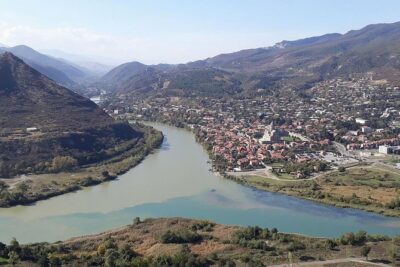
Mtskheta, Jvari, gori, uflistsikhe, history and panorama (group tours)
Read our review →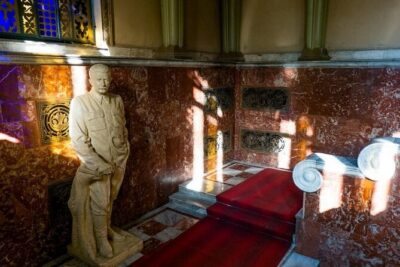
Jvari-Uplistsike-Chronicle of Georgia, PRIVATE Trip
Read our review →
Mtskheta – Jvari. Full City Tour on Hop On Hop Off Bus
Read our review →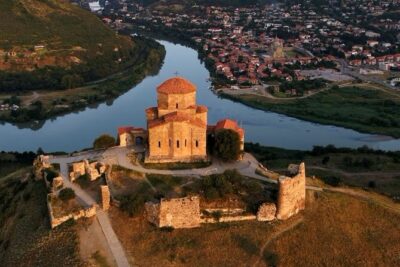
Ancient Georgia Group Tour: Mtskheta,Jvari, Gori, Uplistsikhe
Read our review →
Ancient Mtskheta and Chronicle of Georgia half day tour
Read our review →Browse the lists this tour appears in