
Reviewed · WALKING TOURS
Tbilisi Old Town Walking Tour with a Local Guide
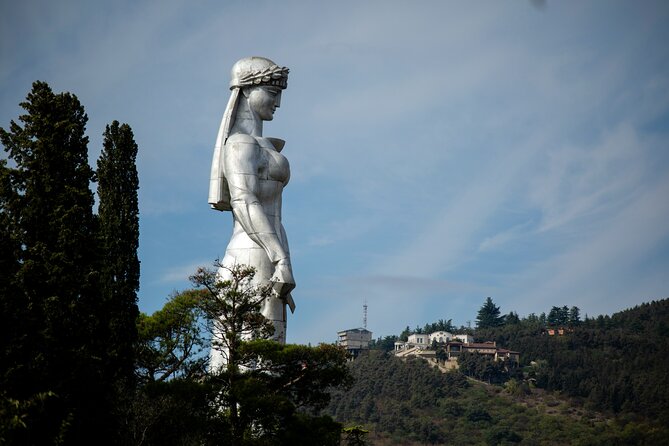
Tbilisi’s Old Town makes more sense when you connect its churches, wine customs, political symbols, and river views in one walk. This tour does that, ending high above the city at Kartlis Deda, the Mother of Georgia, after a ride from Rike Park toward Narikala.
I like the easy mix of major sights and small cultural details, especially the Tamada statue, Georgian toastmaster traditions, and the stop at a traditional bakery. I also like the small group limit of 15, which gives guides such as Teona or Monica room to answer questions. The main drawback is that the pace is brisk, and the cable car details are unclear in the published information, so confirm exactly what your $38 covers before booking.
Key points at a glance
- A compact Old Town route: Cover central Tbilisi in about 3 hours and 15 minutes, with walking time included.
- Culture beyond monuments: Learn about supra feasts, the Tamada toastmaster, Georgian wine, Jewish heritage, Orthodox churches, and Georgia’s European ambitions.
- Strong local guide element: Teona is praised for her stories about Georgian culture and history, while Monica is noted for explaining important monuments in detail.
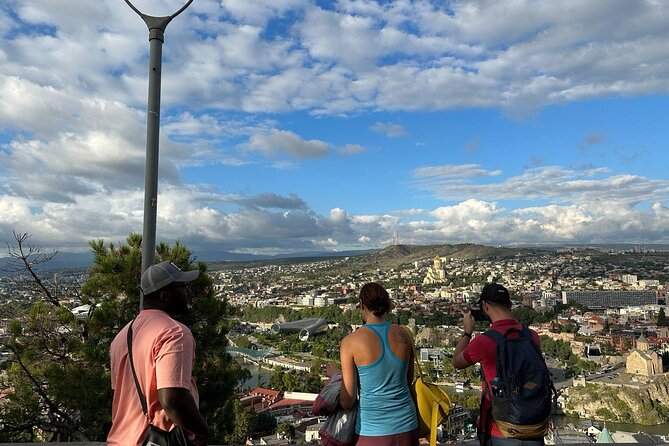
- A good first-day orientation: The route links Freedom Square, the Old Town, the Mtkvari River, Rike Park, and the hill above the city.
- Low extra-cost format: The listed stops are free, though lunch costs about 3 to 5 GEL and the cable car charge should be confirmed.
- A few practical rules: Churches require suitable clothing, photography inside is not allowed, and wine tasting is for adults aged 18 and over.
Why this walk works for a first look at Tbilisi

Tbilisi can feel scattered at first. The river cuts through the city, the Old Town climbs into steep streets, and important sights appear in different architectural layers. This route gives you a useful map in your head without asking you to spend a full day on your feet.
The walk begins at 17 Ioane Shavteli Street and ends at Freedom Square. Along the way, you move from old churches and narrow lanes to modern bridges, public art, political symbols, and a hilltop viewpoint. That change of mood is one of the tour’s strengths.
The guide-led format matters here. A statue may look like a simple photo stop until someone explains the custom behind it. The Tamada, for example, is not just a bronze man holding a wine horn. He represents the toastmaster at a Georgian supra, a feast where hospitality and formal toasts have an important place.
The route is offered in English, and the group can contain up to 15 people. That is small enough for questions without the price of a private tour. The overall rating is 5 out of 5 from 168 ratings, with 99 percent recommending the experience. Those figures suggest a reliable choice for visitors who want interpretation, not just directions between monuments.
A few more things to do in Tbilisi worth a look
- Tbilisi Walking Tour Including Cable Car and Traditional Bakery
★ 5.0 · 1,310 reviews - Tbilisi:Evening Walking & Talking Tour with Wine & Boat Ride
★ 5.0 · 572 reviews - Old Tbilisi Highlights walking tour with wine & 10 tastings
★ 5.0 · 276 reviews
From Berikaoba to Anchiskhati Basilica
The first stop is the Berikaoba sculpture group near Dry Bridge. The figures are expressive and caught in motion, reflecting the freedom and rebellious spirit of the Berikaoba festival. This is a quick stop, only about 10 minutes, but it gives the tour an immediate cultural start rather than opening with a standard church visit.
You then reach Anchiskhati Basilica, the oldest church building in Tbilisi. It is a three-nave basilica dating to the sixth century. Even with only 10 minutes here, the stop helps explain how far back Tbilisi’s religious story reaches.
You should dress respectfully for the church visits. A dress code applies, and photography inside the church is not allowed. The short timing also means this is more of an introduction than a quiet, extended visit. If you want to study the architecture in detail, plan to return on your own.
The Bridge of Peace and the Old Town streets
The Bridge of Peace provides a sharp contrast. Its glass-and-steel structure curves over the Mtkvari River, with a modern design that looks very different from the older buildings around it. The tour uses this stop to show how present-day Tbilisi sits beside its older quarters.
The bridge is free to visit and takes about 10 minutes on the planned route. You get a chance to look back toward the river and ahead toward Rike Park, which becomes important later in the tour.
The walk then continues through Shardeni Street in the Upper Kala district. This small pedestrian street runs between Vakhtang Gorgasali Square and Sioni Street. It is a useful transition into the Old Town, where the route shifts from broad public spaces to a more intimate historic quarter.
Because the tour covers several sights, you should expect short visits rather than long pauses. This suits you if you want an overview and a list of places to revisit. It is less suitable if you prefer sitting in one square for half an hour or taking extensive architectural photographs.
The clock tower, Sioni Cathedral, and Georgian wine

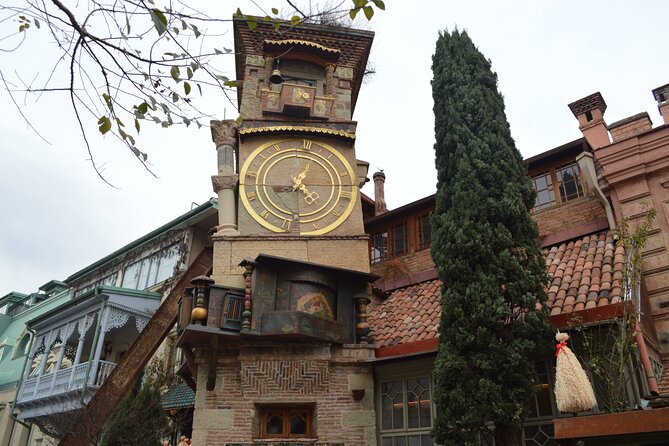
The Rezo Gabriadze Marionette Theater is one of the most distinctive stops. The clock tower in front has unusual architecture, and the guide explains why the theater matters to Tbilisi. You get roughly 10 minutes here, enough to see the building and hear its story, though not enough for a performance.
Next comes Sioni Cathedral. The Sioni complex includes the Cathedral of the Assumption, a fence, and two bell towers. The name comes from a sacred mountain in Jerusalem, and the site remains one of the Old Town’s important religious landmarks.
This is another place where clothing and camera rules matter. You can look inside, but you cannot take photographs inside the church. Keep your visit respectful and follow the guide’s instructions.
Near Sioni Cathedral, the Tamada statue offers one of the tour’s best cultural explanations. The bronze figure holds a kantsi, or wine horn, in a traditional toasting pose. The sculpture is based on an ancient Tamada figurine found in Vani that is more than 2,000 years old.
That small detail connects modern Tbilisi with older Georgian customs. The Tamada leads the toasts at a supra, and the role reflects the value placed on food, wine, conversation, and formal hospitality. If the tour includes the bakery stop and wine tasting described in the experience details, this part of the route gives those tastes useful context. Wine tasting is limited to people aged 18 and over.
Lunch is not included. The planned traditional Georgian bakery stop can cost around 3 to 5 GEL, or roughly 2 to 3 euros according to the supplied details. That makes it an inexpensive chance to try something local, but you should carry some Georgian currency if you want to buy food.
Same base, a different sort of day:
- Day Trip to Kakheti Wine Region Including 9 Wine Tastings
★ 5.0 · 2,774 reviews - Highlights of Caucasus Mountains-Jinvali,Ananuri,Gudauri,Kazbegi(Group tour)
★ 5.0 · 2,682 reviews - Day Trip to Kazbegi and Gudauri
★ 5.0 · 2,009 reviews - Day Trip to Mtskheta Gori and Uplistsikhe
★ 5.0 · 1,801 reviews
Europe Square and Tbilisi’s Jewish heritage
Europe Square brings a more current subject into the walk. Georgian and European Union flags are visible here, reflecting Georgia’s long stated aim of moving closer to the EU. The guide can place that political goal in the setting of daily Tbilisi rather than treating it as an abstract headline.
The square is also part of the route toward Rike Park and the cable car. You get another view of how the Mtkvari River divides and connects the city.
The Great Synagogue of Tbilisi adds a different layer to the Old Town. The building was constructed from 1895 to 1903 by Georgian Jews from Akhaltsikhe. This stop is valuable because the tour does not present Tbilisi as a city with only one religious tradition. Orthodox Christian churches, Jewish heritage, wine culture, and civic identity all appear within a fairly short walk.
The Tree of Life monument follows, with about five minutes for the stop. Georgian artist David Monavardishvili created it in 2016. The guide explains the inspiration and construction of the work, giving you another example of how contemporary art fits into the old quarter.
Rike Park, the cable car, and the climb above the city
Rike Park is described as the center of Tbilisi and is where you take the cable car toward the mountain. The ride is planned for about 15 minutes, including the movement through this part of the route.
The published details need a careful look here. One section says the cable car is included, while another says the admission ticket is not included. Since the tour price is $38 per person, ask the provider, Views Georgia Tours, to confirm whether the cable car fare is covered on your date.
The cable car is not just a transport link. It changes the feel of the tour by taking you from the riverfront to a higher viewpoint. You can see the city spread below and understand the steep relationship between the Old Town and the hills around it.
The tour then reaches Kartlis Deda, the Mother of Georgia. The monument looks down over Tbilisi and is presented as a symbol of Georgian women. This is the final listed stop and a strong place to finish because it pulls together the city views and the country’s national identity.
You should remember that travel time is included in the stated 3 hours and 15 minutes. The tour is not 3 hours and 15 minutes of uninterrupted sightseeing. Some stops last only five or 10 minutes, and the cable car segment takes time as well.
What $38 buys you
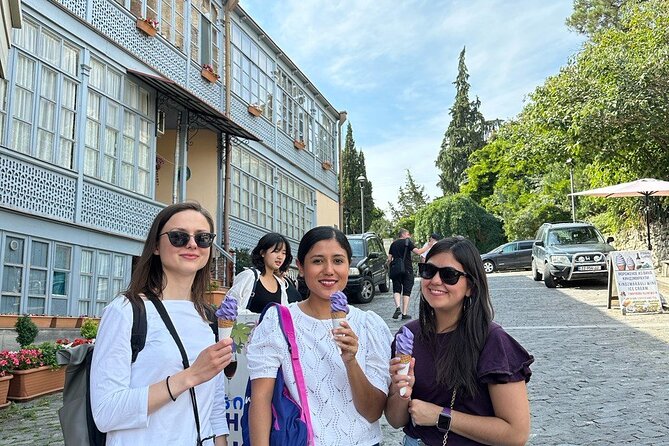
At $38 per person, the tour offers a guide, a planned route through many key Old Town sights, and a small-group setting of no more than 15 people. The value is strongest if you are new to Tbilisi and want stories, orientation, and cultural context in a single outing.
You are not paying for museum admissions because the listed stops are free. Lunch is separate, and the cable car price needs confirmation due to conflicting details. Those extras are small compared with many organized sightseeing tours, but they affect the final cost.
I would compare this tour with a private guide only if your group wants a slower pace or has very specific interests. For a couple or family that wants personal attention without paying private-tour rates, a maximum of 15 people is a sensible middle ground.
The tour is also useful early in a Tbilisi stay. After seeing the main districts and hearing how the city fits together, you can decide where to return. You might want more time at Sioni Cathedral, the Gabriadze theater, the synagogue, or the hilltop viewpoints.
Guide style and the pace of the experience
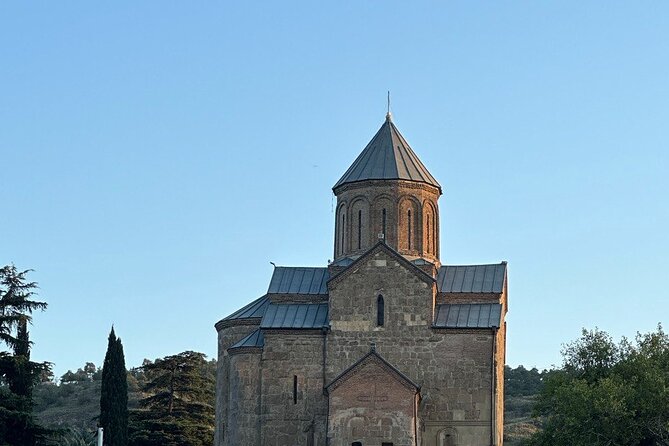
The strongest feature is the guide’s role. Teona is praised for her explanations of Georgian culture and history, her stories, and her friendly help with questions. Monica is also noted for explaining the main monuments in detail. Since guides can vary by departure, you should not assume one specific person will lead your group, but these names show the sort of personal approach the operator aims to provide.
The walk has an educational tone without being limited to dates and building names. You learn why the Tamada holds a wine horn, what the Sioni name refers to, how the synagogue was built, and why EU flags appear at Europe Square.
The schedule does require some discipline. Ten minutes at a church or monument goes quickly, especially if the guide is answering questions. Wear comfortable shoes and be ready to keep moving. The route includes streets and a cable car ride, and the hilltop finish makes it more active than a flat city-center stroll.
Most people can participate, and the tour is near public transportation. Service animals are allowed. The experience requires good weather, with a different date or full refund offered if poor conditions cause cancellation.
Who should book this Tbilisi walking tour?
I would choose this for a first visit, especially if you want a fast but meaningful introduction to Tbilisi. It suits solo visitors, couples, and families who prefer a guide to explain customs instead of reading short signs at each stop.
It is also a good match if you care about Georgian food and wine culture. The bakery stop costs little, and the Tamada explanation gives the wine tradition a human setting. Adults aged 18 and over can take part in the wine tasting element.
You may want another option if you dislike short stops, cannot walk comfortably for more than three hours, or want extensive time inside churches. The tour includes travel time, and none of the listed visits is designed as a long, quiet exploration.
The starting point is 17 Ioane Shavteli Street. The tour ends at Freedom Square, which is useful for continuing into central Tbilisi after the walk. Confirmation arrives at booking, and free cancellation is available up to 24 hours before the start time. Changes or cancellations within 24 hours are not refunded.
Should you book it?
Book this tour if you want a well-packed introduction to Tbilisi that connects monuments with Georgian customs. The best parts are the local explanations, the Tamada statue, the mix of religious traditions, the bakery stop, and the final hilltop view.
Before paying, confirm the cable car inclusion and check the meeting point carefully. If you accept the brisk pace and modest extra costs, $38 is a fair price for a guided route through the Old Town with a maximum of 15 people.
FAQ
How long does the Tbilisi Old Town walking tour last?
The tour lasts approximately 3 hours and 15 minutes. Travel time is included in that duration.
Where does the tour begin?
The meeting point is 17 Ioane Shavteli Street in Tbilisi, Georgia.
Where does the tour end?
The tour ends at Freedom Square in Tbilisi.
Is the tour offered in English?
Yes. The tour is offered in English.
How large is the group?
The experience has a maximum group size of 15 people.
Is lunch included?
No. Lunch is not included. A traditional Georgian bakery stop is planned, where food can cost around 3 to 5 GEL.
Is the cable car included in the price?
The supplied details conflict. One section lists the cable car as included, while another says the admission ticket is not included. Confirm this with Views Georgia Tours before booking.
Are there rules for visiting the churches?
Yes. Churches have a dress code, and photography inside the church is not allowed.
Can I cancel for a full refund?
Yes, if you cancel at least 24 hours before the experience begins. Cancellations or changes made within 24 hours are not refunded. If poor weather cancels the tour, you are offered another date or a full refund.
Just added in Tbilisi
- Chiatura and Katskhi Pillar One Day Urbex Tour★ 5.0 · 14 reviews
- Soviet Story – Private day trip to Chiatura, Stalin’s museum and Katskhi pillar★ 4.5 · 15 reviews
- Full Day Tbilisi City Tour with Wine Tasting & Cable Car Ride★ 5.0 · 18 reviews
- Tbilisi Walking Tour Including Cable Car and Wine Tasting★ 5.0 · 16 reviews
- 8-Day Trekking Group Tour in Svaneti★ 5.0 · 21 reviews
- Private five days tour to Svaneti-Mestia, Ushguli, Becho,Chalaadi★ 5.0 · 21 reviews
- Join a Local for a Market Tour, Cooking Class and Meal in her Tbilisi Home★ 5.0 · 15 reviews
- Bestseller Day Trip to Kazbeg/Gergeti Delicious Lunch at Rooms★ 5.0 · 22 reviews
Walking Tours, compared.

Tbilisi Walking Tour Including Cable Car and Traditional Bakery
Read our review →
Evening Walking & Talking Tour with Wine & Boat Ride
Read our review →
Old Tbilisi Highlights walking tour with wine & 10 tastings
Read our review →
Old Tbilisi Tour: Private Walking Tour With Wine Tasting
Read our review →
Private Tbilisi Food Tour: 9 Tastings Walk in Bohemian District
Read our review →
Discover Tbilisi: Hidden Gems and Iconic Sights Walking Tour
Read our review →
Browse the lists this tour appears in