
Reviewed · CANYON & CAVE TOURS
Tsalka Canyon Tour from Tbilisi with Poka Nunnery, Gorelovka and Asureti
The most striking part of this day is its variety. In roughly 12 hours, you move from a sixth-century cathedral to a high, often ice-covered lake, a working nunnery, a Doukhobor village, a dramatic canyon, and a former German settlement. This is southern Georgia beyond the usual Tbilisi circuit, not a quick stop at one famous sight.
I like the private format, since your group can travel in an air-conditioned vehicle and ask questions along the way. I also like the human touches: guide Giorgi has been praised for his care, local music knowledge, good photo stops, and even returning forgotten luggage to a hotel the next day. The main drawback is the length. You will spend many hours on the road, and the canyon requires about 30 minutes of hiking, so this suits you best if you have moderate physical fitness and a full day to spare.
Six details that define this Georgia day trip
- Manglisi Sioni dates back to the sixth or seventh century, with an earlier Christian church linked to Georgia’s conversion.
- Paravani Lake sits at 2,073 meters, making weather and cold a real part of the experience.
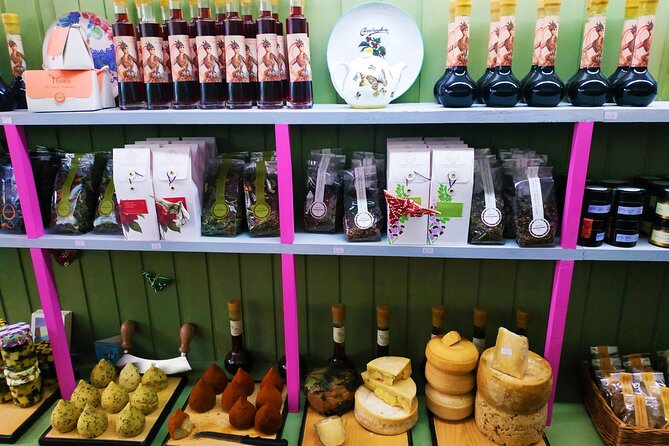
- Poka Nunnery produces cheese, candles, cloisonne enamel, and sweets, giving you a chance to see a living religious community at work.
- Gorelovka introduces you to the Doukhobors, a Russian-origin Christian group with unusual religious and social traditions.
- Dashbashi Canyon includes a 1,800-meter route and a 240-meter glass bridge, with a diamond-shaped cafe above the canyon.
- Asureti preserves German-built homes, a Lutheran church, a cemetery, and the old Shala grape variety, all within a long day from Tbilisi.
Why this private 12-hour route is worth your time
This is not a streamlined sightseeing trip. It is a wide-ranging journey through Javakheti and nearby villages, with each stop offering a different piece of Georgian history. You will see Orthodox Christian sites, high-country nature, minority culture, religious craftwork, and traces of German settlement in one day.
The private setup matters. Only your group participates, so the day is more flexible than a large coach trip. You can ask questions in English, stop for views, and have a more direct exchange with your guide. Pickup is offered in Tbilisi, and the vehicle is air-conditioned, an important comfort when the route takes about 12 hours.
Giorgi has served as guide on this experience, and the strongest praise centers on his personal care. He is described as punctual, warm, and good at explaining local history, culture, and music. One especially useful detail: after a guest left luggage in the vehicle, he drove back to the hotel the following day to return it. That suggests the sort of attentive service you hope for on a long private day.
At $197.50 per person, the price is not low, especially for a solo traveler. But you are paying for a private vehicle, pickup, a full day of guiding, several admission stops, and transport across a large portion of southern Georgia. For two or more people sharing the private experience, the value improves. Group discounts may also be available.
Lunch is not included in the standard tour price, though the route stops at a restaurant. You can choose a lunch and wine option, and the food experience may be a highlight. A local family restaurant serving organic and local products has been used on the route, so this is a good chance to eat Georgian food outside the standard city restaurant scene.
More canyons and caves reachable from Tbilisi:
- Kutaisi Canyons and Caves from Tbilisi Full Day Tour
★ 5.0 · 448 reviews - Diamond bridge and Dashbashi canyon day excursion from Tbilisi
★ 5.0 · 393 reviews - Day tour to Chronicles of Georgia, Gori city, Uplistsikhe cave
★ 5.0 · 86 reviews
Manglisi Sioni and the beginning of Georgia’s Christian story
Your first stop is Manglisi Sioni, a cathedral with roots reaching back to the fourth century and a main structure dating from the sixth or seventh century. You have about 30 minutes here, with admission included.
The site connects to the early spread of Christianity in Georgia. According to the local tradition described for the cathedral, Byzantine Emperor Constantine gave King Mirian treasures and pieces associated with the Holy Cross, then sent Bishop John to build churches in Georgia. Before reaching Mtskheta, Bishop John stopped at Manglisi and began constructing a temple.
That story gives the visit more weight than a quick photo stop. You are looking at a place tied to the first Christian era of the country, not simply an old stone church. The short visit should be enough to see the architecture and hear the main background, though it will not allow a long study of every detail.
Dress matters here and at the other Georgian Orthodox churches. Women need a head scarf and a dress, while men should not wear short trousers. Scarves and wraparound clothing can be available near church entrances, but I would still dress conservatively from the start. It saves time and avoids an awkward scramble at the door.
Paravani Lake at 2,073 meters
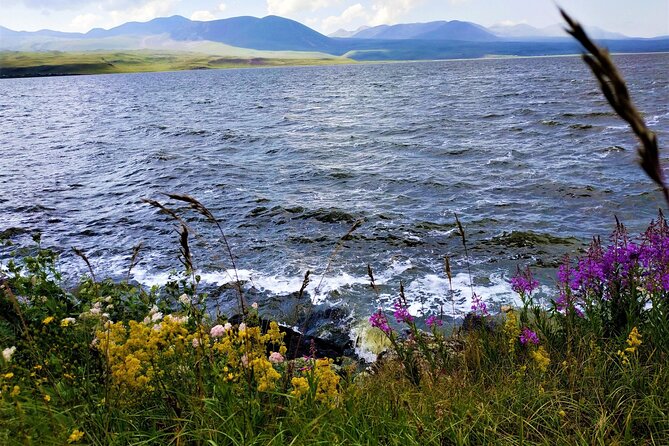
The road then climbs to Paravani Lake, the largest lake in Georgia by area, covering about 38 square kilometers. At 2,073 meters, it is also a high, exposed place, and you should not expect the same weather as in Tbilisi.
The visit lasts around 15 minutes. That is brief, but it gives you time to take in the open water and high-country setting. From mid-autumn through mid-spring, the lake is covered with ice, so the appearance changes sharply with the season.
This is a scenic pause rather than a walk or an extended activity. Bring an extra layer, even if the day began warmly in Tbilisi. The short stop also shows the tradeoff built into the route: you cover a great deal of territory, but some places are seen quickly.
Poka Nunnery and its local craftwork
Poka Nunnery of St. Nino is one of the more distinctive stops. St. Nino is said to have stayed here for two days after entering Georgia across the Javakheti mountains. She then preached Christianity, followed the Mtkvari River, and continued toward Mtskheta.
The nunnery has served a missionary purpose for years, representing a Georgian-speaking religious community in an otherwise unfamiliar cultural setting. That detail helps explain why the stop feels connected to local identity, not just church architecture.
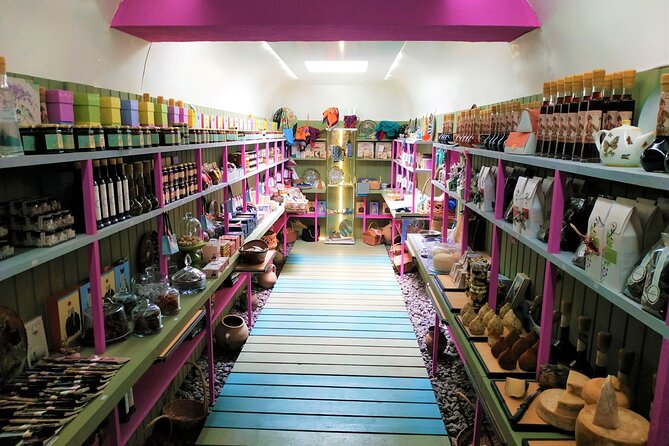
You have about 30 minutes to visit. The most practical reason to stop is the nunnery’s own production work. The community makes cheese, candles, cloisonne enamel, and confectionery products. These items give you something tangible to take home and show how a religious institution can support its work through skilled local production.
If you like food and handmade goods, Poka may be one of the day’s best stops. Products are elegantly packaged, and the cheese, sweets, and other items make more personal souvenirs than generic shop purchases. The time is still limited, so do not expect a long workshop or a full tour of every production area.
Same base, a different sort of day:
- Day Trip to Kakheti Wine Region Including 9 Wine Tastings
★ 5.0 · 2,774 reviews - Highlights of Caucasus Mountains-Jinvali,Ananuri,Gudauri,Kazbegi(Group tour)
★ 5.0 · 2,682 reviews - Day Trip to Kazbegi and Gudauri
★ 5.0 · 2,009 reviews - Day Trip to Mtskheta Gori and Uplistsikhe
★ 5.0 · 1,801 reviews
Gorelovka and the Doukhobor story
Gorelovka offers a different kind of history. The village was founded by Doukhobors, a Christian spiritual group of Russian origin. Between 1841 and 1845, about 5,000 Doukhobors were relocated from Russia to Georgia during the reign of Emperor Nicholas I.
Their beliefs set them apart from both the state and the established church. They rejected secular government, priests, icons, and church rituals. Marriage was the only custom they followed in the account provided for the village, and women held an equal place with men within the family.
Your 30-minute stop includes the Ethnographic Museum, with no admission fee. This is a useful counterpoint to the Orthodox churches earlier in the day. Instead of focusing on official religious buildings, you learn about a community that resisted formal church structures and preserved its own way of life.
Gorelovka is best approached with patience. It is not a polished attraction built around a large display. Its value comes from the story of the people who lived there and the chance to understand one of Georgia’s minority communities. The museum stop is short, so your guide’s explanations will be important.
Dashbashi Canyon and the glass bridge
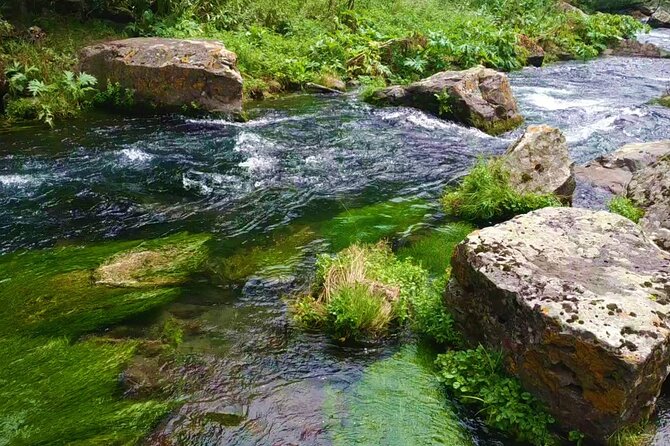
Dashbashi Canyon is the day’s main outdoor stop, with about two hours set aside for the complex. The canyon is known for cascading waterfalls that take on an emerald color, with water breaking into many smaller falls.
To reach the canyon river, you follow a path of about 1,800 meters. The stated access time includes roughly 30 minutes of hiking, so wear shoes that can handle an uneven route. This is not a stop where you simply step out of the vehicle, take one picture, and climb back in.
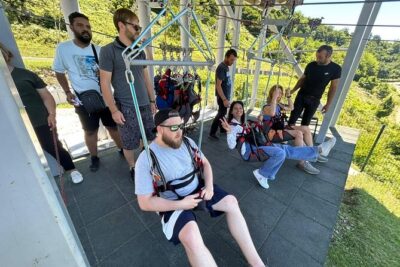
The complex also includes a 240-meter glass bridge crossing the canyon. A diamond-shaped cafe sits in the middle, creating an unusual viewpoint above the gorge. The bridge may be the most modern and engineered feature of the day, while the waterfalls provide the natural drama.
You should know two limits before booking. First, the canyon closes during bad weather. Second, the required height for entering the canyon is more than 1.2 meters. Weather can also affect how enjoyable the walk feels, so keep your schedule flexible and check conditions before departure.
Two hours gives you time to walk, see the waterfalls, use the bridge, and pause for views. It may feel tight if you want a slow hike or a long cafe stop, but it is enough for a focused visit. The canyon is the most physically demanding part of the tour, and you should save some energy for the return walk.
Asureti and the German chapter of Georgian history
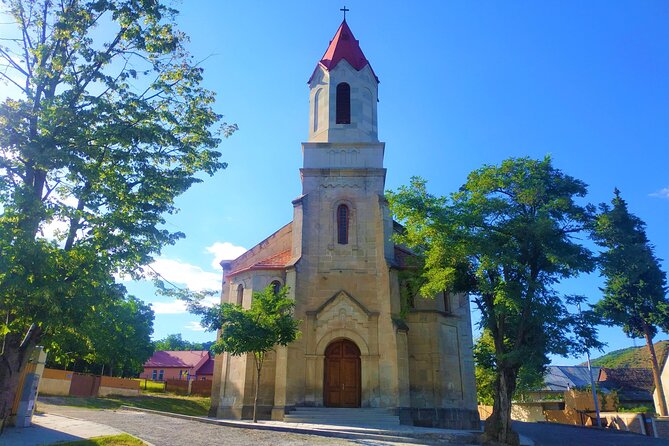
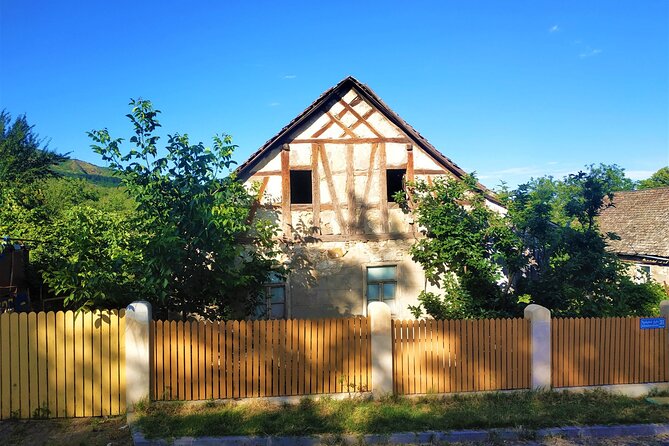
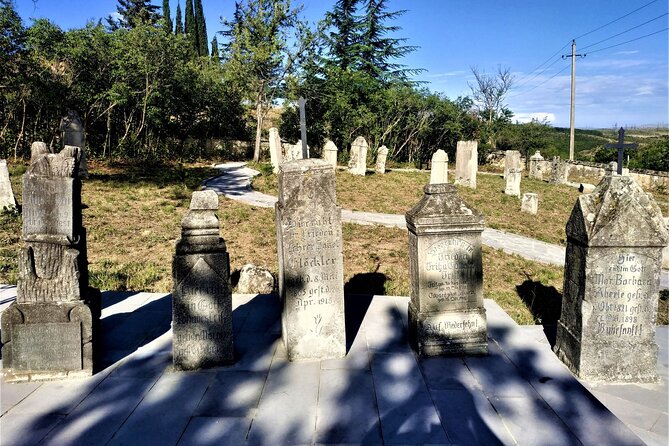
The final stop is Asureti, a village founded by about 7,000 German colonists who settled here in 1817. They lived in Georgia for nearly 125 years before Stalin deported Germans from Georgia to Central Asia in 1941. Only those married to Georgians were allowed to remain.
The village still contains traces of that settlement. Houses built without cement or nails, oak balconies, a sulfur bath, and a wine cellar show the practical skill of the early residents. You will also see a Lutheran church from 1871 and a cemetery.
Asureti has another link to wine. The old Georgian grape variety called Shala was found in the forest by a German farmer named Shalma. That detail neatly connects German settlement with Georgia’s long wine culture.
You have about 30 minutes here, so expect a compact look rather than an extended village walk. The stop works well at the end of the day because it gives you one final historical layer. By then, you have seen Georgian Orthodox heritage, Doukhobor culture, a nunnery, and German colonial history. Asureti adds yet another group that helped shape the country.
Food, wine, and the value of the day
The standard tour does not include lunch, but the route stops at a restaurant. You can add a lunch and wine option, which makes sense on a day this long. Eating locally prepared food breaks up the driving and gives you a chance to try products from the region rather than relying on packaged meals.
A family-run restaurant on this route has served organic, local food and received especially warm praise for its hospitality. I would consider the meal option if you want the day to feel more complete. If you prefer to keep costs down, confirm what you need to bring or purchase, since lunch is not part of the standard price.
The included admissions and private transport help justify the cost. You are not only paying to see Dashbashi Canyon. You are covering a broad route that would be difficult to organize efficiently by public transport in one day. The value is strongest for a small group that wants a private guide and does not want to arrange several separate rides.
Who should book this tour?
You should consider this tour if you want to get beyond Tbilisi and prefer historical context over a simple scenic drive. It suits you especially well if you enjoy religious sites, minority communities, village architecture, local food, and varied scenery.
It is also a good choice for a small group that values privacy. The private format lets you travel at your group’s pace within the fixed route, and you can ask detailed questions in English. The air-conditioned vehicle is another practical plus on a long day.
I would hesitate if you dislike long drives, want a slow visit at each stop, or have trouble with a 30-minute hike. The itinerary covers a lot of ground, and several stops last only 15 or 30 minutes. Bad weather can also close Dashbashi Canyon, although a canceled tour due to poor weather brings the choice of another date or a full refund.
Free cancellation is available when you cancel at least 24 hours before the start time. Changes or cancellations made within 24 hours are not refunded, and the local cutoff time applies.
Final call: a strong choice for curious, active visitors
I recommend this tour for you if your ideal day mixes scenery, old churches, local food, and stories about communities that are easy to miss. The combination of Poka Nunnery, Gorelovka, and Asureti gives the day more substance than a standard canyon outing.
Book it if you can handle the early 8:00 a.m. start, long hours on the road, church dress requirements, and moderate walking. The price is easier to justify when shared by a small group, especially if you value a private vehicle and a guide such as Giorgi, whose careful service and local explanations have made a strong impression.
Skip it if you want a short, easy excursion with plenty of free time. For the right visitor, though, this is an unusually broad look at southern Georgia, with Dashbashi Canyon as the visual centerpiece and the smaller cultural stops giving the day its real character.
FAQ
What time does the tour start?
The tour starts at 8:00 a.m. and lasts approximately 12 hours.
Is pickup from Tbilisi available?
Yes. Pickup is offered in Tbilisi.
Is this a private tour?
Yes. Only your group participates in the activity.
Is lunch included?
Lunch is not included in the standard tour. The route stops at a restaurant, and a lunch and wine option is available.
How much walking is required at Dashbashi Canyon?
You need to hike for around 30 minutes to reach the canyon. The canyon complex also includes a 1,800-meter path to the river.
What happens if bad weather closes Tsalka Canyon?
The canyon closes during bad weather. If the tour is canceled for this reason, you will be offered a different date or a full refund.
Just added in Tbilisi
- Private Adorable City Tour of Tbilisi★ 5.0 · 3 reviews
- Tbilisi Airport to Gudauri, Bakuriani, Batumi, Tbilisi★ 5.0 · 3 reviews
- full day Kazbegi-Gudauri-jvari -from Tbilisi★ 5.0 · 6 reviews
- Old tbilisi walking tour & wine tasting★ 5.0 · 9 reviews
- Your unique photo session in Tblisi, Georgia★ 3.5 · 4 reviews
- Wine promenade in hospitable Tbilisi★ 5.0 · 17 reviews
- Vardzia. Lake Paravani, Khertvisi & Lomisa castle, Rabati★ 4.5 · 12 reviews
- Private Wine Tour In Kakheti Region with 7 Wines and Lunch★ 5.0 · 3 reviews
Canyon & Cave Tours, compared.
Kutaisi Canyons and Caves from Tbilisi Full Day Tour
Read our review →
Diamond bridge and Dashbashi canyon day excursion from Tbilisi
Read our review →
CANYONS & CAVE Tour from Kutaisi – Okatse, Martvili & Prometheus
Read our review →
Day tour to Chronicles of Georgia, Gori city, Uplistsikhe cave
Read our review →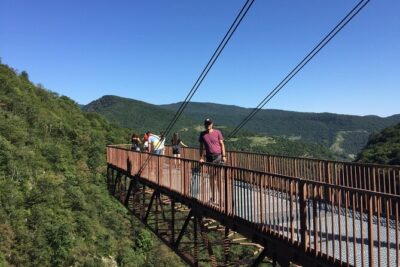
Martvili Canyon & Prometheus Cave, Georgian Lunch
Read our review →
Private Canyon &Cave Tour from Batumi(Martvili,Okatse,Prometheus)
Read our review →
Martvili Canyon & Prometheus Cave Group Tour from Batumi
Read our review →
Prometheus Cave, Okatse Canyon & Martvili Canyon from Kutaisi
Read our review →Browse the lists this tour appears in