
Reviewed · TOURS IN TBILISI
Old Town and Beyond: A Tbilisi Silk Road Feast with Culinary Backstreets
Tbilisi’s best food stories often sit behind plain doors. This seven-hour walk leads you from an underground Azeri tea house to monastery-made sweets, a small wine bar, sizzling shkmeruli, fresh khinkali, and an artisanal cheese shop, with old churches filling the gaps between bites. It is a generous way to meet the city through both appetite and memory.
I like the small group of no more than seven, which gives a guide room to explain unfamiliar dishes and answer questions. I also like the mix of food and place: Anchiskhati Basilica, Sioni Cathedral, Parliament, and Metekhi Cathedral are not just scenery between meals. The main caution is simple: come very hungry. Seven hours of food can be a lot, especially if you prefer light lunches or have dietary limits that have not been discussed in advance.
Key things to know before booking
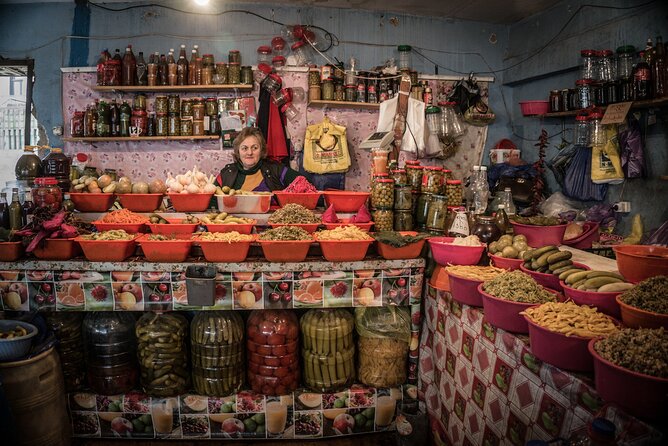
- Seven food-focused stops: Expect tea, monastery products, wine, shkmeruli, khinkali, and cheese rather than one large restaurant meal.
- A proper walking route: The food is tied to Old Town lanes, churches, Freedom Square, Parliament, and the area around Metekhi Cathedral.
- A maximum of seven people: The small format should make conversation and tasting explanations easier.
- English-speaking guides with personality: Maka, Crystal, and Kristo are named in the experience material, though your guide may vary.
- A full-day appetite is useful: The route lasts about seven hours, and one past participant felt there was no need for either breakfast or dinner afterward.
- $125 is a food-and-history price: You are paying for several tastings, a guide, and a carefully connected city walk, not simply transportation or admission tickets.
A Silk Road food walk with churches between courses
This is not a quick introduction to Georgian cuisine. It is a long, deliberate walk through Tbilisi’s food culture, using the city’s Silk Road past as the connecting thread.
You begin at 10:00 a.m. near Waterfall Square on Abano Street in Old Town and finish at ღvino Underground on Galaktion Tabidze Street. The route takes roughly seven hours. You should expect to walk through central Tbilisi while stopping often for food and conversation.
That format matters. Georgian cooking makes more sense when you learn how local products, Orthodox monasteries, wine traditions, and neighborhood specialists fit together. A guide can explain not only what is on your plate, but also why a church shop sells certain foods, why Georgian wine has such a strong place in local culture, and how familiar dishes differ across the country.
The small group is one of the tour’s strongest practical features. With only seven places available, the guide can keep the pace personal. The experience has been led by guides including Maka, Crystal, and Kristo. Their roles appear to go beyond naming dishes. You can expect the history of Tbilisi and Georgia to receive nearly as much attention as the food.
Other trips people book in Tbilisi:
- Day Trip to Kakheti Wine Region Including 9 Wine Tastings
★ 5.0 · 2,774 reviews - Highlights of Caucasus Mountains-Jinvali,Ananuri,Gudauri,Kazbegi(Group tour)
★ 5.0 · 2,682 reviews - Day Trip to Kazbegi and Gudauri
★ 5.0 · 2,009 reviews
Starting underground with Azeri tea in Old Town
The first stop is an underground Azeri tea house in Tbilisi’s atmospheric Old Town. You have about 30 minutes here, and the admission is included.
Tea is a smart opening. It gives you a gentle start before the heavier dishes arrive, and it points to Tbilisi’s position at the meeting point of different cultures. The stop also makes clear that Georgian food culture is not a single, sealed tradition. The city has long absorbed influences from communities moving along trade routes through the Caucasus.
Because this is a short stop, do not expect a full meal or a long formal tea ceremony. Think of it as your first taste and a chance to settle into the group. Starting in Old Town also puts you directly into the city’s older streets rather than beginning with a generic restaurant visit.
Sioni Cathedral and the food of Orthodox monasteries
The walk continues to Sioni Cathedral, followed by a church-run shop selling products made by Orthodox monasteries. You spend about an hour in this part of the route, sampling the shop’s treats.
This is one of the more distinctive parts of the day. Monasteries in Georgia have long been associated with small-scale craft production, and the stop gives you a direct link between religious institutions and food making. Instead of treating church architecture as something to photograph and leave behind, the walk connects the building to the products made within that tradition.
The tasting is also useful for anyone unfamiliar with Georgian sweets and preserved foods. Your guide can explain what you are eating and how such products fit into local life. If your interest is limited to the famous dishes, this stop may feel less immediately exciting than khinkali or chicken. I would still keep it on the list, since it offers a side of Georgian food culture that a standard restaurant meal may miss.
Freedom Square and small-scale Georgian wine
Near Freedom Square, the group visits an unusual wine bar for a tasting focused on small Georgian producers. The scheduled time is about an hour.
Wine is not a decorative add-on here. It is one of the clearest ways to understand Georgia’s place in the region. The tasting gives your guide a chance to discuss the range of local production and help you compare wines that may not appear on a basic restaurant menu.
The emphasis on small-scale producers is especially valuable. You are not simply ordering a standard glass and moving on. You are learning how Georgian winemaking reaches the table through independent makers and specialist bars.
This stop could be a highlight for wine drinkers, but it may be less rewarding if you do not drink alcohol. The supplied details do not say whether nonalcoholic alternatives are available, so ask before booking if that matters to you. The wine is scheduled before the later food stops, so pacing yourself is sensible.
Same base, a different sort of day:
- Day Trip to Mtskheta Gori and Uplistsikhe
★ 5.0 · 1,801 reviews - Tbilisi Walking Tour Including Cable Car and Traditional Bakery
★ 5.0 · 1,310 reviews - Day Trip to Armenia Including Homemade Lunch
★ 5.0 · 1,162 reviews - Kakheti Wine Region: Signagi and Bodbe Tour with 10 Wine Tastings
★ 5.0 · 1,019 reviews
Anchiskhati Basilica, Tbilisi’s oldest church
Anchiskhati Basilica receives about 45 minutes. It is described as the oldest church in Tbilisi and an important architectural and cultural site.
This is where the day’s food stops gain context. Tbilisi is not only a collection of restaurants and tasting rooms. Its old churches show how belief, politics, craft, and city life have overlapped for centuries. Your guide can connect the basilica to the streets you have already walked and to the food traditions you are sampling.
The stop is long enough to look around without turning the tour into a formal church visit. You should dress and behave respectfully in this setting. As with any full-day walking tour, the balance here depends on your personal interests. Food-first visitors may want to move on quickly, while anyone interested in architecture and Georgian culture will appreciate the pause.
Shkmeruli near the Rezo Gabriadze theater
Near the Rezo Gabriadze Marionette Theater, you sit down for shkmeruli, a sizzling Georgian chicken dish. This stop lasts about 45 minutes.
Shkmeruli is a good choice for the middle of a food walk because it feels like a proper feast dish. The description identifies it as a centerpiece of Georgian celebrations, so this is more than a casual snack. It gives you a chance to experience the hearty, communal side of Georgian cooking.
The nearby theater adds another layer to the stop. Even if the tour does not include a performance or admission, the location places your meal in one of central Tbilisi’s better-known cultural areas. You get a meal and a landmark without splitting the day into unrelated sightseeing blocks.
This is also one reason breakfast is optional at best. The tastings build toward substantial food, and shkmeruli is not the sort of dish most people treat as a tiny sample.
Khinkali by Parliament
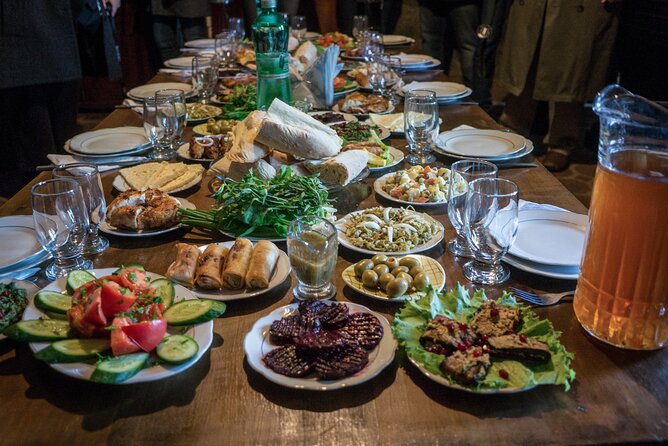
Near the Parliament of Georgia, the group visits a khinkali specialist and samples freshly made dumplings. The stop is scheduled for about an hour.
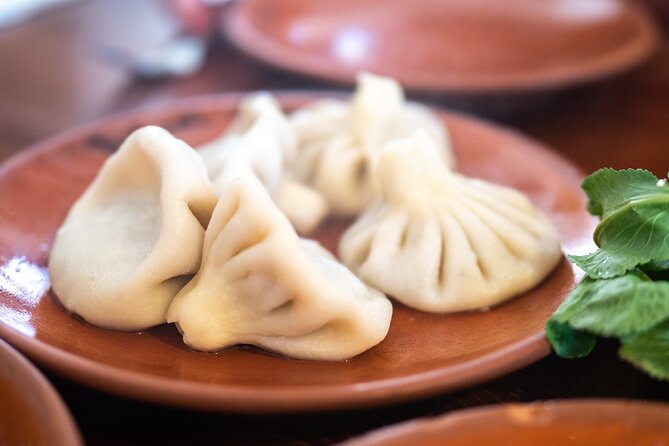
Khinkali is one of Georgia’s best-known foods, but the value here comes from meeting someone described as a master of the dish and trying dumplings made fresh. Your guide can explain the varieties and the details that separate one style from another. That kind of instruction is useful because khinkali has its own eating method, and a first attempt can be messy.
The location near Parliament also keeps the food tied to the working center of the capital. You are not being shuttled from one isolated restaurant to another. The walk shows how food businesses sit alongside government buildings, churches, theaters, and old residential streets.
This is likely to be one of the most filling stops. If you have a small appetite, pace yourself earlier in the day. The experience is designed around sampling many foods, not finishing a full restaurant portion at every stop.
Metekhi Cathedral and an artisanal cheese tasting
The route passes Metekhi Cathedral before reaching an artisanal cheese shop. The cathedral portion takes about 30 minutes, followed by a cheese tasting as part of the final food stop.
Metekhi is one of Tbilisi’s most recognizable religious landmarks, set above the river area. Here it functions as both a sightseeing stop and a bridge to the final tasting. The day keeps returning to the same idea: food in Tbilisi is shaped by place, religion, trade, and local specialists.
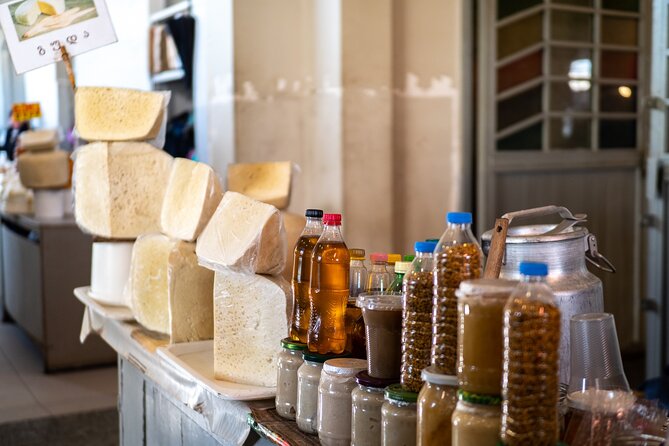
Cheese is a fitting finish after the heavier dishes. It lets you end with a product that can show regional differences without requiring another full meal. The stop should also help you think about Georgian food beyond the dishes most often served to visitors.
You may be quite full by this point. That is not a flaw in the route, but it is a real planning issue. If you are not used to long tasting walks, take small portions when possible and tell your guide early if you need to slow down.
What $125 buys you
At $125 per person, this is not a bargain-priced snack crawl. It is also not merely a guided stroll. The price covers roughly seven hours, an English-speaking guide, several tastings, and access to small food businesses that would be hard to connect on your own in one day.
The value is strongest if you want a guide to explain the food while leading you through central Tbilisi. You are paying for the sequence: tea, monastery products, wine, a cooked chicken dish, dumplings, cheese, and historic sites. You also avoid the work of researching where to go and how to combine these stops efficiently.
The price may feel high if your main goal is inexpensive sightseeing or one big Georgian meal. The experience includes no stated admission charges at the stops, so the value is mainly in the food and guiding rather than ticketed attractions. I would compare it with the cost of several separate meals, drinks, and a private-feeling small-group guide before deciding.
Who will get the most from this day
I would recommend this walk to you if you like food with context. It suits first-time visitors who want a broad introduction to Tbilisi, as well as returning visitors who want to move beyond the most obvious restaurants.
It is especially good for:
- Couples who want a long shared food experience
- People interested in Georgian history and Orthodox culture
- Wine drinkers who want to try small-scale Georgian producers
- Curious eaters who want more than khinkali and khachapuri
- Anyone who prefers a small group to a large bus tour
It may be less suitable if you want a short activity, dislike repeated tastings, or need a carefully controlled diet. The provided information does not list specific dietary substitutions, so ask about your needs before confirming. Most people can participate, service animals are allowed, and the meeting points are near public transportation.
The route requires decent stamina simply because it lasts seven hours and combines walking with several courses. It is not presented as a strenuous hike, but you should plan for a full morning and afternoon rather than a quick two-hour outing.
Timing, meeting points, and cancellation details
Meet at 10:00 a.m. at Waterfall Square, 21 to 23 Abano Street, in Tbilisi’s Old Town. The experience ends at ღvino Underground, 15 Galaktion Tabidze Street.
A mobile ticket is provided, and the activity is offered in English. Confirmation is sent within 48 hours of booking, subject to availability. Since the group is capped at seven people and the activity requires a minimum number, booking well ahead is sensible. It is booked, on average, 44 days in advance.
You can cancel for a full refund up to 24 hours before the start time. Changes or cancellations inside that window are not accepted for a refund. The activity also depends on good weather. If poor weather or an unmet minimum causes cancellation, you are offered another date or experience, or a full refund.
Should you book the Tbilisi Silk Road Feast?
Book it if you want a full day of eating, walking, and explanation, not just a list of dishes. The strongest parts are the small group, the guide-led context, and the unusual range of stops, from Azeri tea and monastery products to wine, shkmeruli, khinkali, and cheese.
I would be particularly happy to book this near the start of a Tbilisi stay. The guide can give you useful background on local foods and neighborhoods, and the route may help you decide what to seek out later on your own.
Skip it if seven hours of food sounds tiring, if you want a low-cost city walk, or if you need confirmed dietary arrangements that are not stated here. For everyone else, $125 buys a substantial introduction to Tbilisi, with enough local flavor to make the city feel more than a sightseeing checklist.
FAQ
How long does the Tbilisi Silk Road Feast last?
The experience lasts approximately seven hours.
What time does the tour start?
It starts at 10:00 a.m.
Where does the experience begin?
The meeting point is Waterfall Square, 21 to 23 Abano Street, in Tbilisi, Georgia.
Where does the experience end?
The route ends at ღvino Underground, MRR2+9GQ, 15 Galaktion Tabidze Street, Tbilisi.
How many people can join?
The group has a maximum of seven people.
Is the tour offered in English?
Yes. The experience is offered in English.
What food and drink are included?
The route includes Azeri tea, treats from Orthodox monasteries, a Georgian wine tasting, shkmeruli, freshly made khinkali, and an artisanal cheese tasting.
Can I cancel for a refund?
Yes. You can cancel at least 24 hours before the start time for a full refund. Cancellations or changes made less than 24 hours before the start time are not refunded.
Just added in Tbilisi
- 8-Day Trekking Group Tour in Svaneti★ 5.0 · 21 reviews
- Private five days tour to Svaneti-Mestia, Ushguli, Becho,Chalaadi★ 5.0 · 21 reviews
- Join a Local for a Market Tour, Cooking Class and Meal in her Tbilisi Home★ 5.0 · 15 reviews
- Chiatura and Katskhi Pillar One Day Urbex Tour★ 5.0 · 14 reviews
- Soviet Story – Private day trip to Chiatura, Stalin’s museum and Katskhi pillar★ 4.5 · 15 reviews
- Full Day Tbilisi City Tour with Wine Tasting & Cable Car Ride★ 5.0 · 18 reviews
- Tbilisi Walking Tour Including Cable Car and Wine Tasting★ 5.0 · 16 reviews
- Martvili Canyon & Prometheus Caves Private Day Tour from Tbilisi★ 5.0 · 25 reviews
Tours in Tbilisi, compared.
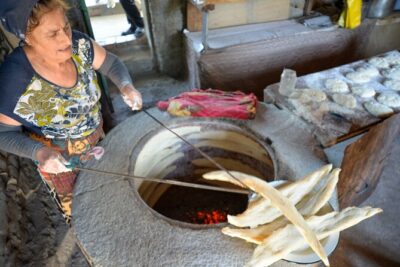
Day Trip to Kakheti Wine Region Including 9 Wine Tastings
Read our review →
Highlights of Caucasus Mountains-Jinvali,Ananuri,Gudauri,Kazbegi(Group tour)
Read our review →
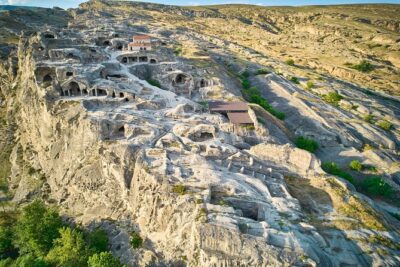

Tbilisi Walking Tour Including Cable Car and Traditional Bakery
Read our review →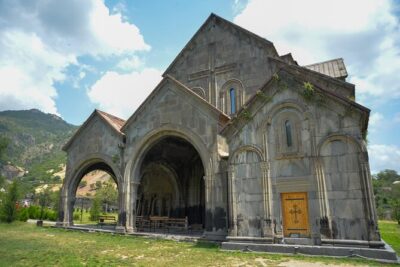

Kakheti Wine Region: Signagi and Bodbe Tour with 10 Wine Tastings
Read our review →
Mtskheta,Jvari,Bazaar,wine tasting,Chronicles of Georgia
Read our review →Browse the lists this tour appears in