
Reviewed · CANYON & CAVE TOURS
Vardzia caves – Rabati castle – Borjomi park from Tbilisi one-day tour
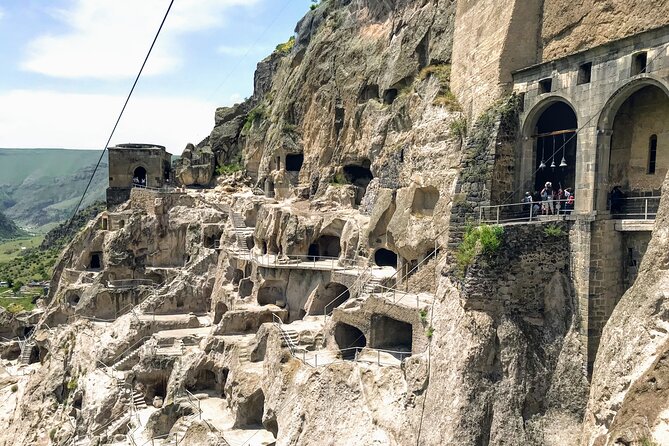
Vardzia is the star here: a twelfth-century monastery cut into a cliff above the Mtkvari River, with old passageways, a decorated church, and mountain views. The scale of the caves makes this more than a quick photo stop.
I like the ease of private hotel pickup and the mix of places: Vardzia for medieval Georgia, Rabati for its blend of church, mosque, minaret, and synagogue, and Borjomi for a slower park stop. The guide can also help you at awkward sections of the cave route. The main catch is the 14-hour day, with long stretches in the car and entrance fees added separately.
Key points to know before booking
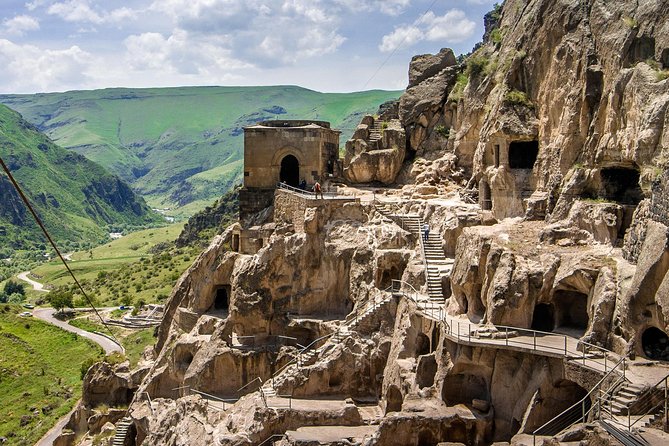
- Vardzia takes about three hours: Allow time for the cave town, church, surviving frescoes, and steep or uneven sections.
- The route covers a lot of ground: This is a long-distance day trip from Tbilisi, not a relaxed outing with short transfers.
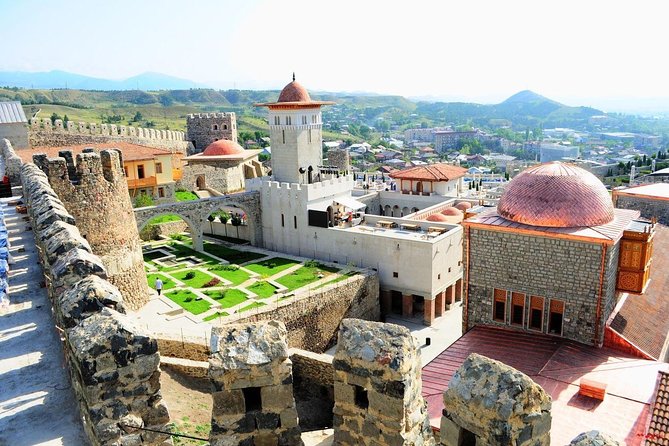
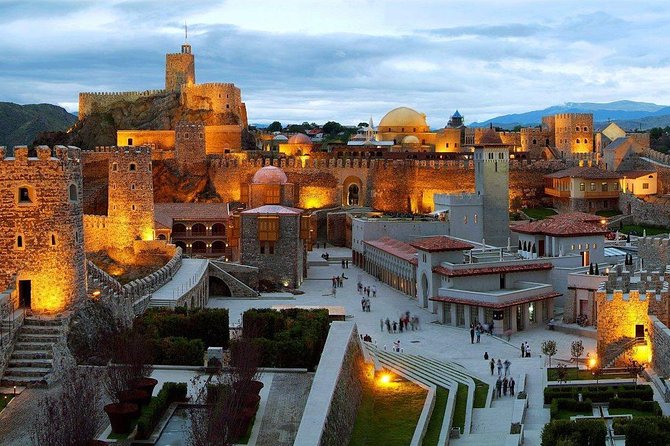
- Rabati Castle crosses cultures: Its seven-hectare complex includes a church, mosque, minaret, and synagogue.
- Khertvisi adds an older fortress stop: It is one of Georgia’s oldest fortresses and is tied to stories of Alexander the Great.
- Borjomi provides a gentler finish: You get park time, mineral water, and views toward the surrounding mountains.
- Budget another $16 per person: Vardzia costs $6, Rabati costs $8, and Borjomi Park costs $2, payable by card or cash.
Why Vardzia is worth the long ride from Tbilisi
The day begins with a morning pickup anywhere in Tbilisi. From there, the route heads toward southern Georgia and the Meskheti region. The driving is a major part of the experience, so I would choose this tour for the sights rather than for a leisurely pace.
Vardzia is the reason many people accept that trade-off. The monastery was created in the twelfth century and carved into a broad cliff above the Mtkvari River. Rather than being a single cave or a small rock shelter, it occupies a large section of the cliff face.
You can expect a mix of chambers, openings, paths, and views across the gorge. The church is especially important. Its wall paintings have survived for centuries, and the frescoes give the site a human scale that the enormous cliff can otherwise lack.
The setting does much of the work. You are not simply walking through an old building. You are looking across a gorge and trying to understand how a religious community used the rock itself for shelter, worship, and daily life. Some monks still live in the caves, which keeps Vardzia from feeling like a purely abandoned monument.
The stop lasts about three hours. That is useful because a rushed hour would barely allow you to see the main passages and church. At the same time, the route requires a moderate level of fitness. Expect walking through an uneven historic site, with sections that may feel awkward for anyone who has difficulty with slopes, steps, or confined passages.
A guide can make a real difference here. One guide associated with this experience is Jonah, who has been praised for explaining the history of the caves and church. The booking details do not guarantee that Jonah will lead your particular departure, but you should have a professional guide with you.
Vardzia’s admission is not included in the headline tour price. Set aside $6 per person, with payment accepted by card or cash. That small extra cost is easy to overlook when comparing tours, so include it in your total.
A few more things to do in Tbilisi worth a look
- Day tour to Vardzia, Borjomi in Georgia
★ 4.5 · 152 reviews - Vardzia, Rabati, and Borjomi Ancient Georgia Group Tour
★ 4.5 · 74 reviews - LEGENDARY PLACES OF GEORGIA: VARDZIA, BORJOMI, RABAT.( Group Tour)
★ 4.5 · 58 reviews
Khertvisi adds an ancient fortress before the main sites
The route also includes Khertvisi Fortress in southern Georgia. The timing supplied for the stops does not give Khertvisi its own formal duration, so treat it as a shorter scenic and historic stop rather than a full visit on the scale of Vardzia or Rabati.
Khertvisi is described as one of Georgia’s oldest fortresses. It was first built in the second century BC, while the church dates from 985 and the present walls from 1354. Those dates alone show how many layers of Georgian history are packed into one location.
The fortress served through the Georgian feudal period. Its position in the Meskheti region also helps connect the route geographically: you are not jumping randomly between attractions, but moving through an area shaped by old roads, fortified settlements, and religious centers.
There is also a striking legend linking Khertvisi to Alexander the Great, who is said to have destroyed it. Treat that as legend rather than settled fact, but it adds a good story for the guide to explain on the road.
This stop is valuable because it gives you a different way to read the region. Vardzia shows a religious community carved into stone. Khertvisi shows the defensive side of medieval Georgia. If you enjoy fortifications, ask the guide to point out how the fortress differs from the cave monastery.
Rabati Castle and its four religious buildings
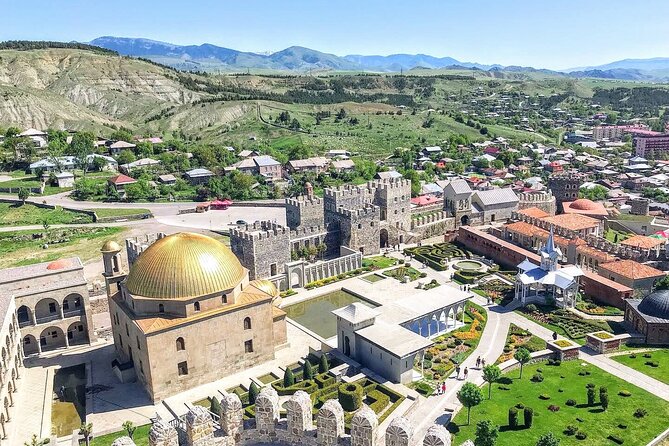
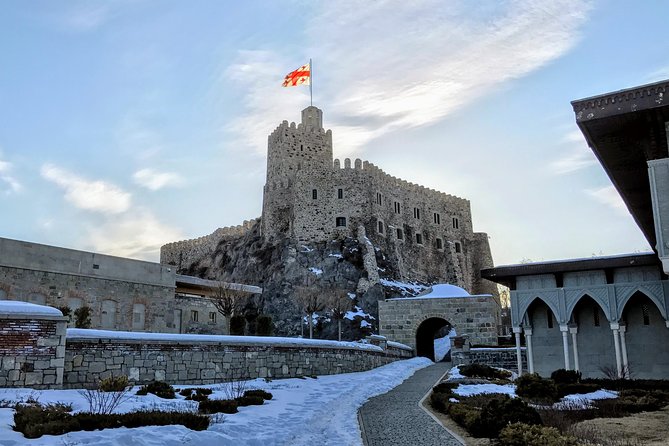
Rabati Castle receives about two hours, giving you enough time to explore the complex rather than simply photograph the outside. Built in the thirteenth century, Rabati changed over later centuries under different cultural influences.
That history is visible in the buildings. Within the seven-hectare complex, you find a church, mosque, minaret, and synagogue. This combination makes Rabati one of the more unusual stops on the route. You are not looking at one isolated monument, but at a site shaped by several faiths and political eras.
I would set aside some time simply to notice the contrast between the structures. The church and mosque are not just decorative additions to a fortress visit. Together with the synagogue and minaret, they show how the area’s identity developed through contact among different communities.
Rabati is also a useful counterpoint to Vardzia. Vardzia feels carved from a single cliff and tied to one powerful religious purpose. Rabati is an architectural collection, changed and expanded over many centuries. The two stops work well together because they tell different stories about Georgia’s past.
Admission to Rabati is separate and costs $8 per person. Payment can be made by card or cash. It is the largest individual admission expense on the route, but two hours here gives you time to make use of it.
The tour description does not list a meal stop or include lunch. You should plan for the day with that in mind. Since the schedule is long and the attractions are far apart, ask the provider about the practical timing of food before departure rather than assuming lunch is included.
Borjomi Central Park is the right final stop
After the fortresses and caves, Borjomi offers a change of pace. The town is famous for its mineral water, and the water from the local well is described as several times stronger than the bottled Borjomi sold in shops.
That is a small but memorable part of the visit. You can try the local water and compare it with the familiar bottled version. The taste may not suit everyone, but it is part of what makes Borjomi more than just another mountain town.
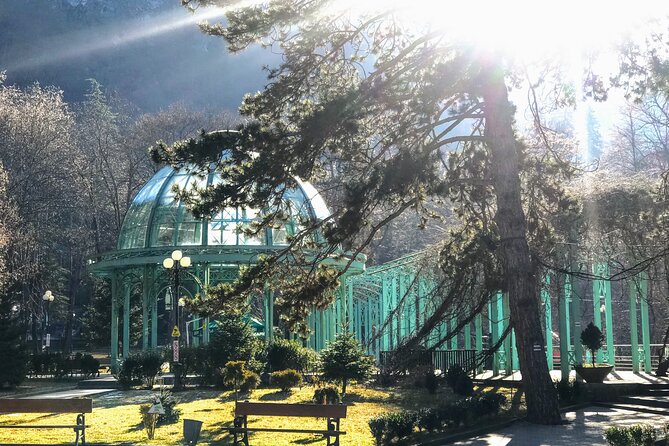
The stop lasts about two hours and includes admission. Borjomi Central Park gives you room to walk after a full day of historic sites. The town was especially popular during the Soviet period, and older buildings from that era remain part of its character.
Above the town is a plateau with a Ferris wheel and additional hotels. From there, you can get views over the town and surrounding mountains. The supplied information does not promise a ride on the Ferris wheel, so consider it a possible feature of the area rather than a guaranteed part of the tour.
Borjomi is also close to Borjomi-Kharagauli National Park, described as Georgia’s largest national park and a popular place for hiking. This one-day route does not turn into a hike in the national park, but the reference helps explain the town’s appeal. Borjomi is a resort base as well as a mineral-water stop.
Admission to the park is $2 per person. It is included in the stated admission arrangement for the stop, though the cost information separately lists the $2 fee. To avoid confusion, confirm with the provider how this small charge will be handled on your departure.
Same base, a different sort of day:
- Day Trip to Kakheti Wine Region Including 9 Wine Tastings
★ 5.0 · 2,774 reviews - Highlights of Caucasus Mountains-Jinvali,Ananuri,Gudauri,Kazbegi(Group tour)
★ 5.0 · 2,682 reviews - Day Trip to Kazbegi and Gudauri
★ 5.0 · 2,009 reviews - Day Trip to Mtskheta Gori and Uplistsikhe
★ 5.0 · 1,801 reviews
What the private format changes
This is a private tour, so only your group participates. That matters on a route with a lot of driving. You do not have to coordinate with a large bus group, and the guide can offer help when a passage at Vardzia feels difficult.
Hotel pickup and drop-off are offered anywhere in Tbilisi. The provider contacts you to confirm the exact pickup address. That saves you from crossing the city early in the morning to reach a fixed meeting point.
Private transport also makes the day more practical for families or small groups who want to see all three main locations without arranging several separate transfers. Group discounts are available, so the per-person value may improve as your party grows.
The trade-off is cost. The tour price is $146 per person, before lunch and the $16 in listed attraction fees. Your basic outlay is therefore about $162 per person, assuming all three listed fees apply separately. That is not a budget day trip, but it covers private transportation, bottled water, professional guide service, pickup, drop-off, and a full route that would be difficult to organize independently in one day.
I would judge the price by the size of your group and the value you place on time. For one person or a couple, it is a significant expense. For a small group sharing a private vehicle, the convenience becomes more appealing, especially when you consider the distances and the help available at the sites.
The 14-hour schedule needs honest planning
Fourteen hours is a long day. You leave in the morning and return late, with much of the time spent on the road between Tbilisi, Vardzia, Rabati, Khertvisi, and Borjomi.
That is the central consideration, not a minor footnote. If you dislike long drives, this tour may feel tiring even if you love the sights. The provider specifically advises you to be comfortable with extended travel periods before booking.
The schedule works best if you see it as a concentrated introduction to southern Georgia. You get several major sites in one outing, but you do not get a slow exploration of each town. Vardzia receives the most time, Rabati gets a solid two hours, and Borjomi closes the day with another two-hour stop.
Wear practical shoes and bring water, even though bottled water is included. Moderate fitness is required, particularly at Vardzia. The guide can help in hard-to-reach places, an especially useful service when you are tired or unsure how to approach a passage.
Weather also matters. The experience requires good weather. If poor conditions force cancellation, you are offered another date or a full refund. For the best chance of enjoying the cave and fortress sections, avoid treating this as a last-minute fixed plan during unsettled weather.
Who will get the most from this day trip
I would recommend this tour to you if your time in Georgia is limited and you want to see major southern sites without changing hotels. It suits people who place a high value on history, religious architecture, fortresses, and unusual places shaped directly by the terrain.
It is also a good match for a private group that wants a flexible setting and a guide rather than a self-drive day. The route has enough variety to keep the day moving: caves, a fortress, a multicultural castle complex, and a mineral-water park.
I would hesitate to recommend it if you want long meals, independent wandering, or a relaxed schedule. You should also think twice if uneven walking is difficult for you or if fourteen hours in a vehicle sounds miserable.
The strongest part of the day is the pairing of Vardzia and Rabati. One is a cliff-carved monastery with surviving church frescoes. The other brings together several religious and architectural traditions inside a large fortified complex. Borjomi then gives you a calmer finish, while Khertvisi adds an older defensive site along the way.
Should you book this Vardzia and Borjomi tour?
Book it if you want maximum sightseeing from Tbilisi and accept a long road day. The private format, hotel pickup, professional guide, and included transport make a complicated route far easier than arranging each section yourself.
Before paying, budget for the $6 Vardzia fee, $8 Rabati fee, $2 Borjomi fee, and your own lunch. Confirm the pickup address, ask who will guide your departure, and be ready for moderate walking.
Skip it if you prefer slow travel or want to spend a full day in only one place. For the right kind of visitor, though, this is an efficient way to connect Georgia’s cave monasteries, fortress towns, and resort culture in one ambitious outing.
FAQ
How long does the tour last?
The tour lasts approximately 14 hours, including the long drives between Tbilisi and the southern Georgian sites.
Is hotel pickup included?
Yes. Pickup and drop-off are offered from hotels anywhere in Tbilisi. The provider will contact you to confirm the exact pickup address.
Is this a private tour?
Yes. Only your group participates in the activity.
What is included in the tour price?
Private transportation, bottled water, and professional guide service are included. Hotel pickup and drop-off are also included.
Are entrance fees included?
The listed attraction fees are paid separately. Vardzia costs $6 per person, Rabati Castle costs $8 per person, and Borjomi Park costs $2 per person. Payment can be made by card or cash.
Is lunch included?
No. Lunch is not included in the tour price.
What fitness level is required?
A moderate level of physical fitness is recommended. The route includes walking at Vardzia, and the tour provider advises you to be comfortable with extended travel periods.
More canyon and cave trips in Tbilisi
- Kutaisi Canyons and Caves from Tbilisi Full Day Tour
★ 5.0 · 448 reviews - Diamond bridge and Dashbashi canyon day excursion from Tbilisi
★ 5.0 · 393 reviews - Day tour to Chronicles of Georgia, Gori city, Uplistsikhe cave
★ 5.0 · 86 reviews - Martvili Canyon & Prometheus Caves Private Day Tour from Tbilisi
★ 5.0 · 25 reviews
Just added in Tbilisi
- Private Adorable City Tour of Tbilisi★ 5.0 · 3 reviews
- Tbilisi Airport to Gudauri, Bakuriani, Batumi, Tbilisi★ 5.0 · 3 reviews
- full day Kazbegi-Gudauri-jvari -from Tbilisi★ 5.0 · 6 reviews
- Old tbilisi walking tour & wine tasting★ 5.0 · 9 reviews
- Wine promenade in hospitable Tbilisi★ 5.0 · 17 reviews
- Vardzia. Lake Paravani, Khertvisi & Lomisa castle, Rabati★ 4.5 · 12 reviews
- Your unique photo session in Tblisi, Georgia★ 3.5 · 4 reviews
- Private Wine Tour In Kakheti Region with 7 Wines and Lunch★ 5.0 · 3 reviews
Canyon & Cave Tours, compared.
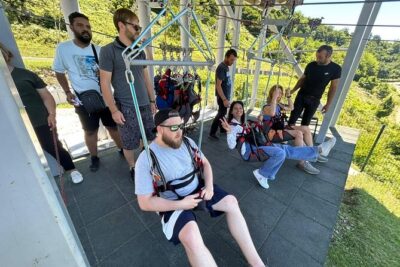
Kutaisi Canyons and Caves from Tbilisi Full Day Tour
Read our review →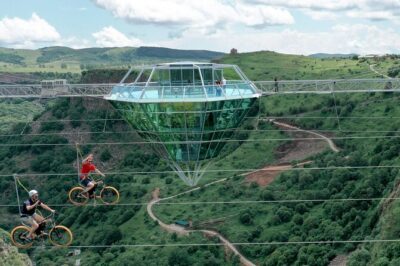
Diamond bridge and Dashbashi canyon day excursion from Tbilisi
Read our review →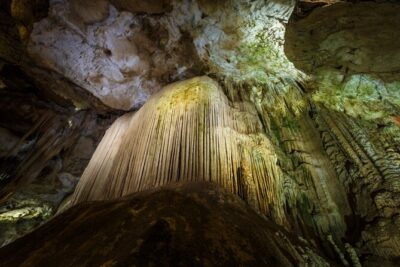
CANYONS & CAVE Tour from Kutaisi – Okatse, Martvili & Prometheus
Read our review →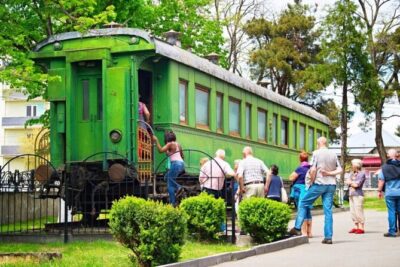
Day tour to Chronicles of Georgia, Gori city, Uplistsikhe cave
Read our review →
Martvili Canyon & Prometheus Cave, Georgian Lunch
Read our review →
Private Canyon &Cave Tour from Batumi(Martvili,Okatse,Prometheus)
Read our review →
Martvili Canyon & Prometheus Cave Group Tour from Batumi
Read our review →
Prometheus Cave, Okatse Canyon & Martvili Canyon from Kutaisi
Read our review →Browse the lists this tour appears in