

Reviewed · SOVIET-ERA & BRUTALIST TOURS
Soviet Tbilisi Tour – Off the beaten path
Tbilisi’s Soviet past is not confined to a museum. It is hidden beneath a private house, carved into a huge hilltop monument, and built into concrete housing blocks. This private tour takes you well beyond the old center, with guides such as George, David, Temo, and Irakli bringing politics, architecture, and family memories into the picture.
I especially like the underground printing house, a strange and memorable place where Stalin-era propaganda was produced, and the Nutsubidze Skybridge, a rusty-looking public passageway that links steep residential blocks. You also get hotel pickup, a private vehicle, and time for photographs rather than a rushed checklist of sights.
The main consideration is the subject itself. This is not a polished city sightseeing trip. Some locations are weathered, unfinished, or rough around the edges, and the tour suits you best if you enjoy difficult history, Soviet architecture, and places that feel a little unexpected.
Key points at a glance
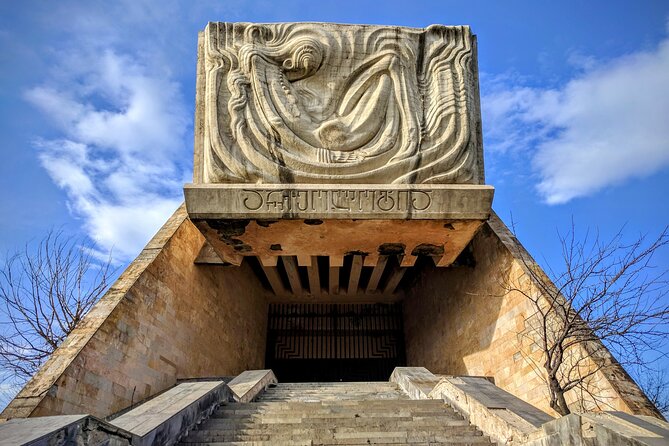
- Stalin’s hidden printing house: Enter a basement museum beneath an old private home and see Soviet-era relics in an unusually personal setting.
- The Chronicles of Georgia: Walk around a giant hilltop monument with views toward Tbilisi Sea and rows of concrete apartment blocks.
- Nutsubidze Skybridge: See one of the city’s strangest Soviet housing projects, including a high-level pedestrian connection between residential towers.
- A private five-hour outing: Your group travels together, with hotel pickup and drop-off included for private bookings.
- A guide-led history lesson: Guides including George, David, Temo, Zezva, and Irakli add political context, local stories, and personal perspective.
- Good value for curious visitors: At $49.68 per person, the price covers transport, guiding, and access to sites that are awkward to reach alone.
Why this tour reveals a different Tbilisi
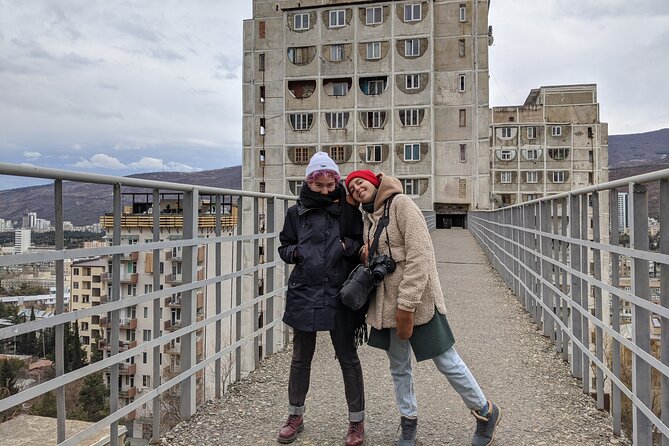
Most first visits to Tbilisi focus on the old town, sulfur baths, churches, balconies, and the river. Those sights matter, but they show only one layer of the city. This tour shifts your attention to the Soviet-built districts, large concrete housing projects, monumental art, and places that are easy to miss without a local guide.
I like the way the route links several different parts of Georgia’s recent past. Stalin’s printing operation shows the underground side of communist politics. The Chronicles of Georgia presents history as monumental public art. Nutsubidze shows how Soviet planners tried to solve the daily problems of life on steep hillsides.
The result is not a simple story of old versus new. You see Soviet structures that are still used, buildings that have weathered badly, and monuments that remain difficult to interpret. Your guide’s explanation matters because the architecture alone can feel cold or confusing.
The tour lasts about five hours, which gives the subject room to breathe. It is long enough to travel across the city and stop for photographs, but short enough to fit into a free morning or afternoon. You finish near the Dry Bridge flea market, a useful place to continue exploring on foot.
Other city walks in Tbilisi:
- 1 Day Private Armenia: UNESCO, Soviet & Curated Family Lunch
★ 5.0 · 106 reviews - Tbilisi old town & soviet heritage – Private driver-guided Tour
★ 5.0 · 83 reviews - Armenia: 1 Day Soviet gems, UNESCO + Family lunch (Small group)
★ 5.0 · 68 reviews
Entering Stalin’s underground printing house
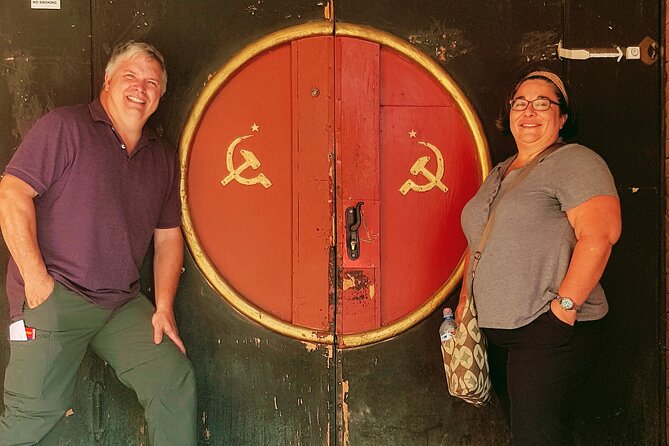
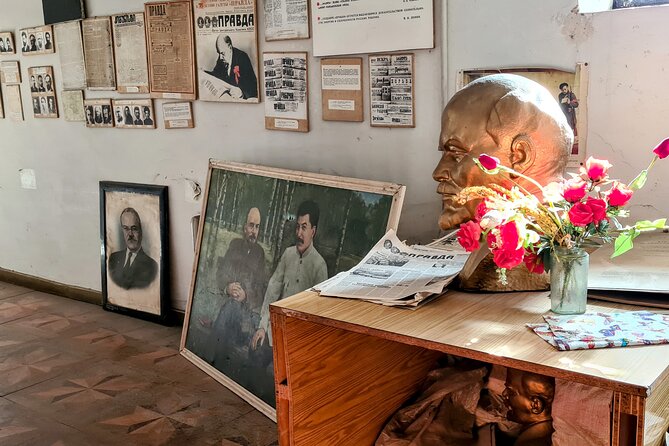
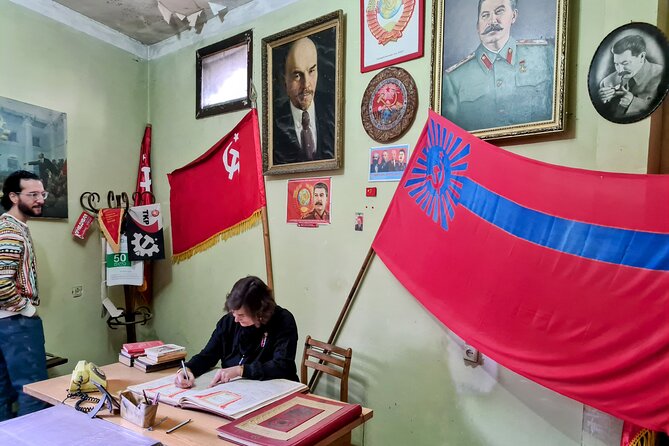
The first stop is J. Stalin’s Underground Printing House Museum, located in the basement of an old private house. The setting is part of the experience. You are not entering a large national museum with clean galleries and polished displays. You are going down into a cramped, unusual site connected with illegal communist publishing.
The museum contains Soviet-era objects and printing equipment, along with stories about the people involved. The director is described as a dedicated communist, which gives the visit a particular character. You may hear an openly sympathetic interpretation of communist history rather than a neutral, textbook presentation.
That is worth understanding before you arrive. The museum is valuable because it preserves a vivid piece of political history, but the interpretation may not match your own views. Listen carefully, ask questions, and treat the visit as a chance to understand how Soviet memory is still handled in Georgia.
You have about 30 minutes here, with admission included. That is enough time to see the main space and hear the essential story. The short visit also keeps the tour moving, since the most interesting parts of the day come from comparing this hidden basement with the enormous public monuments and housing blocks later on.
The stop works best if you are interested in how political movements operated in practice. You are not just hearing about Stalin from a distance. You are looking at a physical place used for printing and organization, in a city where political power was often shaped behind closed doors.
Reading the Chronicles of Georgia monument
From the basement, the tour moves to the Chronicles of Georgia, often called the Georgian Stonehenge. The nickname gives you a rough idea of its scale, but not its mood. This is a huge, unfinished brutalist monument by Zurab Tsereteli, built on a hill above the city.
The tall stone and metal forms are dedicated to Georgian history. Their size is imposing, and the open setting gives you room to walk around and study the carved panels. The monument is not a tidy history lesson. It is grand, symbolic, and open to interpretation.
I like this stop because it joins art, politics, and geography. From the hill, you can look toward the Tbilisi Sea reservoir and across broad areas of concrete Soviet housing. The view helps explain the scale of the city beyond its historic center.
Allow about 30 minutes. Admission is free, so there is no added ticket cost, and the visit is mostly about walking, looking, listening, and taking photographs. Wear sensible shoes if you want to move around the site comfortably.
The monument can feel remote from the familiar Tbilisi shown in guidebooks. That is precisely its value. You see how Georgia presented its past through a huge public project, while the surrounding apartment blocks show the practical, everyday city that grew around Soviet planning.
One point to keep in mind is that unfinished monumental art can be divisive. You may find it powerful, strange, or overblown. The tour does not require you to admire it. It gives you the setting and background to decide what you think.
Seeing the Nutsubidze Skybridge up close
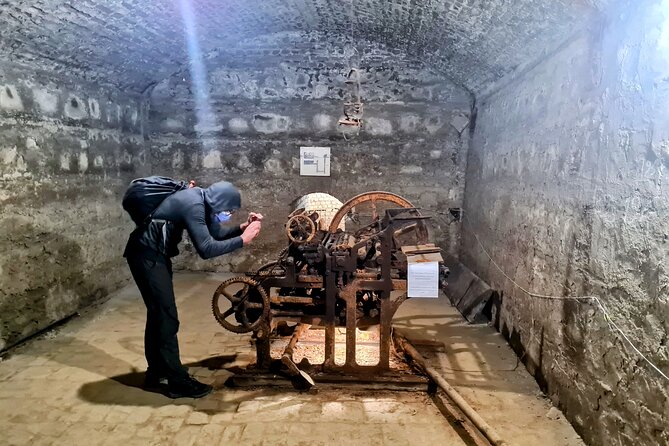
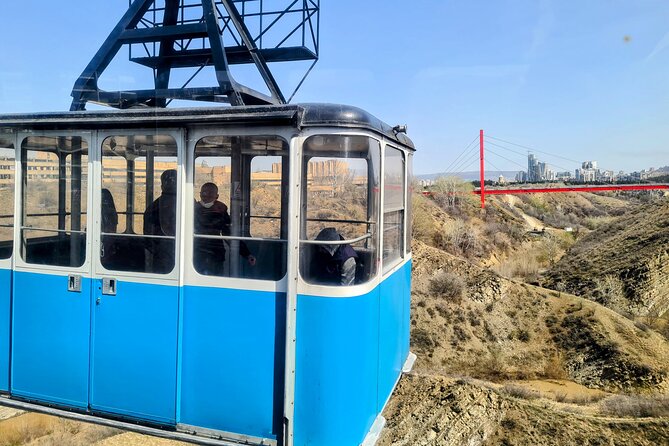
The longest part of the experience is spent around the Nutsubidze Skybridge, an unusual Soviet housing complex built into Tbilisi’s hills. The area combines concrete apartment blocks, steep terrain, and an elevated connection that helps residents move between buildings.
This is the sort of place that is hard to understand from a photograph. From the ground, the buildings can seem like a collection of separate towers. Then the bridge and elevated passage come into view, and the logic of the design becomes clearer. It is practical, stark, and visually odd at the same time.
You have about two hours for this section, making it the main architectural walk of the day. There is time to see the structures from different angles, hear how the complex works, and take pictures without being hurried from one viewpoint to the next.
The setting also shows the human side of Soviet planning. These are not empty monuments. They are residential buildings, used by local people, with walkways and access routes shaped by the steep city terrain. You are looking at architecture as part of daily life, not simply as an abandoned relic.
Expect some rough edges. The structures may look worn, rusty, or patched, and this is an urban exploration experience rather than a formal architectural museum. That can be a strength if you enjoy texture and atmosphere. If you prefer restored buildings and clear visitor facilities, this may feel less comfortable.
The long stop gives the guide room to explain how the housing blocks fit into the city. It also allows time for the personal side of the tour. Several guides, including George and David, are praised for connecting architecture with wider events, family experiences, and changes in Georgian society.
Same base, a different sort of day:
- Day Trip to Kakheti Wine Region Including 9 Wine Tastings
★ 5.0 · 2,774 reviews - Highlights of Caucasus Mountains-Jinvali,Ananuri,Gudauri,Kazbegi(Group tour)
★ 5.0 · 2,682 reviews - Day Trip to Kazbegi and Gudauri
★ 5.0 · 2,009 reviews - Day Trip to Mtskheta Gori and Uplistsikhe
★ 5.0 · 1,801 reviews
What the guides add to the experience
The guide is central to this tour. Without context, a basement printing room, a giant unfinished monument, and a concrete skybridge could become three disconnected curiosities. With a strong guide, they form a story about power, public memory, urban planning, and ordinary life.
Different departures may be led by different guides. Names connected with the tour include George, David, Temo, Zezva, Irakli, and Data. Temo is described as warm and passionate about Georgia. George is noted for clear English, music choices, and the ability to answer broad questions about Tbilisi. David is praised for bringing the sites to life and offering a thoughtful view of current affairs and the past.
You should expect conversation rather than a memorized speech. The guides are reported to add personal touches, explain small details, and give visitors space for photographs. That balance matters during a private tour, since you can ask about subjects that interest you instead of following a fixed group discussion.
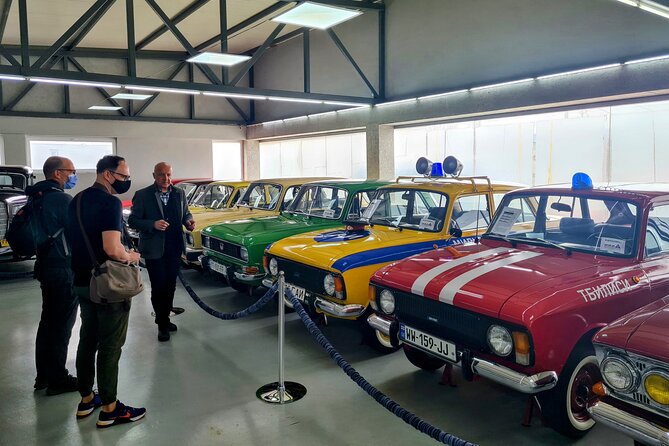
The political subject also benefits from a guide who can provide more than dates. Soviet Georgia cannot be reduced to Stalin, concrete buildings, or old cars. The tour works best when your guide explains how those pieces affected people and why some memories remain contested.
English is the offered language. The tour is private, so only your group participates. That gives you more control over questions and pacing, though the quality of any guided experience will still depend on the individual guide assigned that day.
Price, transport, and the real value
The listed price is $49.68 per person. For a private, approximately five-hour trip with hotel pickup, transport across Tbilisi, guiding, and included admission at the printing house, that is a fair price.
The value comes from access and efficiency. You could try to reach the hilltop monument and Nutsubidze area by public transport, but the route would take planning, and you would lose the historical explanation that links the sites. A private vehicle also means less time figuring out connections between districts.
Pickup is offered from your Tbilisi hotel or holiday apartment, provided you share those details when booking. The stated starting point is near the round fountain by Avlabari metro station, while the tour can finish at the Dry Bridge flea market on Zviad Gamsakhurdia Right Bank.
That end point is useful. You can continue to the flea market, browse local objects, and walk back toward central Tbilisi. If you want to return to your hotel instead, confirm the drop-off arrangement before setting out, since the listed end point is the flea market.
Group discounts are available, and mobile tickets are supported. Most people can participate, but the information does not promise step-free access at every location. The basement, hilltop monument, and residential complex may involve uneven ground, stairs, or difficult surfaces, so ask the operator about your specific needs.
The tour is often booked well ahead of the date, with an average booking lead time of about 28 days. That does not mean you must book a month early, but it is sensible to reserve ahead if your Tbilisi dates are fixed.
Who will enjoy this half-day outing
I would choose this tour if you have already seen the old town and want to understand the city beyond its postcard center. It is especially suited to you if you like:
- Soviet architecture and urban planning
- Stalin-era history and political memory
- Photography in weathered, unusual settings
- Brutalist monuments and concrete housing
- A private guide who can answer questions
- Seeing several distant parts of Tbilisi in one outing
It is less suitable if you want a gentle food tour, a polished museum visit, or a standard introduction to Georgian culture. The focus is narrow, and some stops are visually stark.
You should also be comfortable with a mixed interpretation of the past. The printing house director’s communist viewpoint may challenge you, while the monument and housing projects raise questions rather than offering easy answers. That makes the tour more interesting, but it may not suit someone looking for a simple anti-Soviet narrative.
Practical advice before you book
Tell the operator your hotel or apartment details for pickup. Since the tour is private, confirm the pickup time and final drop-off plan in advance, especially if you want to reach another appointment after the Dry Bridge flea market.
Bring a phone or camera. The tour includes unusual views over Tbilisi, the reservoir, concrete housing districts, and large-scale public art. The Nutsubidze section in particular offers plenty of visual detail.
Give yourself mental room for the subject. This is not a quick collection of photo stops. The best parts come from asking questions about why these places were built, how they were used, and what they mean now.
Cancellation is free up to 24 hours before the start time. A cancellation inside that window is not refundable, and changes are not accepted within 24 hours. The tour also requires a minimum number of participants, so if the operator cancels for that reason, you are offered another date or a full refund.
Should you book the Soviet Tbilisi Tour?
Yes, if you want to see a side of Tbilisi that most first-time routes miss. The underground printing house, Chronicles of Georgia, and Nutsubidze Skybridge are very different places, yet together they create a clear picture of how Soviet power shaped both public monuments and ordinary housing.
The strongest reason to book is the combination of private transport and a guide who can explain difficult material in person. At $49.68 per person, you are paying for far more than entry to three sites. You are buying a practical route through scattered districts and a chance to ask questions along the way.
Skip it if your interests lie mainly in medieval churches, food, wine, or restored historic buildings. But if concrete architecture, recent history, and Tbilisi’s less polished corners appeal to you, this is one of the more useful half-day trips you can make in the city.
FAQ
How long does the Soviet Tbilisi Tour last?
The tour lasts approximately five hours.
Is this a private tour?
Yes. Only your group participates in the activity.
Is hotel pickup included?
Pickup is offered from your Tbilisi hotel or holiday apartment for the private tour. You need to share those details when booking.
What language is the tour offered in?
The tour is offered in English.
What places does the tour visit?
The stated stops are J. Stalin’s Underground Printing House Museum, the Chronicles of Georgia monument, and the Nutsubidze Skybridge area.
Is admission included?
Admission to the Underground Printing House Museum is included. The Chronicles of Georgia has free admission. The tour information lists admission as included for the Nutsubidze Skybridge stop.
Where does the tour finish?
The listed end point is the Dry Bridge flea market at 3 Zviad Gamsakhurdia Named Right Bank in Tbilisi.
Can I cancel for a full refund?
Yes, if you cancel at least 24 hours before the experience start time. Cancellations or changes made less than 24 hours in advance are not accepted for a refund.
Just added in Tbilisi
- 8-Day Trekking Group Tour in Svaneti★ 5.0 · 21 reviews
- Private five days tour to Svaneti-Mestia, Ushguli, Becho,Chalaadi★ 5.0 · 21 reviews
- Join a Local for a Market Tour, Cooking Class and Meal in her Tbilisi Home★ 5.0 · 15 reviews
- Chiatura and Katskhi Pillar One Day Urbex Tour★ 5.0 · 14 reviews
- Soviet Story – Private day trip to Chiatura, Stalin’s museum and Katskhi pillar★ 4.5 · 15 reviews
- Full Day Tbilisi City Tour with Wine Tasting & Cable Car Ride★ 5.0 · 18 reviews
- Tbilisi Walking Tour Including Cable Car and Wine Tasting★ 5.0 · 16 reviews
- Mtskheta – Gori – Uplistsikhe caves • Private tour★ 5.0 · 24 reviews
Soviet-Era & Brutalist Tours, compared.

1 Day Private Armenia: UNESCO, Soviet & Curated Family Lunch
Read our review →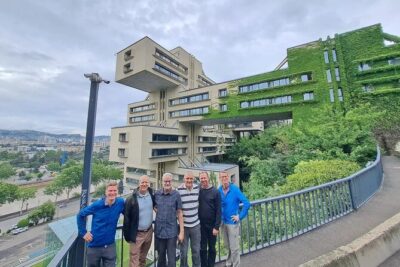
Tbilisi old town & soviet heritage – Private driver-guided Tour
Read our review →
Armenia: 1 Day Soviet gems, UNESCO + Family lunch (Small group)
Read our review →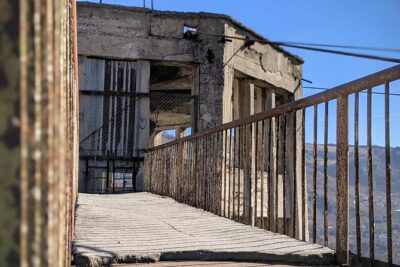
Soviet past – Private day tour to Chiatura, Katskhi pillar and Chronicles
Read our review →
Soviet Story – Private day trip to Chiatura, Stalin’s museum and Katskhi pillar
Read our review →Browse the lists this tour appears in