
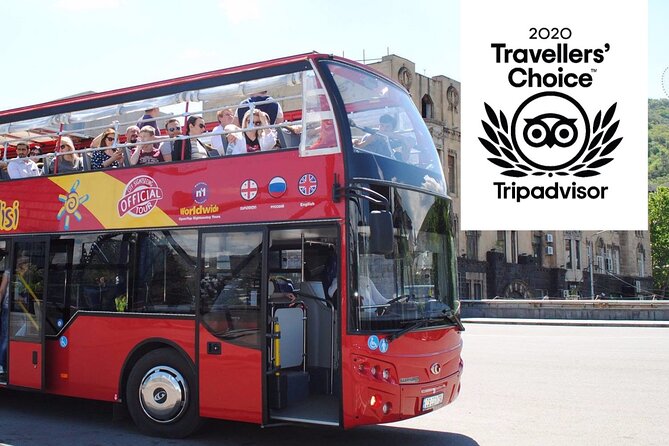
Reviewed · CITY TOURS
City tour Tbilisi on red bus
Tbilisi’s red bus is most useful as a first-day orientation ride. From the upper deck, you get a quick look at the Old Town, the Mtkvari River, Metekhi, Rike Park, Rustaveli Avenue, and several other parts of the city without tiring your feet. It is also a sensible choice if an ankle, knee, or limited walking ability makes Tbilisi’s hills and uneven streets a challenge.
I like the broad city coverage and the included headsets, which let you follow an audio guide in 14 languages. I also like the 24-hour ticket, since you can use the first loop to choose places for a closer visit later. The main caution is that the service can be less clear than expected: some rides finish closer to an hour, buses may arrive 30 to 40 minutes apart, and hop-on, hop-off instructions are not always explained well.
Key points before you board
- Start at 44 Kote Afkhazi Street: The meeting point is in a handy part of central Tbilisi, close to the Old Town and public transportation.
- See the city in one loop: The route covers defensive walls, Meidan Square, the sulphur bath district, Metekhi, Dry Bridge, Rike Park, Peace Bridge, Freedom Square, and Rustaveli Avenue.
- Use the ticket for 24 hours: The ride itself is about one to one and a half hours, but the ticket is intended to let you get off and continue exploring.
- Listen through supplied headsets: The recorded or live commentary is offered in 14 languages, including English.
- Expect a simple overview, not a detailed walking tour: You see many sights from the road, but some landmarks pass quickly and may need a separate visit.
- Plan around bus gaps: A wait of about 30 minutes is possible, and one reported wait reached roughly an hour.
A practical first look at Tbilisi by red bus

Tbilisi spreads along the Mtkvari River, with the Old Town pressed against hills and newer streets reaching outward. That layout can be confusing on your first day. The red bus gives you a useful mental map: river here, old defensive quarter there, grand Rustaveli Avenue farther north, and the newer parks and bridges linking the center.
The tour begins at 44 Kote Afkhazi Street, in the central part of the city. The listed start time is 10:00 a.m., and the activity returns to the same meeting point. You receive a 24-hour ticket, headsets, and the city commentary. The group can reach up to 50 people, although one account describes a bus that was not crowded.
I would use this ride early in a Tbilisi visit rather than treat it as the whole sightseeing plan. Sit through the first circuit, note the places that catch your eye, then use the ticket to decide where you want to return. That approach makes the bus more useful than simply riding around once and leaving.
A few more things to do in Tbilisi worth a look
- Kakheti;City of Love Sighnaghi, Bodbe. KTW. Wine House Group tour
★ 5.0 · 376 reviews - Tbilisi – Mtskheta – Jvari. Full City Tour on Hop On Hop Off Bus
★ 4.5 · 91 reviews - Day tour to Chronicles of Georgia, Gori city, Uplistsikhe cave
★ 5.0 · 86 reviews
What the route shows you in 90 minutes
The advertised full circuit takes about one hour and 30 minutes. In practice, allow some flexibility. The ride may take closer to an hour on a particular day, especially if stops, traffic, or parking slow the route. This difference matters if you are planning a museum booking, airport transfer, or meal immediately afterward.
The route is designed to show the main sights rather than provide long stops at each one. You pass through the old defensive areas, along the river, past churches and bridges, and onto major avenues. It is a useful sweep of the city, but you should not expect time to study every building from the seat.
The bus route includes:
- Tbilisi’s Old Town and defensive walls
- Meidan Square
- The sulphur bath district
- The Mtkvari River
- Metekhi and its historic wall
- Dry Bridge Market
- Rike Park and the Peace Bridge
- Freedom Square
- Rustaveli Avenue
- Heroes Square
- Agmashenebeli Avenue
That list gives you a good sense of the tour’s scope. It moves between old Tbilisi, central civic streets, markets, parks, and modern riverfront areas. You get variety, though not much depth at any single site.
Meidan Square and the sulphur bath district

Meidan Square is one of the best places to begin understanding old Tbilisi. It sits near the narrow lanes, balconies, restaurants, and bath district that give the historic center its character. From the bus, you can identify the area and get a quick sense of how compact the old quarter is.
The sulphur baths are especially important because they help explain why Tbilisi developed where it did. The city’s name is linked to its warm springs, and the bath district remains one of the signature parts of the Old Town. From a moving bus, though, you will see the setting rather than experience the baths themselves.
If this area interests you, get off only after you understand the bus procedure. The service is described as hop-on, hop-off, but announcements do not always make clear whether the bus will wait, when the next one comes, or exactly where you should stand. Ask the staff at the starting point before leaving the bus, and note the stop carefully.
Metekhi, the river, and Tbilisi’s steep setting
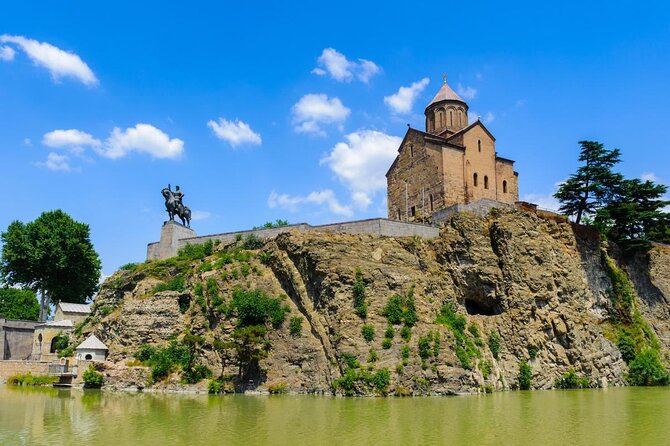
The route passes the Mtkvari River and Metekhi Cathedral, two landmarks that help you read Tbilisi’s geography. Metekhi sits above the river, and the surrounding slopes show why walking between parts of the city can take more effort than a map suggests.
A seat on the upper deck can give you the best broad views, but the ride is not designed for long photo stops. The bus may move on quickly, and buildings or roadside features can be hard to identify at the exact moment the audio mentions them. Keep your eyes open and use the first circuit to decide what deserves a later visit on foot.
For anyone with mobility limits, this part of the tour can be valuable. One passenger with a sprained ankle found the bus an effective way to see the city without walking for hours. Tbilisi has uneven streets and slopes, so a seated overview can turn a difficult sightseeing day into a manageable one.
Same base, a different sort of day:
- Day Trip to Kakheti Wine Region Including 9 Wine Tastings
★ 5.0 · 2,774 reviews - Highlights of Caucasus Mountains-Jinvali,Ananuri,Gudauri,Kazbegi(Group tour)
★ 5.0 · 2,682 reviews - Day Trip to Kazbegi and Gudauri
★ 5.0 · 2,009 reviews - Day Trip to Mtskheta Gori and Uplistsikhe
★ 5.0 · 1,801 reviews
Dry Bridge Market and the old city edge

Dry Bridge Market is another useful stop on the route, though the bus passes by rather than offering a guided market visit. The market is known for its flea-market character, and the area gives you a look at a different side of central Tbilisi than the polished streets around Freedom Square.
Do not confuse passing the market with having time to browse it. If you want to look through the stalls, you need to get off and allow time for the next bus. Since the interval may be about 30 minutes, the ticket works best when you are comfortable setting your own pace.
The same point applies to Meidan Bazaar. The route passes it, but the bus does not include food, shopping, or admission to anything along the way. Think of these places as markers that help you plan your own walking route later.
Rike Park and the Peace Bridge
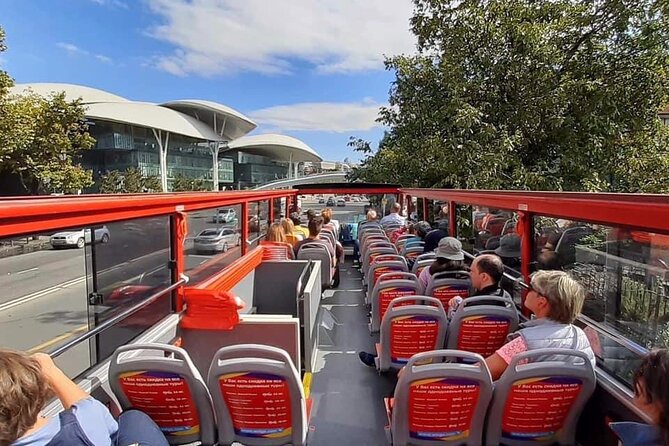
Rike Park and the Peace Bridge show a more recent side of Tbilisi. The park sits beside the river, while the bridge provides a striking link between the newer riverfront and the Old Town. The bus gives you a fast way to see how these areas connect.
This is one of the route’s stronger visual sections. You move from old lanes and bathhouses toward open park space and modern architecture. The contrast is part of what makes the ride useful: Tbilisi is not one uniform historic district, and the bus makes that change easier to see.
Still, expect a quick view rather than a carefully framed sightseeing stop. If you want photographs or time in the park, get off and continue on foot. The ticket’s 24-hour validity gives you that option, provided you are prepared for the next bus wait.
Freedom Square, Rustaveli Avenue, and Heroes Square
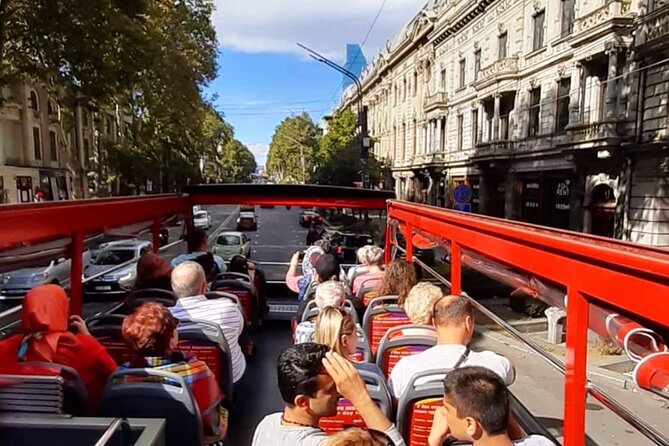
Freedom Square and Rustaveli Avenue introduce Tbilisi’s formal center. Rustaveli is one of the city’s main avenues, with major public buildings, cultural venues, and a much wider street plan than the Old Town. The red bus helps you connect this area with the river and the historic quarter.
Heroes Square takes the route farther from the tight center. It is less intimate than Meidan Square, but it helps show the scale of modern Tbilisi. Agmashenebeli Avenue adds another urban district to the circuit, giving you a broader look at the city than a short Old Town walk would provide.
The drawback is that the commentary may not always give enough detail to make every building meaningful. One account found the audio too limited and had trouble knowing which structure was being described. I would keep the map or brochure handy and treat the audio as an introduction, not your only source of information.
The audio guide and the human staff
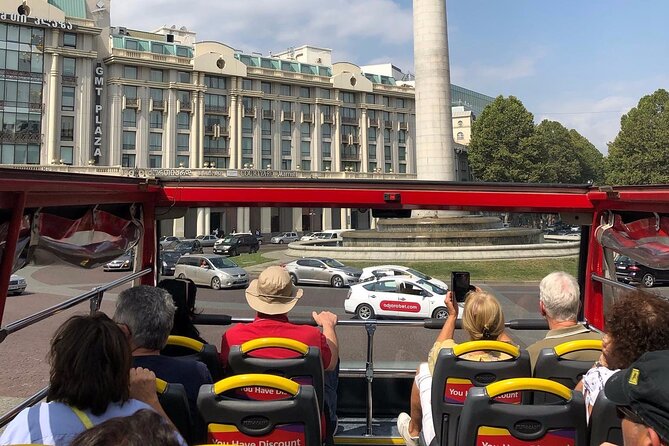
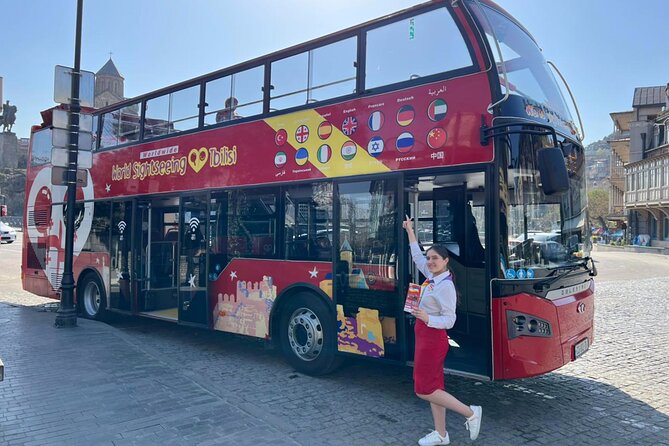
Headsets are supplied so you can hear the commentary clearly, and the audio guide is offered in 14 languages. English is listed as an available language. This is a real advantage on a moving bus, where ordinary street noise can make spoken information hard to follow.
The service may also be operated by a multilingual guide. Some rides include staff who answer questions in English, provide a brochure, and help passengers at the starting point. That human help can make a big difference when you need to clarify stops or ask where to get off.
The experience is not perfectly consistent, so take a moment at the start to confirm three things: which language is loaded, where the next bus will arrive, and whether you may leave the bus and reboard at that stop. One passenger was not given a headset and received no guiding at all. That is not what you should expect, but it is a good reason to check before the bus leaves.
How the 24-hour ticket affects the value
At $20 per person, the ticket is reasonably priced if you use it as both a city overview and a short transport option. A single ride gives you coverage of many key districts, while the 24-hour validity lets you return to selected areas without arranging another sightseeing vehicle.
The value falls if you only complete one hurried loop. Several practical issues can get in the way: the full ride may finish in about an hour, buses may be delayed, and some of the route may repeat nearby sections. If your plan is simply to sit on the bus once, a walking tour may provide more explanation for your money.
I see the strongest value for visitors who need a low-effort city survey. It can save energy, help you plan later sightseeing, and provide a ride between several central areas. It is less compelling for someone who enjoys detailed history, quiet time at landmarks, or a guide who explains each stop at street level.
The ticket includes taxes, fees, handling charges, and headsets. Food and drinks are not included. Children must be accompanied by an adult, and most people can participate without special health restrictions.
Timing, weather, and waiting for the next bus
The advertised start is 10:00 a.m. at Kote Afkhazi Street. A bus may be crowded or comfortable depending on the departure, and the maximum group size is 50. If rain or cold weather is possible, think carefully before getting off at a stop, since you may wait around 30 minutes for the next bus.
One difficult experience involved being asked to leave the bus in wet, cold weather and wait for another vehicle. That is a reminder not to assume you can remain on the same bus for the entire 24-hour period. Ask staff about the operating pattern before you board.
I would arrive early, especially if you want an upper-deck seat. Bring water, and keep a light layer available. The tour does not include refreshments, and the open upper deck may feel very different from the sheltered lower level.
Who should book this Tbilisi bus tour?
I would recommend it most strongly to:
- First-time visitors who want a quick city map
- People with limited walking ability
- Families who prefer a seated overview
- Visitors with only a short time in Tbilisi
- Anyone who wants to identify areas for later exploration
- Visitors who value transport and sightseeing in one ticket
I would be more cautious if you want a detailed cultural explanation. The audio can be helpful, but it may not explain each sight fully, and announcements about getting off may be unclear. A walking tour is likely better for close views of the Old Town, the baths, Metekhi, and the market.
The free cancellation rule gives you some room to adjust plans. You can cancel for a full refund up to 24 hours before the start time, while cancellations or changes made inside that window are not accepted.
Should you book the red bus?
Book this tour if you want an easy orientation ride across Tbilisi and plan to use the 24-hour ticket with purpose. Stay on for the first circuit, mark Meidan Square, Dry Bridge, Metekhi, Rike Park, and Rustaveli Avenue, then return to one or two places that interest you.
Skip it if your priority is a detailed guide, slow photography, or a carefully explained visit to each landmark. For many people, the best plan is to combine the bus with walking: use the red double-decker to understand the city’s shape, then explore the Old Town and riverfront at street level.
FAQ
Where does the Tbilisi red bus tour start?
The tour starts at 44 Kote Afkhazi Street, Tbilisi 0105, Georgia.
What time does the tour start?
The listed start time is 10:00 a.m.
How long does the bus tour take?
The advertised circuit takes about one hour and 30 minutes. Actual ride times can vary, and the full circuit may sometimes finish closer to one hour.
How long is the ticket valid?
The ticket is valid for 24 hours, allowing you to use the hop-on, hop-off service during that period.
Is an audio guide available in English?
Yes. The excursion includes an audio guide in 14 languages, including English, and headsets are supplied.
What is the cancellation policy?
You can cancel at least 24 hours before the start time for a full refund. Cancellations and changes made less than 24 hours before the start time are not accepted.
Just added in Tbilisi
- 8-Day Trekking Group Tour in Svaneti★ 5.0 · 21 reviews
- Private five days tour to Svaneti-Mestia, Ushguli, Becho,Chalaadi★ 5.0 · 21 reviews
- Join a Local for a Market Tour, Cooking Class and Meal in her Tbilisi Home★ 5.0 · 15 reviews
- Chiatura and Katskhi Pillar One Day Urbex Tour★ 5.0 · 14 reviews
- Soviet Story – Private day trip to Chiatura, Stalin’s museum and Katskhi pillar★ 4.5 · 15 reviews
- Full Day Tbilisi City Tour with Wine Tasting & Cable Car Ride★ 5.0 · 18 reviews
- Tbilisi Walking Tour Including Cable Car and Wine Tasting★ 5.0 · 16 reviews
- Mtskheta – Jvari – Samtavro, the cradle of Georgian Christianity. (group tours)★ 4.5 · 24 reviews
City Tours, compared.
Kakheti;City of Love Sighnaghi, Bodbe. KTW. Wine House Group tour
Read our review →
Mtskheta – Jvari. Full City Tour on Hop On Hop Off Bus
Read our review →
Day tour to Chronicles of Georgia, Gori city, Uplistsikhe cave
Read our review →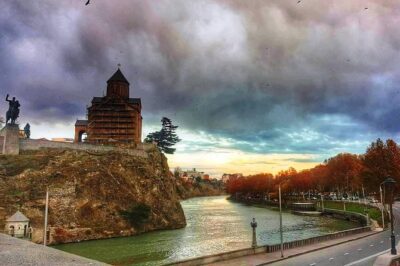

Tbilisi city tour PRIVATE excursion Airport and hotel pickup INCL
Read our review →
Tbilisi City Tour, Most Popular Tourists Destinations In The Capital Of Georgia
Read our review →

Browse the lists this tour appears in