
Reviewed · HIKING & TREKKING
7-day hiking expedition to Tusheti through the Atsunta pass
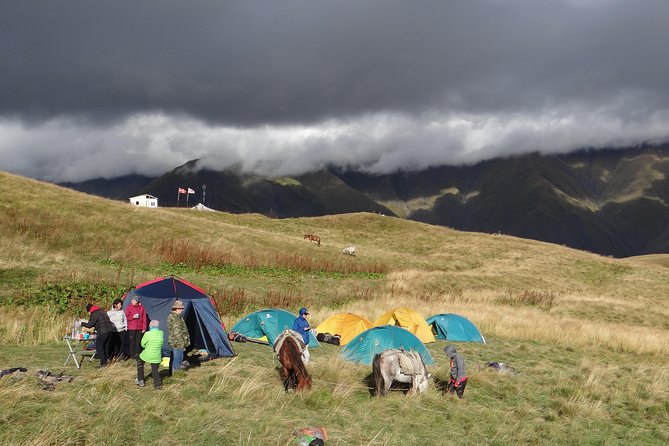
The heart of this trip is the crossing from Khevsureti into Tusheti over 3,431-meter Atsunta Pass, where two days pass without mobile service or villages. You get raw mountain scenery, abandoned stone settlements, river crossings, and a real sense of being far from town.
I like the practical setup: horses carry the gear, and food, tents, sleeping bags, transfers, and guesthouses are included. I also like the small group size, capped at 10, which suits a route where timing and safety matter. The main catch is the effort. This is not a casual walking holiday, and one day includes roughly 20 kilometers on foot.
Key things to know before you book
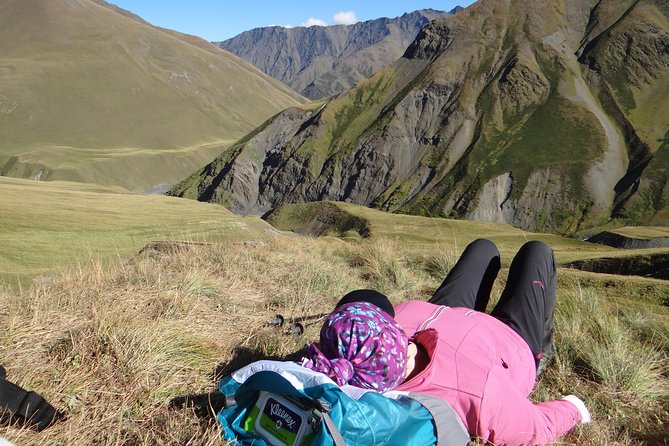
- Atsunta Pass reaches 3,431 meters, making Day 3 the toughest part of the trek.
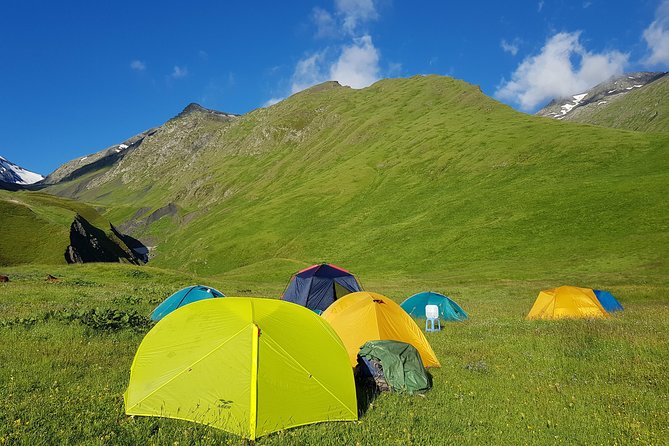
- Two nights are spent in tents, with no villages or mobile communications during part of the route.
- Horses carry your equipment, so you do not need to haul all your camping gear.
- The trip uses 4×4 vehicles on rough mountain roads, including the long route over Abano Pass.
- Local food and family-run guesthouses bring you close to the culture of Georgia’s high mountain regions.
- The group is limited to 10 people, with pickup from the operator’s office in Tbilisi.
From Tbilisi to Shatili and Georgia’s high roads
The trip starts at 9 a.m. from the operator’s office in Tbilisi. Your first transfer takes about five hours over roughly 150 kilometers, though mountain roads mean the clock matters more than the distance.
The route pauses at scenic places, including Bear Cross Pass at 2,676 meters. A picnic here gives you an early taste of the high country before reaching Shatili.
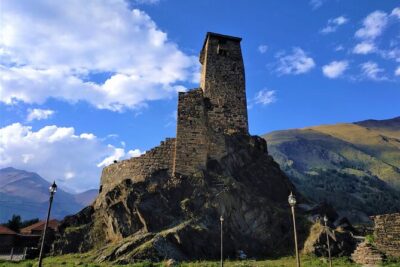
Shatili is not just an overnight stop. Its medieval stone towers and tightly packed buildings make it one of the most memorable settlements on the route. After checking into a guesthouse, you have time to walk around, take photographs, and get used to the scale of the mountains.
Dinner is prepared by the guesthouse owners. That matters because the evening is not simply a hotel meal after a long drive. It is your first introduction to the local cooking that helps make this trip feel rooted in the region.
The day is long, but it is not yet a trekking day. If you prefer to ease into a trip, that is useful. If you dislike extended vehicle rides, this opening transfer may feel slow.
A few more things to do in Tbilisi worth a look
- Highlights of Caucasus Mountains-Jinvali,Ananuri,Gudauri,Kazbegi(Group tour)
★ 5.0 · 2,682 reviews - David Gareji and Real Rainbow Mountains Off-Road adventure + hike
★ 5.0 · 129 reviews - Private day trip to the Caucasus mountains and the Russian border
★ 5.0 · 62 reviews
Mutso, Anatori, and the road’s end at Ardoti
After breakfast on Day 2, you leave the main road in jeeps for Ardoti, where the road ends. The drive includes stops at Anatori and Mutso, two places that add a strong historical edge to the route.
Mutso is an abandoned stone settlement, and its position among the mountains makes it especially striking. Anatori provides another stop before the border-control formalities. You will need to show your passport to Georgian border guards, and the process is expected to take about 20 minutes.
After a picnic, the walking begins. The trek to camp takes about four hours. At camp, you help set up the tents, then rest before dinner.
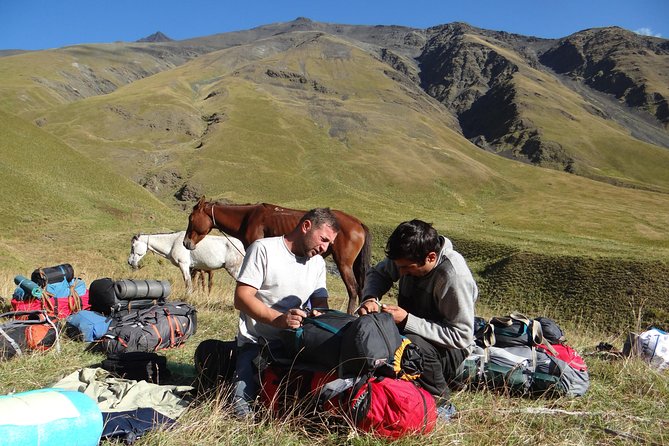
The trip provides a waterproof duffel bag, tent, sleeping pad, and sleeping bag. Horses carry equipment, which is a major practical benefit on a route that quickly becomes steep and remote. You still need to carry what you personally need during the day, but you are not expected to shoulder the full camping load.
This is also the point where the trip changes character. There are no villages for part of the route, and mobile communications disappear for two days. I see that as a strength if you want a break from constant contact, but you should tell people at home that you will be offline.
Day 3 and the high crossing at Atsunta Pass
Day 3 is the serious test. The trail crosses Atsunta Pass at 3,431 meters, dividing Khevsureti from Tusheti.
The published schedule marks this as a difficult day, and that warning deserves attention. The supplied itinerary does not give a full walking time for the pass day, so you should not plan around the short one-hour listing shown for this stop. The pass is the key physical challenge of the entire expedition.
At this height, the route is about endurance, footing, weather, and steady pacing. You should be comfortable with sustained mountain walking and changing conditions. The official fitness guidance calls for moderate physical fitness, but the pass itself is more demanding than an ordinary day hike.
The rewards are clear: this is the point where you move between two remote regions, rather than simply visiting a scenic village. The sense of distance from roads, phone signals, and regular services is strongest here.
Safety support is part of the tour’s appeal. Transfers use reliable 4×4 vehicles, horses help with the load, and the group remains small. Still, no operator can remove the basic risks of a high mountain crossing. You need to arrive prepared for a hard day.
A long descent beside the Pirikiti Alazani
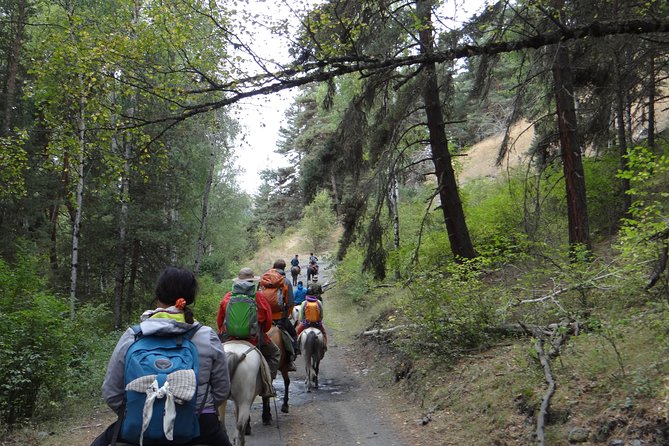
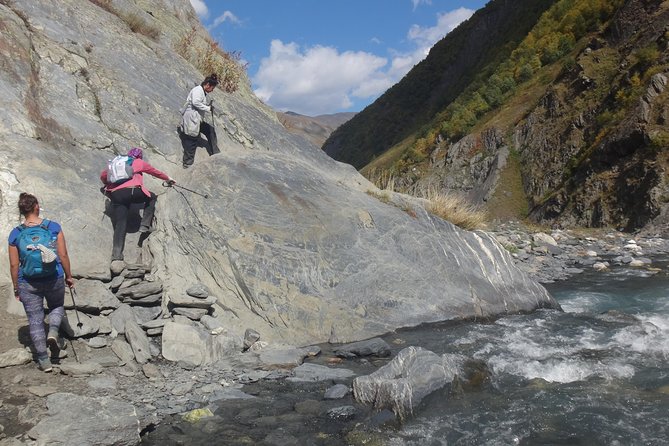
After the pass, Day 4 follows the Pirikiti Alazani River downhill toward Girevi. The direction is easier on paper, but the route is long, about 20 kilometers.
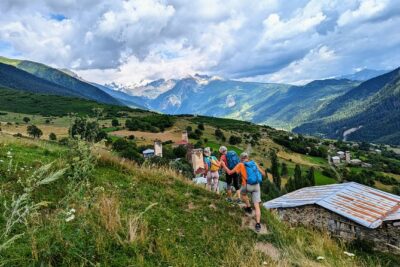
This day gives you a better look at the working side of Tusheti. You pass shepherds’ houses and the abandoned stone city of Chontio. These are not polished attractions with signs and facilities. They are part of the region’s old settlement pattern, seen along a trail that still depends on walking and animals.
By reaching Girevi, you return to a place with permanent residents and guesthouses. That change should feel welcome after two nights in tents. You sleep indoors and have access to a village setting, though this is still remote Tusheti rather than a full-service town.
The main issue is the distance. A downhill route can still tire your knees and feet, especially after the pass. Good footwear and a sensible pace matter more than trying to cover the route quickly.
Same base, a different sort of day:
- Day Trip to Kakheti Wine Region Including 9 Wine Tastings
★ 5.0 · 2,774 reviews - Day Trip to Kazbegi and Gudauri
★ 5.0 · 2,009 reviews - Day Trip to Mtskheta Gori and Uplistsikhe
★ 5.0 · 1,801 reviews - Tbilisi Walking Tour Including Cable Car and Traditional Bakery
★ 5.0 · 1,310 reviews
Dartlo, Kvavlo, and a night in stone
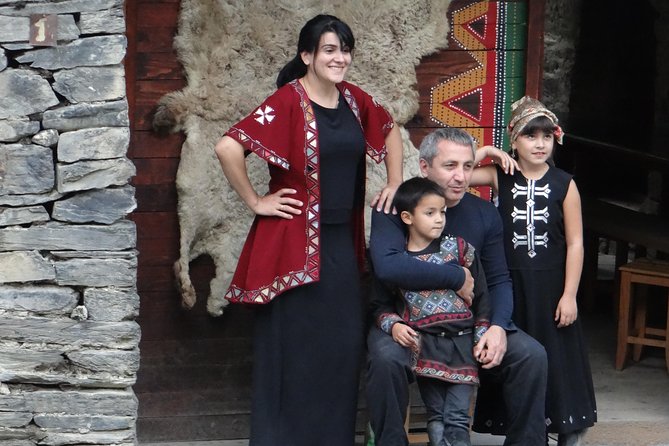
Day 5 is described as easier, with about four hours along a jeep road. By lunchtime, you reach Dartlo.
Dartlo is one of the architectural highlights of the trip. Its stone buildings and traditional form show why the village has been considered for World Heritage status. You have time after lunch to hike uphill to Kvavlo, adding a short side trip rather than another major crossing.
The night is spent in a stone house built in local style. This is a useful middle ground between camping and a conventional hotel. You get shelter and a local setting without losing the character of the route.
I especially like the rhythm here: a hard pass, a long walking day, then a gentler day with time for village exploration. That variation keeps the week from becoming one continuous physical push.
Horse riding from Omalo to Shenako and Diklo
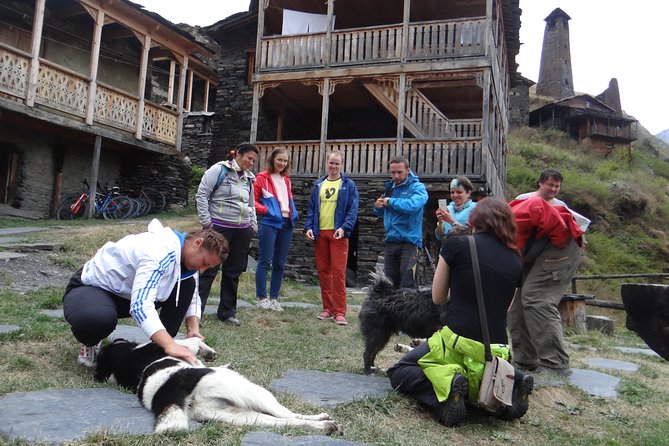
On Day 6, you drive to Omalo, the largest village in Tusheti. Your belongings stay at a guesthouse while you go horse riding to Shenako and Diklo.
The itinerary does not specify the length of the riding excursion, so you should treat it as a planned activity rather than a timed riding lesson. The route visits two villages, including Shenako and its Church of the Holy Trinity, a detail that adds a cultural stop to the mountain scenery.
This day is less about covering a major pass and more about seeing Tusheti from a traditional form of transport. Horses are already central to the expedition because they carry gear, so the riding fits the setting rather than feeling like a separate tourist add-on.
You return to Omalo for dinner. After several days of remote walking, a night at a guesthouse gives you a final comfortable base before the long journey out.
Leaving Tusheti over Abano Pass
Day 7 begins with the road out. In Alvani, you change from the mountain jeeps to a more comfortable bus, then continue toward a winery in Kakheti for a festive lunch.
The road from Tusheti includes about 60 kilometers of unpaved driving and crosses Abano Pass, described as the highest automobile pass in Europe. This is not a quick transfer. Mountain roads can make a short distance take a long time, and the drive is part of the experience.
The winery lunch gives the final day a pleasant shift. After tents, river valleys, stone villages, and rough roads, you finish with food and wine in Kakheti before arriving in Tbilisi around 5 p.m.
Beer, wine, and chacha bought at guesthouses are not included, but the winery lunch is included. If you want alcoholic drinks at other points, budget separately.
What the $1,190 price really covers
At $1,190 per person, the price is not simply paying for guided walking. It covers six breakfasts, seven lunches, six dinners, snacks, drinks, camping equipment, waterproof luggage, sleeping gear, horses for carrying equipment, 4×4 transfers, guesthouses, and the final transport to Tbilisi.
That package matters in Tusheti. Organizing the jeeps, horses, food, border formalities, camping supplies, and remote lodging independently would be difficult. The cost also includes the logistics of moving between regions where roads are rough and services are limited.
The value is strongest if you need a handled expedition rather than a self-supported trek. You are paying for a connected plan in a difficult area, not just for trail access.
The price is less attractive if you already own all your camping gear, prefer to arrange your own transport, or want to choose every overnight stop. This is a fixed seven-day program with a clear route and a set group structure.
Food, lodging, and the level of comfort
The food plan is generous for a remote mountain route. Breakfast, lunch, dinner, snacks, and drinks are included, with traditional meals prepared at some guesthouses.
You sleep in a mix of places: a guesthouse in Shatili, two nights in tents, a guesthouse in Girevi, a traditional stone house near Dartlo, and a guesthouse in Omalo. Comfort will change from night to night. That is part of the point, but it means you should not expect hotel standards throughout.
Two nights without mobile communication and villages are a real feature, not a minor inconvenience. You will need to accept limited contact, basic camping, and a degree of uncertainty that comes with remote mountain travel.
Group size, guiding, and practical limits
The maximum group size is 10 people. That is small enough to keep the group manageable on a high pass and in narrow mountain settlements.
Guide Stanislav is identified with the experience. The information provided describes a focus on safety, reliable vehicles, healthy food, and careful service. The route also requires coordination between the guide, drivers, guesthouses, and horse support.
You should have moderate physical fitness, but read that phrase carefully. The itinerary includes a difficult 3,431-meter pass and a 20-kilometer walking day. The tour is better suited to someone who regularly walks in the hills than to someone who only takes occasional city strolls.
Pickup is offered, and the meeting point is the operator’s office in Tbilisi at 9 a.m. on the scheduled departure date. Confirmation is sent within 48 hours, subject to availability. Service animals are allowed, and the meeting point is near public transportation.
Cancellation terms are strict near departure. A full refund requires cancellation at least six full days before the start. Cancellation two to six days ahead receives a 50 percent refund, while cancellation less than two days before departure is not refunded. The minimum group requirement also matters: if the trip is canceled for that reason, you are offered another date or experience, or a full refund.
Should you book this Tusheti trek?
Book it if you want a demanding, well-organized route through one of Georgia’s least connected mountain regions. The strongest reasons are the Atsunta Pass crossing, the abandoned settlements at Mutso and Chontio, two nights under canvas, horse support, and the mix of local guesthouses and traditional food.
Think twice if you need reliable phone service, private hotel rooms, short walking days, or full control over the schedule. The pass, the long descent, rough 4×4 roads, and variable lodging are not side notes. They define the trip.
For an active visitor who values remote scenery and practical support, the $1,190 package makes sense. You get much more than a series of viewpoints: you cross between two mountain regions and spend enough time there to feel the distance.
FAQ
Where does the tour start?
The tour starts at the operator’s office in Tbilisi, with pickup at 9 a.m. on the departure day.
How long does the experience last?
The expedition lasts approximately seven days and returns to Tbilisi around 5 p.m. on Day 7.
What is the highest point on the route?
The highest trekking point is Atsunta Pass at 3,431 meters.
How difficult is the trek?
The tour requires moderate physical fitness. Day 3 is described as difficult, and Day 4 includes about 20 kilometers of walking.
How many nights are spent in tents?
You spend two nights in a tent during the remote section between Ardoti and Girevi.
Are mobile communications available throughout the route?
No. The tour description states that mobile communications will be unavailable for two days.
Are horses included?
Yes. Horses are included to carry equipment, and horse riding is also scheduled on Day 6 from Omalo to Shenako and Diklo.
What meals are included?
The price includes six breakfasts, seven lunches, six dinners, snacks, and drinks.
Are drinks such as beer and wine included?
Beer, wine, and chacha purchased at guesthouses are not included.
What is the cancellation policy?
You can receive a full refund if you cancel at least six full days before the start. Cancellation two to six days ahead receives a 50 percent refund, and cancellation less than two days before departure is not refunded.
Just added in Tbilisi
- Private Adorable City Tour of Tbilisi★ 5.0 · 3 reviews
- Tbilisi Airport to Gudauri, Bakuriani, Batumi, Tbilisi★ 5.0 · 3 reviews
- full day Kazbegi-Gudauri-jvari -from Tbilisi★ 5.0 · 6 reviews
- Old tbilisi walking tour & wine tasting★ 5.0 · 9 reviews
- Your unique photo session in Tblisi, Georgia★ 3.5 · 4 reviews
- Wine promenade in hospitable Tbilisi★ 5.0 · 17 reviews
- Vardzia. Lake Paravani, Khertvisi & Lomisa castle, Rabati★ 4.5 · 12 reviews
- Private Wine Tour In Kakheti Region with 7 Wines and Lunch★ 5.0 · 3 reviews
Hiking & Trekking, compared.
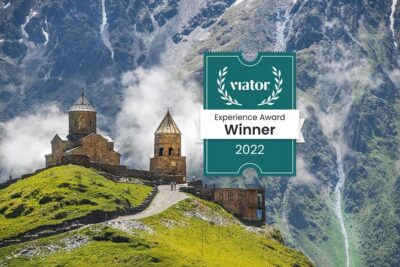
Highlights of Caucasus Mountains-Jinvali,Ananuri,Gudauri,Kazbegi(Group tour)
Read our review →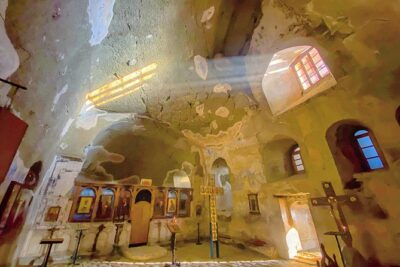
David Gareji and Real Rainbow Mountains Off-Road adventure + hike
Read our review →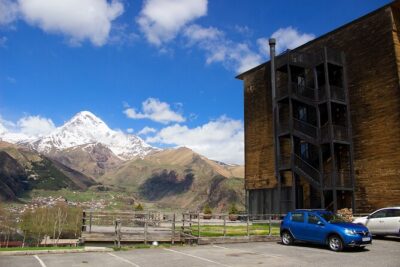
Private day trip to the Caucasus mountains and the Russian border
Read our review →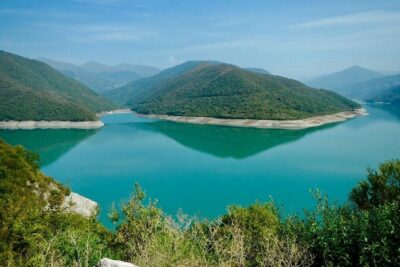
Adventure in Caucasus – Private Tour to Jinvali, Ananuri, Gudauri, Kazbegi
Read our review →
Kazbegi Tour with Gergeti Church, Waterfall Hike & Hidden Gems
Read our review →Browse the lists this tour appears in